Tag Archives: B.E. Architecture

Tours: Shakespeare Grove Residence In Australia

The Local Project (November 24, 2023) – Located in a leafy pocket of Hawthorn is Shakespeare Grove by B.E. Architecture, a dream house designed as a family home and devised by a memorable palette of materials.

Video timeline: 00:00 – Introduction to the Dark and Moody Dream House 01:12 – Designed as Two Halves 01:40 – The Decorative and Private Sector 02:00 – Incorporating A Sense of Scale and Sculpture 02:38 – The Casual and Family Sector 03:01 – A Reduced Material Palette and Light Quality 03:53 – Incorporating Custom Made Personal Items 05:12 – Enjoyable Aspects of the Design

B.E. Architecture’s overarching responsibility was to create a residence that responded to the area and catered to the council, town planners, heritage planners, neighbours and, ultimately, its clients. Designed as two halves, the dream house features a distinct façade that hides the intimate and warm interior. Furthermore, when looking to simplify the expression of the building, the team used consistent materials across both the interior and exterior. Moving the house tour inside, the front half of the home holds the master bedroom, ensuite and study, as well as the formal dining and living areas.

Though facing the street, the front half of Shakespeare Grove is kept private and offers an inward-facing inner experience. The interior design is typified by the inlaid timber ceilings and cocooning walls of felt, and the first half of the dream house is designed to be more decorative than the second. Also shown through the house tour is a generous architectural scale, as seen in the details of the staircase. Moreover, a vaulted hallway leads from the formal part of the dream house to the casual spaces. The rear of the dream house holds the social areas such as the kitchen, lounge and dining space – all of which are open to the natural surrounds and flow to the outdoor entertaining zones.
Australia Architecture: Casa Piva’s Italian Roots

The Local Project (November 7, 2023) – Casa Piva is a small yet layered architects own home defined by a slow revealing of spaces and experiences. Andrew Piva, Project Architect and Director at B.E. Architecture, refers to his home as a labour of love – it is simultaneously warm, inviting and highly functional thanks to the use of Tuscan Oak as a surface material.

Video timeline: 00:00 – Introduction to the Architects Own Home 01:11 – Behind the Design of the Home 02:12 – Enveloped in Warm Materials 03:18 – Including A Bit of Fun 04:44 – A Compact And Generous Brief 06:18 – Focusing on A Minimal Selection of Materials 06:32 – A Rational, Balanced and Calm Design

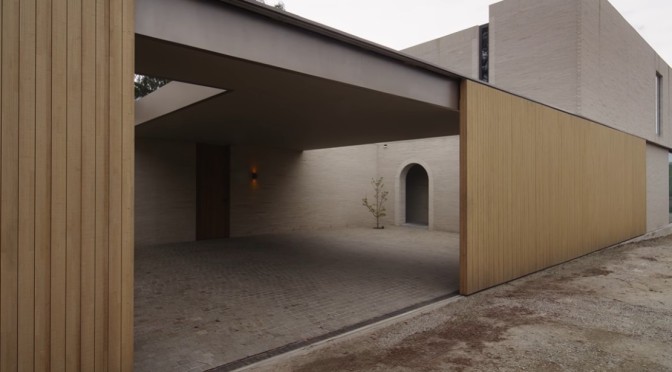
From the street, the family home doesn’t reveal too much of itself. However, upon entry, one is met with an intriguing and experiential journey through spaces that are designed around a series of small courtyards. The foremost entry into the architects own home takes place through a modest-sized door from the laneway, where one is greeted by a large and intricate brick courtyard with trees coming up through apertures in the roof – a scene reminiscent of an Italian villa. As well as providing a generous space for the dwelling, it also serves as a functional space to park cars.

Once inside, Casa Piva reveals a compressed, dark and moody ambience. This slowly transitions as you journey through the architects own home. The first glimpse of the kitchen, which is adorned with Tuscan Oak joinery, reveals the warmth and comfort the casa brings forth. The home is compact but features generously sized rooms. Within the residence are three bedrooms as well as a study, which doubles as a TV room and guest bedroom and reveals the residence’s flexibility. The master bedroom is larger and cocooned in timber.

Design: St. Vincent Place In Albert Park, Australia

The Local Project – Following three years of curation, St Vincent’s Place emerges as an award winning home, peppered with art and designed to promote conversation. Crafted by B.E Architecture, the restoration project employs expressive pieces with consistency, enabling the building to be navigated with ease.

Video timeline: 00:00 – Introduction to the Award Winning Home 00:21 – A Restoration Project 3 Years in The Making 00:58 – Building Aspects From the Ground Up 01:31 – Compatibility Within the Home 01:46 – A Walkthrough of the Historic Section of the Home 02:03 – The Modern Section of the Home 02:18 – Reinterpretations of the Historic Aspects 02:46 – Encouraging Conversation Through Building and Design 03:36 – A Range of Surprising Features 04:45 – Peaceful Curation and Arrangement 05:09 – A Journey With the Client

Originally owned by a convent, St Vincent’s Place is comprised of three buildings set side-by-side, situated in the Melbourne precinct of Albert Park. The heritage façade – the only historical element that could be retained in the award winning home – represents a significant contribution to the architecture of the area, presenting a combination of stone and delicate black metalwork. Traversing two design styles in a singular project, B.E Architecture dedicates the front of the home to heritage recreation whilst providing a modern extension.

The front of the award winning home captures a formal entrance and living room and upstairs, a master bedroom and dressing room. A studious approach to restorative design is reflected in the treatment of cornices, skirtings and architraves, as well as doorjambs, doors and flooring. In contrast, the back of the building captures a contemporary interior design including a downstairs pool, onsen and steam room, elevated with tiling and considered lighting.

Several features of St Vincent’s Place indicate the designer’s penchant for aesthetic flair. Inspired by pioneering artist Sigmar Polke, sliced agate doors filter natural light with an array of neutral tones. In addition, a large text piece reading ‘Heaven is a Place Where Nothing Ever Happens’ sparks curiosity from its reference, size and impressive incorporation into the award winning home.

“You do feel the magic of how these elements come together here,” says Broderick Ely, Design Director at B.E Architecture. “We curate, we arrange and manipulate these items so it sits very quietly.” Using the even application of decorative elements, B.E Architecture establishes a coherent and award winning home. St Vincent’s Place is structured to gently guide occupants towards its many hidden gems, enabling the mind to wander in unison with the body.