Video timeline: Chapters 0:00 – Introduction 3:00 – Weather & Ice 5:09 – Documenting the Journey 7:00 – Stuck in the Ice 10:00 – Finishing the Journey
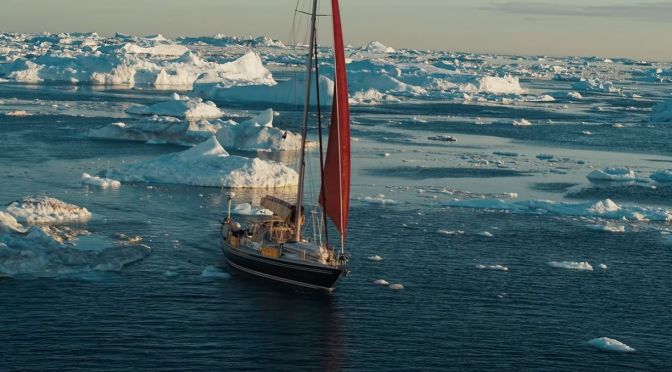
Hear from Renan about the challenges they faced during their polar passage and how he balanced getting the content he needed while also staying safe and helping crew the boat.
Timelab Pro (April 15, 2023) – Our trip to Franz Josef Land was an unforgettable experience, and we were fortunate enough to be on board the mighty famous ship Mikhail Somov for a scientific mission to study the Narwhals in the Arctic.
Franz Josef Land is the northernmost territory of Russia, and one of the least filmed territory in the world. Our shots are truly unique, capturing the beauty of the Arctic landscape and the majestic Narwhals in their natural habitat. As we took our drone to the skies, we searched for days to find these elusive creatures, and finally, we were lucky enough to spot them.
Did you know that Narwhals are the only known species of whale to have a single tusk? And that this tusk, which is actually a protruding tooth, can grow up to 3 meters long? The scientists on board the Mikhail Somov were conducting an important research expedition to prove that Narwhals dwell in the Russian Arctic.
They also took biopsies from the Narwhals to better understand the impact of global climatic changes on these amazing creatures. Our diesel-electric ship, the Mikhail Somov, is a historical ship with a rich history of Arctic exploration. In 1985 the Mikhail Somov became trapped in the ice for 133 days, but the crew was able to survive and eventually free the ship. Despite its modern upgrades, the ship still maintains the charm and spirit of its earlier expeditions.
What’s it like to grow up underneath the aurora borealis, on the shores of the Arctic Ocean? Photographer Evgenia Arbugaeva describes leaving—and returning to—Tiksi, a Siberian coastal village that during her childhood became a ghost town in the wake of the Soviet collapse. That experience taught her to find beauty in unexpected places—riding reindeer with nomadic herders, visiting isolated Arctic weather stations, and following mammoth ivory hunters.
The Icebreaker and ships in Artic, cinematic drone footage in 4K by Oculus Films.
The Arctic is a polar region located at the northernmost part of Earth. The Arctic consists of the Arctic Ocean, adjacent seas, and parts of Alaska (United States), Canada, Finland, Greenland (Denmark), Iceland, Norway, Russia, and Sweden. Land within the Arctic region has seasonally varying snow and ice cover, with predominantly treeless permafrost (permanently frozen underground ice) containing tundra. Arctic seas contain seasonal sea ice in many places.
The Arctic region is a unique area among Earth’s ecosystems. The cultures in the region and the Arctic indigenous peoples have adapted to its cold and extreme conditions. Life in the Arctic includes zooplankton and phytoplankton, fish and marine mammals, birds, land animals, plants and human societies. Arctic land is bordered by the subarctic.
The Arctic Ocean is the smallest and shallowest of the world’s five major oceans. It spans an area of approximately 14,060,000 km² and is also known as the coldest of all the oceans. The International Hydrographic Organization (IHO) recognizes it as an ocean, although some oceanographers call it the Arctic Mediterranean Sea. It is sometimes classified as an estuary of the Atlantic Ocean, and it is also seen as the northernmost part of the all-encompassing World Ocean. The Arctic Ocean includes the North Pole region in the middle of the Northern Hemisphere, and extends south to about 60°N.
The Arctic Ocean is surrounded by Eurasia and North America, and the borders follow topographic features; the Bering Strait on the Pacific side, and the Greenland Scotland Ridge on the Atlantic side. It is mostly covered by sea ice throughout the year and almost completely in winter. The Arctic Ocean’s surface temperature and salinity vary seasonally as the ice cover melts and freezes; its salinity is the lowest on average of the five major oceans, due to low evaporation, heavy fresh water inflow from rivers and streams, and limited connection and outflow to surrounding oceanic waters with higher salinities. The summer shrinking of the ice has been quoted at 50%.
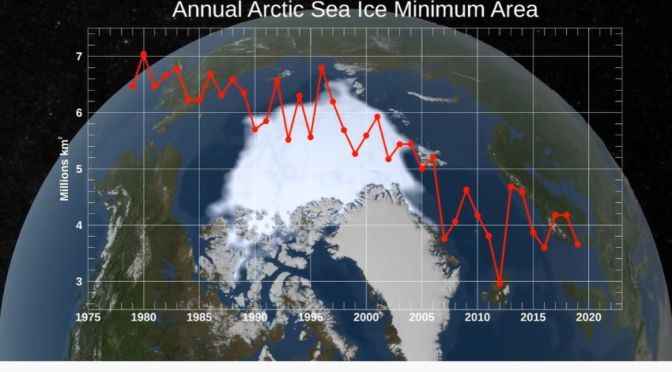
The US National Snow and Ice Data Center (NSIDC) uses satellite data to provide a daily record of Arctic sea ice cover and the rate of melting compared to an average period and specific past years, showing a continuous decline in sea ice extent. In September 2012, the Arctic ice extent reached a new record minimum. Compared to the average extent (1979-2000), the sea ice had diminished by 49%. An icebreaker is a special-purpose ship or boat designed to move and navigate through ice-covered waters, and provide safe waterways for other boats and ships. Although the term usually refers to ice-breaking ships, it may also refer to smaller vessels, such as the icebreaking boats that were once used on the canals of the United Kingdom.
For a ship to be considered an icebreaker, it requires three traits most normal ships lack: a strengthened hull, an ice-clearing shape, and the power to push through sea ice. Icebreakers clear paths by pushing straight into frozen-over water or pack ice. The bending strength of sea ice is low enough that the ice breaks usually without noticeable change in the vessel’s trim. In cases of very thick ice, an icebreaker can drive its bow onto the ice to break it under the weight of the ship.
A buildup of broken ice in front of a ship can slow it down much more than the breaking of the ice itself, so icebreakers have a specially designed hull to direct the broken ice around or under the vessel. The external components of the ship’s propulsion system (propellers, propeller shafts, etc.) are at greater risk of damage than the vessel’s hull, so the ability of an icebreaker to propel itself onto the ice, break it, and clear the debris from its path successfully is essential for its safety.
On Sept. 15, 2020, Arctic sea ice reached its annual minimum extent — the second-lowest on record. This summer, temperatures soared in the Siberian Arctic, and intense fires burned through peatland. The Arctic region is warming three times faster than the rest of the planet.
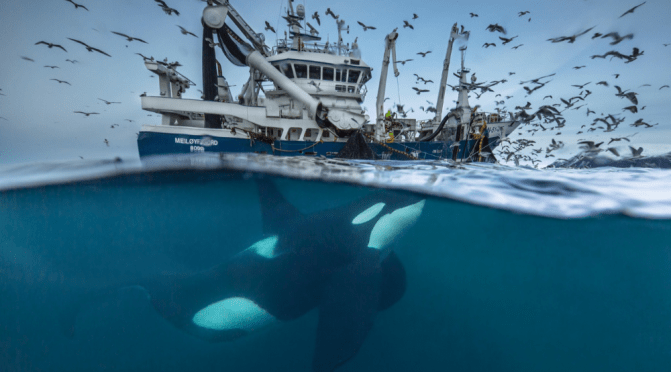
Didier Noirot is known as one of the world’s greatest underwater cameramen and has several prestigious awards for his natural history film camerawork. Over the past 40 years, Didier has been driven by his passion for marine life, but now he’s set himself a new challenge, to film what is perhaps the largest known gathering of marine mammals in the world; hundreds of killer whales in pursuit of shoals of herring. Today, these killer whales are faced with unexpected competition from humpback whales, who began appearing in this Arctic region only a few years ago, driven by a lack of food resources in the Atlantic Ocean, their natural habitat. In the midst of this changing ecosystem, we journey to the heart of the Norwegian fjords, where Didier Noirot’s aim is to take us as close as we can get to these giants of the Arctic so we can witness first-hand their new behaviour and hunting activity, which has never been captured on film before.
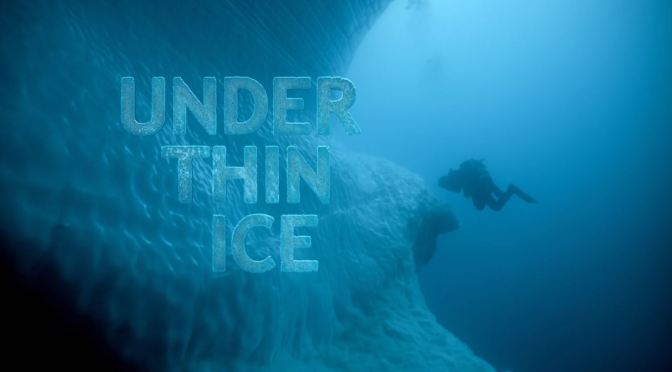
“Under Thin Ice”. World Premiere at the 2020 WCFF. Natalie Dubois, Producer and Denis Blaquiere, Director.
SYNOPSIS The Arctic is a majestic world, home to wildlife rarely seen in the south: bowhead whales, polar bears, narwhals, walrus, seals, zooplankton, algae. At the end of each spring, after long months of darkness, the sun shines for 24 hours a day and all living species gather at the floe edge — where ice meets open ocean — for a feeding frenzy. But global warming is threatening this ecosystem. Temperatures are rising and the ice sheet is melting at an alarming rate. In the last 40 years, more than 75% of the summer ice cover has disappeared.
Diving with whales, walruses and polar bears, Jill and Mario bring viewers into a majestic underwater world trying to adapt to ice loss and climate change. Viewers will travel on ice floes with Jill and Mario to Tallurutiup Imanga (also known as Lancaster Sound) in Nunavut, Canada, where they will dive with belugas and narwhals in the open Arctic Ocean. They will follow them to Greenland’s Disko Bay to explore the underside of icebergs and discover the luminescent world of algae. Back to Canada in the Naujaat region, they will swim with walruses and polar bears, the supreme predators of the Arctic. Filmed in stunning 4K, Under Thin Ice brings viewers into an awe-inspiring underwater world threatened by melting ice and rapid climate change.
The WCFF mission is to inform, engage and inspire wildlife conservation through the power of film and media.
The 10th annual WCFF in New York, NY will be a virtual event October 1-31. This is due to COVID-19 restrictions. New York State and the City of New York have not allowed movie theaters to reopen. Each day of the virtual festival will have LiveChats where the audience can interact with filmmakers, conservationists and scientists.
News, Views and Reviews For The Intellectually Curious




 Boomers Daily