The Economist (November 21, 2024): AI is driving a transformation across all fields of science, from developing drugs for incurable diseases and improving the understanding of animal communication to self-driving labs.
Video timeline: 00:00 – How AI is revolutionising science 02:53 – Drug discovery 04:31 – AlphaFold 05:30 – Adoption of AI in science 07:08 – Animal communication 09:26 – Scientific fraud 11:03 – Self-driving labs 14:36 – Future of AI in science
Could this prompt a new golden age of discovery? Video supported by @mishcon_de_reya
The Wall Street Journal (October 29, 2024): While polls show former President Donald Trump and Vice President Kamala Harris in a dead heat in the final stretch of the 2024 election, the GOP nominee is dominating the Democratic candidate in the betting markets.
Chapters: 0:00 Election betting is legal 0:36 How it works 2:39 Prediction markets vs. polls 3:58 The reliability of betting markets
Once banned by federal regulators, Americans can now legally gamble on elections in prediction markets. Platforms like Kalshi and Polymarket have emerged as websites to place yes-or-no contracts. WSJ reporter Alexander Osipovich explains how these markets work, what they could tell us about the outcome of the election and the implications of trading on the future of the country.
CNBC (September 17, 2024): For decades, Amazon has set the standard for fast package delivery. When Prime launched in 2005, two-day shipping was virtually unheard of. By March 2024, 60% of Prime items were delivered same or next day. Now Amazon wants to push that number even higher, using generative AI, despite concerns about energy and cost.
Chapters: 2:14 Two-day to same-day 5:51 Robot revolution 9:18 Predicting orders 12:11 Routes and personalization
CNBC got an exclusive look at Amazon’s use of generative AI to optimize delivery routes, make more intelligent warehouse robots, and better predict where to stock new items.
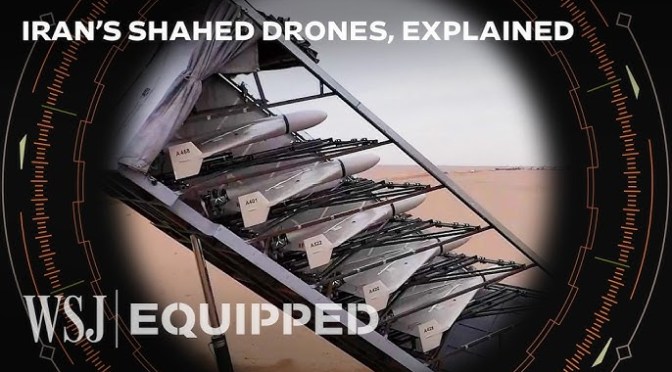
The Wall Street Journal (August 28, 2024): Iran’s Shahed drones have disrupted Red Sea shipping, threatened U.S. troops in the Middle East and caused chaos in Ukraine. These precise one-way attack suicide drones mark a major shift in drone warfare.
Chapters: 0:00 Shahed drones 0:31 What they are and how they work 2:45 How they stack up to other drones 4:01 Who’s using these drones? 6:02 Defenses against these drones
WSJ looks at how Iran’s kamikaze drones work, how they are being used across the globe by militant groups and Russia and the defense mechanisms used against them.
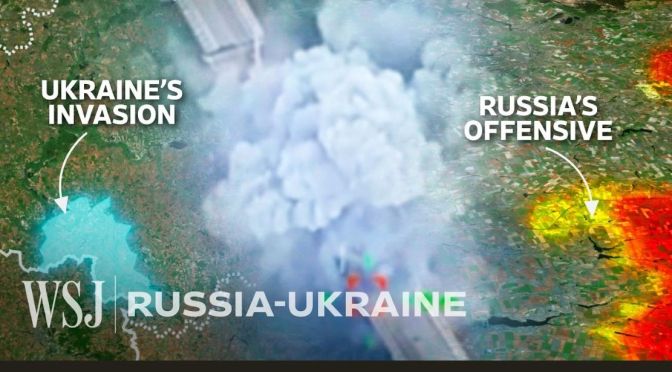
The Wall Street Journal (August 22, 2024): Ukraine’s invasion of Russia was a gamble for Kyiv as they push deeper into the Kursk region. But as Moscow intensifies its offenses on the strategic Ukrainian city of Pokrovsk in the Donetsk region, strategies on both sides are emerging.
Chapters: 0:00 Where the war stands 0:34 Ukraine tactics in Kursk 1:53 Russia’s response 2:53 What’s next?
If Pokrovsk falls, it will be the largest population center taken by the Russian military since Bakhmut in May 2023. WSJ explains the latest developments on how the Kursk invasions steps up the stakes for both Ukraine and Russia.
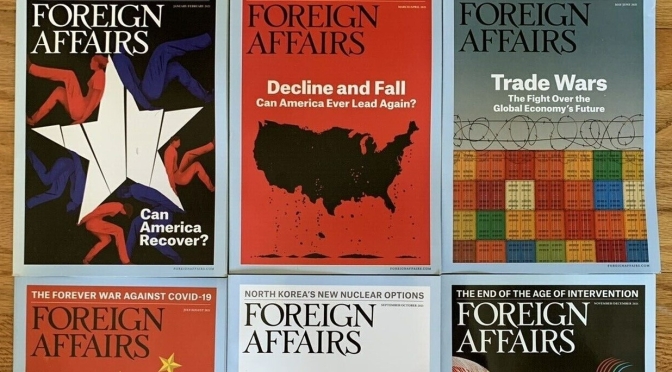
“America is back.” In the early days of his presidency, Joe Biden repeated those words as a starting point for his foreign policy. The phrase offered a bumper-sticker slogan to pivot away from Donald Trump’s chaotic leadership. It also suggested that the United States could reclaim its self-conception as a virtuous hegemon, that it could make the rules-based international order great again. Yet even though a return to competent normalcy was in order, the Biden administration’s mindset of restoration has occasionally struggled against the currents of our disordered times. An updated conception of U.S. leadership—one tailored
The Return of Peace Through Strength
Making the Case for Trump’s Foreign Policy
Si vis pacem, para bellum is a Latin phrase that emerged in the fourth century that means “If you want peace, prepare for war.” The concept’s origin dates back even further, to the second-century Roman emperor Hadrian, to whom is attributed the axiom, “Peace through strength—or, failing that, peace through threat.”
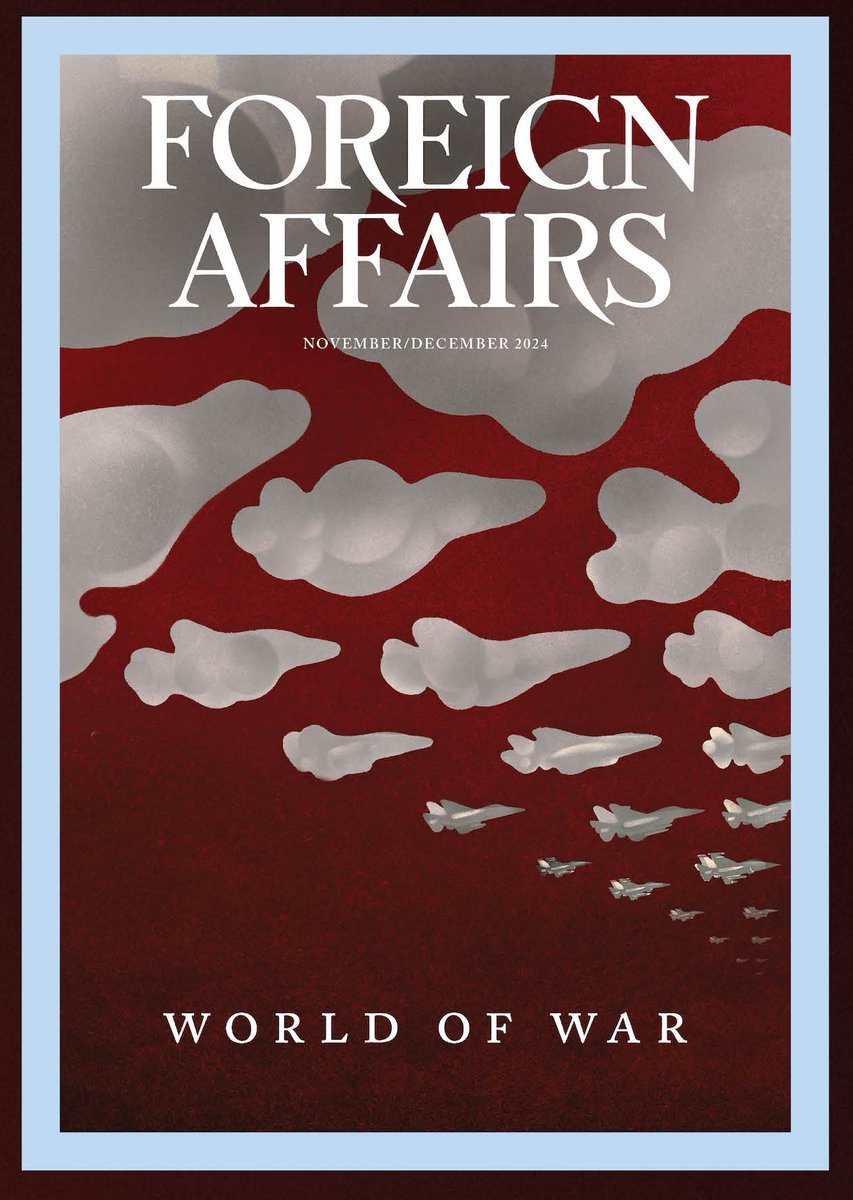
By now, Chinese President Xi Jinping’s ambition to remake the world is undeniable. He wants to dissolve Washington’s network of alliances and purge what he dismisses as “Western” values from international bodies. He wants to knock the U.S. dollar off its pedestal and eliminate Washington’s chokehold over critical technology. In his new multipolar order, global institutions and norms will be underpinned by Chinese notions of common security and economic development, Chinese values of state-determined political rights, and Chinese technology. China will no longer have to fight for leadership. Its centrality will be guaranteed.
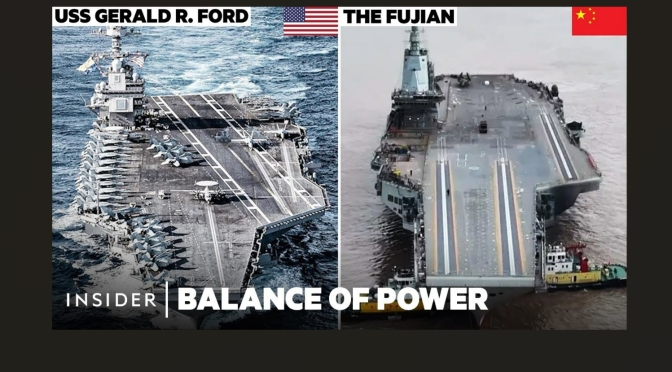
Insider(April 6, 2024): From the $13 billion USS Gerald R. Ford to the Chinese Fujian carrier, a high stakes race is underway between the US and China for aircraft carriers. We compare the two superpowers’ fleets, their capabilities and missions.









 Insider
 Boomers Daily