Two new smart systems use cameras, artificial intelligence and an assortment of sensors to keep watch over you—Patscan looks for threats in public spaces, while Eyeris monitors the driver and passengers in a car. WSJ’s Katherine Bindley visits CES to explores their advantages, as well as their privacy costs.
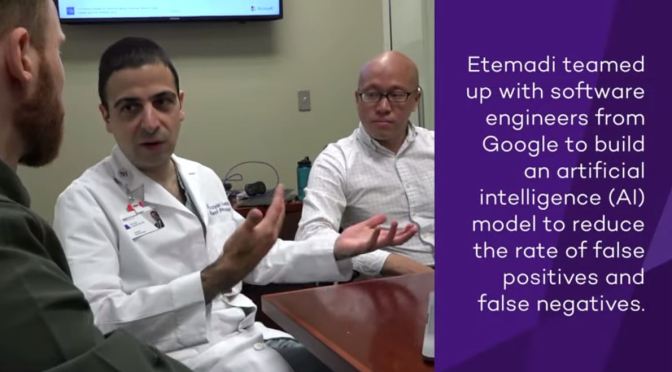
A new Artificial Intelligence (AI) model predicts breast cancer in mammograms more accurately than radiologists, reducing false positives and false negatives, reports a large international study from Google, Northwestern Medicine and two screening centers in the United Kingdom (U.K.).
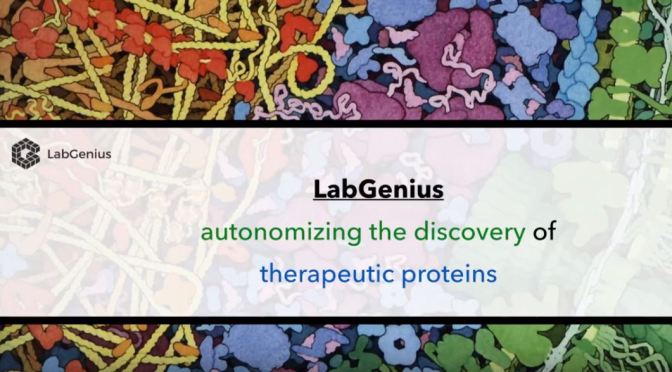
Researchers are using artificial intelligence techniques to invent medicines and materials—but in the process are they upending the scientific method itself? The AI approach is a form of trial-and-error at scale, or “radical empiricism”. But does AI-driven science uncover new answers that humans cannot understand? Host Kenneth Cukier finds out with James Field of LabGenius…
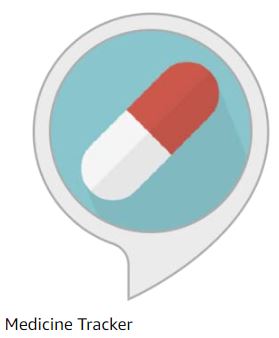
Any customer with an active prescription and an Alexa-enabled device will be able to access the medication management skill on the device, a Giant Eagle spokesperson told CNBC. Rachel Jiang, who leads the Amazon Alexa health and wellness team, said the company began developing the skill after noticing that customers were using the devices to create medication reminders.
Beyond a simple reminder, the skill also offers more information about medication regimens and can be used to order refills. When the skill is installed, Alexa, which was confirmed earlier this year to be HIPAA-compliant, will prompt users to set up a profile and passcode, which must be delivered each time Alexa is asked a question about a medication.
Amazon and Pittsburgh-based supermarket and pharmacy chain Giant Eagle have formed a partnership that will allow Amazon Echo devices to offer Giant Eagle pharmacy patients medication reminders, CNBC reports.
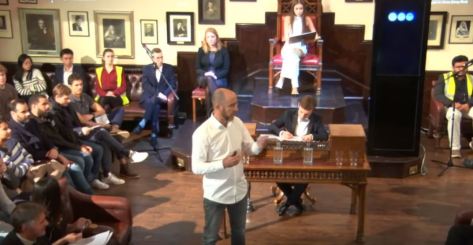
“This House Believes AI Will Bring More Harm Than Good”
This debate was run in association with IBM Research.
Proposition:
Project Debater Project Debater is designed by IBM research. It will deliver a speech based on over 1,100 arguments collected from Union members and others over the past week. It will not be taking points of information.
Sharmila Parmanand
Sharmila Parmanand is a PhD Candidate in Gender Studies at the University of Cambridge and a Gates Scholar. She has served as a debate trainer or chief judge in debating events in 45 countries. She served as a chief judge for most major global debating competitions (World Universities, World Schools, European Universities, Asian Universities, Austral-Asian Universities, North American Universities, and PanAmerican Universities).
Professor Neil Lawrence
Neil Lawrence is the DeepMind Professor of Machine Learning at the University of Cambridge and the co-host of Talking Machines. Neil’s main research interest is machine learning through probabilistic models. He focuses on both the algorithmic side of these models and their application. His recent focus has been on the deployment of machine learning technology in practice, particularly under the banner of data science.
Opposition
Project Debater
Project Debater is designed by IBM research. It will deliver a speech based on over 1,100 arguments collected from Union members and others over the past week. It will not be taking points of information.
Harish Natarajan
Harish Natarajan is a graduate of the University of Oxford and the University of Cambridge. He was a grand fnalist and 2nd best speaker at the 2016 World Debating Championships and won the European Debating Championship in 2012. Harish holds the record for most competition victories. He currently works as the Head of Economic Risk Analysis at AKE International in London.
Professor Sylvie Delacroix
Sylvie Delacroix is professor in Law and Ethics at the University of Birmingham. Her work has notably been funded by the Wellcome Trust, the NHS and the Leverhulme Trust, from whom she received the Leverhulme Prize. She has recently been appointed to the Public Policy Commission on the use of algorithms in the justice system.
This is the Barsys Coaster, a smart coaster with a mini weighing-machine and an AI inside it that coaches you through the fine cocktail-mixing process. The coaster works with the Barsys app, which lets you select a recipe, while the coaster itself sits on a table with an empty glass above it. The app tells you how to build your cocktail, by telling you what to pour into your glass, while the coaster and its weight-sensor lets you know when to stop pouring.
The incredibly precise weight-sensor within the coaster can know exactly when you’ve poured the right amount of gin, or vodka, or orange juice, while the app itself then tells you to stop pouring and proceed to the next step. The result? Precisely crafted cocktails courtesy an AI bartender and your passion for drinking fine cocktails from the comfort of your own house as Netflix cues the next episode of whatever it is you’re watching!
Listen to the latest science updates, with Benjamin Thompson and Shamini Bundell. This week, insights into the evolution of walking upright, how science needs to change in the next 150 years, and the remaining hurdles for vaccination.
This year is Nature’s 150th anniversary. Science has made huge strides during this time, but what needs to change to continue this progress for the next 150 years? Comment: Science must move with the times
17:52 The state of vaccination in 2019
Researchers assess the differences in immunization levels worldwide and identify the bottlenecks in developing new vaccines. Research article: Piot et al.
Hear the latest science news, with Benjamin Thompson and Shamini Bundell. This week, a computer beats the best human players in StarCraft II, and a huge study of insects and other arthropods.
Researchers have surveyed how land-use change has affected arthropod diversity. Research article: Seibold et al.
18:30 News Chat
Young Canadians file a lawsuit against their government, an Alzheimer’s drug gets a second chance, and South Korean efforts to curb a viral epidemic in pigs.
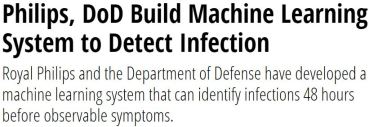
The prototype revealed that using artificial intelligence and machine learning to examine certain combinations of vital signs and other biomarkers could strongly predict the likelihood of infection up to 48 hours in advance of clinical suspicion, including observable symptoms.
Royal Philips, in collaboration with the Defense Threat Reduction Agency (DTRA) and Defense Innovation Unit (DIU) of the US Department of Defense (DoD), are building a machine learning algorithm that will be able to detect an infection before a patient shows signs or symptoms.
The partnering organizations recently announced results from an 18-month project, called Rapid Analysis of Threat Exposure (RATE), the first large-scale exploration of pre-symptomatic infection in humans. The project aims to develop an early warning system that accelerates diagnosis and treatment of infection, containing the spread of communicable disease.




 Researchers are using artificial intelligence techniques to invent medicines and materials—but in the process are they upending the scientific method itself? The AI approach is a form of trial-and-error at scale, or “radical empiricism”. But does AI-driven science uncover new answers that humans cannot understand? Host Kenneth Cukier finds out with James Field of LabGenius…
 Any customer with an active prescription and an Alexa-enabled device will be able to access the medication management skill on the device, a Giant Eagle spokesperson told CNBC. Rachel Jiang, who leads the Amazon Alexa health and wellness team, said the company began developing the skill after noticing that customers were using the devices to create medication reminders.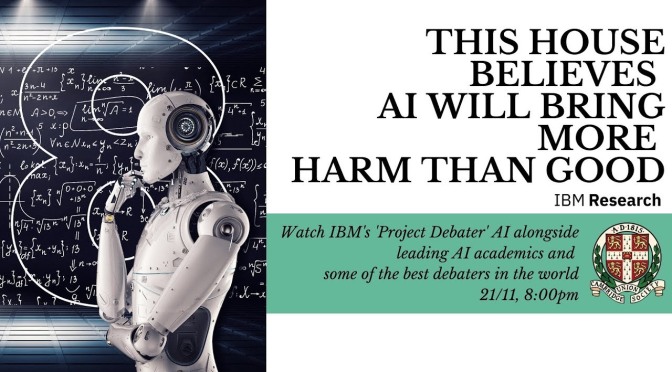


 From a Yanko Design online review:
 Listen to the latest science updates, with Benjamin Thompson and Shamini Bundell. This week, insights into the evolution of walking upright, how science needs to change in the next 150 years, and the remaining hurdles for vaccination.
 Hear the latest science news, with Benjamin Thompson and Shamini Bundell. This week, a computer beats the best human players in StarCraft II, and a huge study of insects and other arthropods.
 The prototype revealed that using artificial intelligence and machine learning to examine certain combinations of vital signs and other biomarkers could strongly
  Boomers Daily