
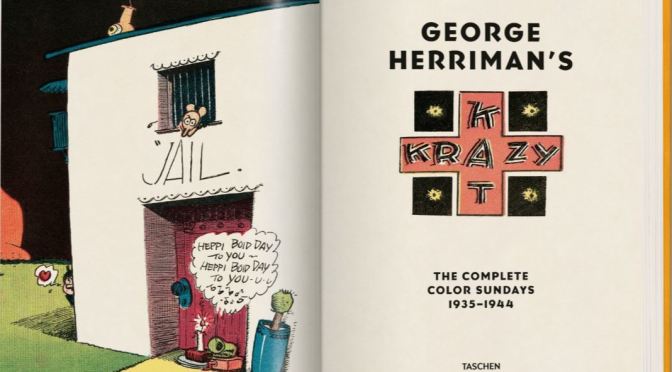
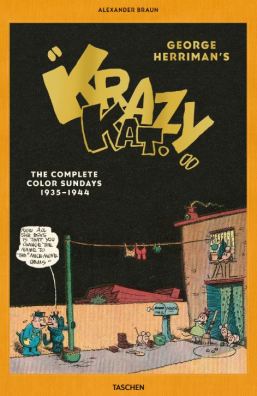
 The premise is simple: a black cat loves scheming a white mouse who incessantly throws bricks at the cat’s head, which police dog Officer Pupp, secretly harboring a passionate love for the cat, tries to prevent.
George Herriman endlessly plays with the above formula in his legendary newspaper strip Krazy Kat, published from 1913 until his death in 1944. Through his wit, detailed characterization, and visual-verbal creativity, Herriman introduced even the least comically-inclined to the young medium; Gertrude Stein, F. Scott Fitzgerald, Pablo Picasso, James Joyce, US President Woodrow Wilson, Jackson Pollock, Charlie Chaplin, Frank Capra, P.G. Wodehouse, Willem de Kooning—all KK fans among many others.
It was thanks to media tycoon William Randolph Hearst, a confirmed fan who gave Herriman carte blanche in his newspapers, that the artist was allowed to freely explore countless absurd and melancholy variations on the theme of unrequited love for years on end. Herriman unabashedly took advantage of this, radically exploring the medium’s potential and pushing all of its formal boundaries; readers had to put up with surreal, Dadaist sceneries, a language that whirled slang, neologisms, phonetic spelling, and scholarly references, and diffuse gender roles—making Krazy Kat probably the first gender-fluid star in comic history.
To read more or purchase: https://www.taschen.com/pages/en/catalogue/graphic_design/all/01173/facts.george_herrimans_krazy_kat_the_complete_color_sundays_19351944.htm
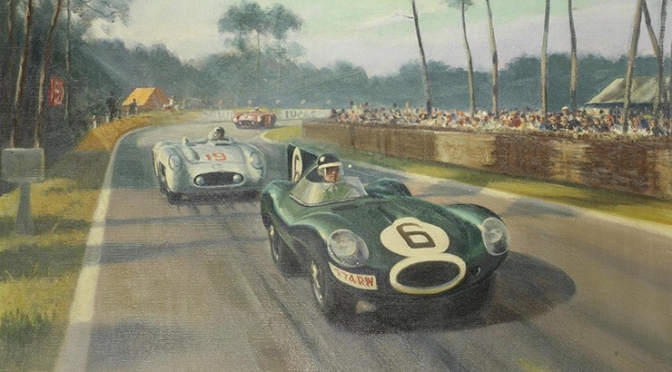
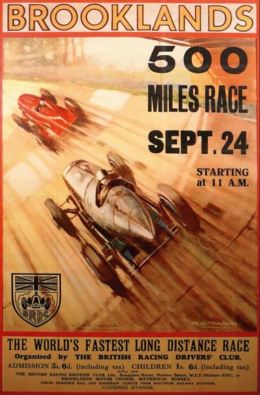 His work was displayed in many exhibitions in the UK and twenty four of his paintings were exhibited in New York in 1960. the exhibition was entitled ‘British Motoring Achievements’ and was a collection of paintings depicting outstanding performances of British cars during the previous ten years. These included the Vanwall and Cooper in Grand Prix, Monte Carlo and Alpine Rallies, speed records by MG and Austin, and Le Mans wins by Jaguar and Aston Martin.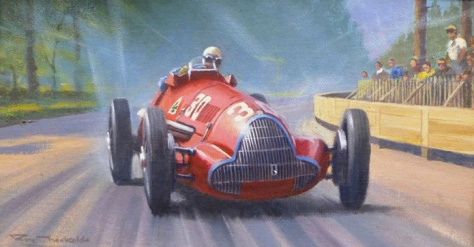
 Boomers Daily