
Category Archives: Research

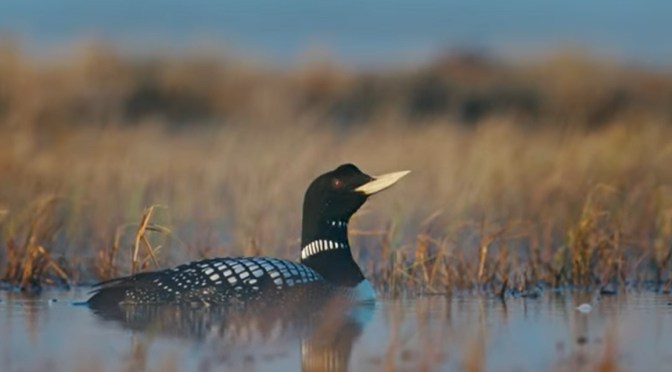
Nature: Filming Birdlife In America’s Arctic Wetlands

Cornell Lab of Ornithology (July 26, 2023) – The tundra wetlands in the heart of America’s Arctic, centered in the NPR-A around Teshekpuk Lake, are among the most extensive in the circumpolar Arctic and contain some of the highest recorded densities of breeding shorebirds in this vast area.

Millions of birds from all over the world flock to these wetlands every year to nest and raise their young. Come along with Cornell Lab’s Gerrit Vyn as he joins a team to capture image of the region’s birdlife.

America’s Arctic is one of North America’s last great wilderness areas, a critical habitat for migratory birds from around the world, and a treasure to be protected for future generations.

#AmericasArctic

Research Preview: Science Magazine – July 21, 2023

Image

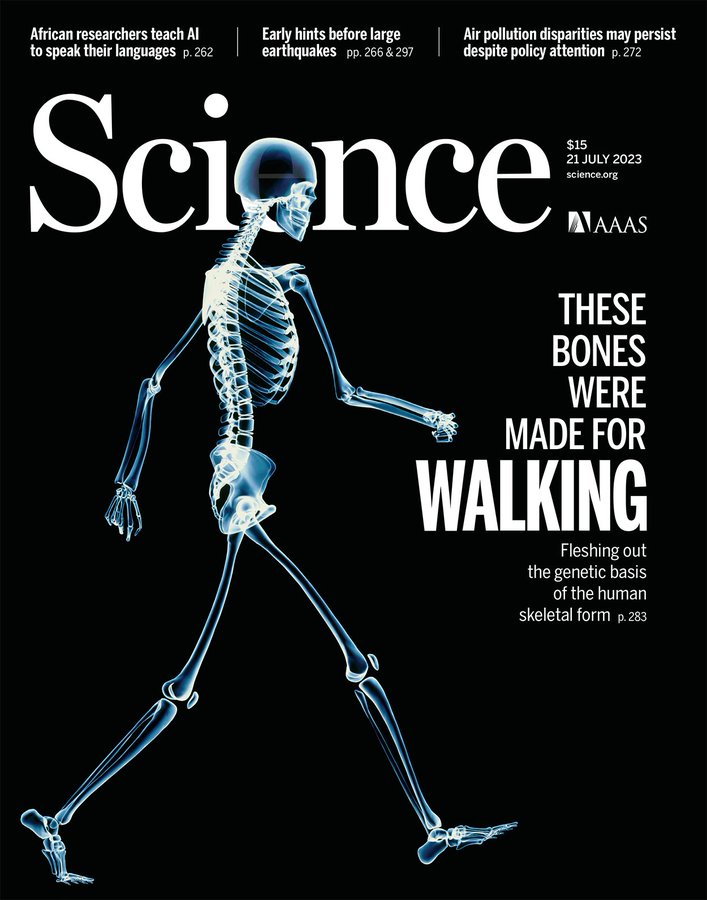
Science Magazine – July 21, 2023 issue: The cover depicts an x-ray of a human skeleton walking. Researchers extracted 23 skeletal proportions from 30,000 individuals using deep learning. Coupled with genetic and biobank data, more than 100 genetic variants associated with these proportions were identified. These analyses shed light on the evolution of the skeletal form, which facilitates bipedalism, and reveal connections to musculoskeletal disorders.

Hollywood movie aside, just how good a physicist was Oppenheimer?

A-bomb architect “was no Einstein,” historian says, but he did Nobel-level work on black holes

Deglaciation of northwestern Greenland during Marine Isotope Stage 11

Research Preview: Nature Magazine – July 20, 2023

Volume 619 Issue 7970

nature Magazine -July 20, 2023 issue: Launched in 2018, the Human Biomolecular Atlas Program (HuBMAP) aims to map how cell types are arranged in the human body. The initiative is both developing and then deploying the necessary technology to create maps of organs at single-cell resolution.

This quiet lake could mark the start of a new Anthropocene epoch

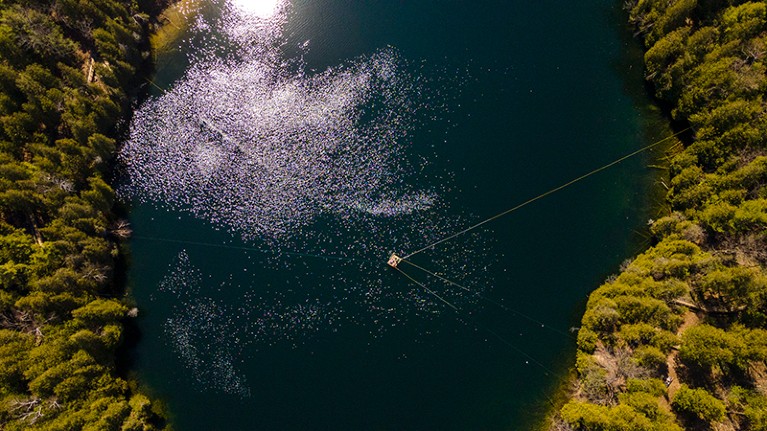
An aerial view of Crawford Lake.

The dawn of a new geological epoch is recorded in the contaminated sediment at the bottom of Crawford Lake in Canada.

The official marker for the start of a new Anthropocene epoch should be a small Canadian lake whose sediments capture chemical traces of the fallout from nuclear bombs and other forms of environmental degradation. That’s a proposal out today from researchers who have spent 14 years debating when and how humanity began altering the planet.

How to introduce quantum computers without slowing economic growth

To smooth the path of the quantum revolution, researchers and governments must predict and prepare for the traps ahead.

Research Preview: Science Magazine – July 14, 2023

Image

Science Magazine – July 14, 2023 issue: There have been huge strides in the development and application of artificial intelligence (AI) to science and society. But will AI eclipse humans, or will we find a way to safely and fairly collaborate, allowing us to reach further? 

A machine-intelligent world

Huge strides have been made in the development of machine-learning algorithms to generate what is commonly called artifi cial intelligence (AI). Looking to the forefront of how AI is being used in science and society reveals many benefi ts, as well as grand challenges, that must be addressed.

Leveraging artificial intelligence in the fight against infectious diseases

Despite advances in molecular biology, genetics, computation, and medicinal chemistry, infectious disease remains an ominous threat to public health. Addressing the challenges posed by pathogen outbreaks, pandemics, and antimicrobial resistance will require concerted interdisciplinary efforts.

Research Preview: Nature Magazine – July 13, 2023

Volume 619 Issue 7969

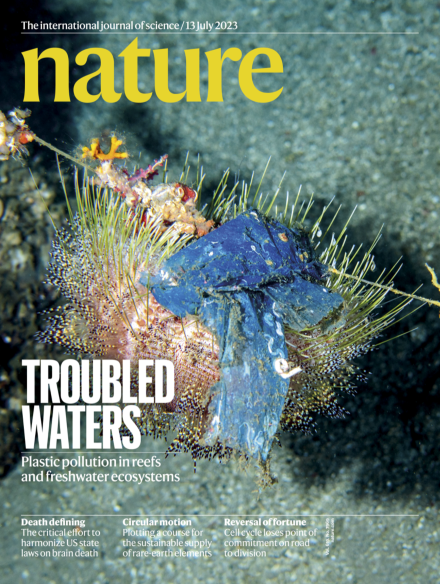
nature Magazine -July 13, 2023 issue: Usually, sea urchins procure blades of seagrass or small pieces of rubble to help them blend in with the sea floor, but the fire urchin (Asthenosoma varium) on the cover has instead appropriated the remnants of a blue plastic bag and is entangled in a discarded fishing line stuck on a reef.

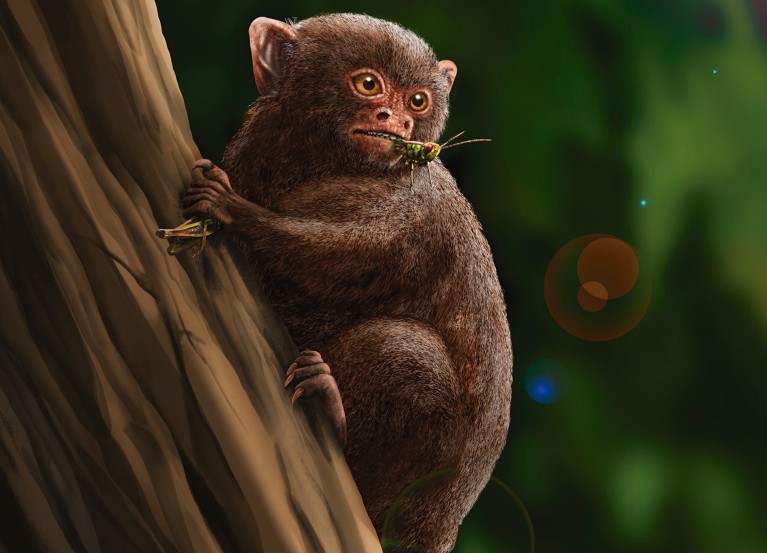
How ancient monkeys rode the waves to the Americas — and survived

Artist’s reconstruction of the primate Ashaninkacebus.

Analysis suggests that three types of primate made the transoceanic journey to South America from Africa millions of years ago.

Some of the first primates to reach South America might have been tiny, insect-loving monkeys that had been swept out to sea.

Great bolts of lightning foretell Earth-warming clouds

Trieste Lightning.

Coverage of wispy cirrus clouds is linked to episodes of electrical activity.

Lightning is typically seen when imposing cumulonimbus clouds fill the sky. But new research shows that these bolts of electricity can also be used to forecast thin and wispy clouds that warm the world by reflecting heat back to the surface.

Research Preview: Science Magazine – July 7, 2023

Image

Science Magazine – July 7, 2023 issue:

The star watcher

Amateur astronomer Koichi Itagaki is one of the most prolific supernova hunters of all time

Rare fossil implies deep roots for vertebrates

Half-billion-year-old tunicate from western Utah “looks like it died yesterday”

Research Preview: Nature Magazine – July 6, 2023

Volume 619 Issue 7968

nature Magazine -July 6, 2023 issue: Shape shifters – DNA origami allows useful supramolecular structures to be created from templates. But the process has its limitations, with most structures confined to two configurations: folded or unfolded.

Fungi bacon and insect burgers: a guide to the proteins of the future

Stylised illustration showing a shop display of alternative protein products with signs saying 'New' and 'Try today'.

Humanity needs to eat less meat. Here are seven alternatives.

Would you eat a burger enriched with mealworms? Fake bacon sliced from a mass of fermented fungi? Milk proteins extruded by microbes? Maybe you already have. Dozens of companies are now banking on these alternatives to animal protein becoming a regular part of your diet.

Mini-antibodies given mighty powers can stave off influenza

Influenza A virus, TEM image.

Complexes formed from ‘nanobodies’ and an antiviral drug halt infection in its tracks.

A dynamic duo comprising an antiviral drug joined to an antibody fragment provides strong protection against the two main types of influenza that infect humans, according to research in mice.

Research Preview: Science Magazine – June 30, 2023

Contents | Science 380, 6652

Science Magazine – June 30, 2023 issue: Vapor from liquid nitrogen wafts over a rat kidney awaiting a groundbreaking preservation method at the University of Minnesota. Scientists there have learned how to cool the organ to –150°C and rewarm it while minimizing freezing damage, enabling it to work after being transplanted. 

Long-sought hum of gravitational waves from giant black holes heard for first time

illustration of pulsar on gravitational waves from supermassive black holes.

Subtle shifts in stellar signals reveal pervasive waves from mergers of giant black ho

Frozen in time

Scientists are learning how to cryopreserve living tissues, organs, and even whole organisms, then bring them back to life

Research Preview: Nature Magazine – June 29, 2023

Volume 618 Issue 7967

nature Magazine -June 29, 2023 issue: RNA molecules can adopt complex 3D structures, but whether DNA can self-assemble into similar 3D folded structures has been less clear. In this week’s issue, Luiz Passalacqua and his colleagues use a DNA mimic of green fluorescent protein (GFP) to investigate this question.

Underwater volcano triggered the most intense lightning ever recorded

Satellite video of Tonga's Hunga Volcano eruption.

The huge eruption of the Hunga Tonga–Hunga Ha‘apai volcano generated more than 2,600 lightning flashes per minute.

Open-source AI chatbots are booming — what does this mean for researchers?

A green unlocked padlock symbol is pictured amongst a binary code sequence on a computer screen.

Freely accessible large language models have accelerated the pace of innovation, computer scientists say.

The craze for generative artificial intelligence (AI) that began with the release of OpenAI’s ChatGPT shows no sign of abating. But while large technology companies such as OpenAI and Google have captured the attention of the wider public — and are finding ways to monetize their AI tools — a quieter revolution is being waged by researchers and software engineers at smaller organizations.

Preview: MIT Technology Review – July/August 2023

Image

MIT Technology Review – July/August 2023: ‘The Accessibility issue’ features Connecting climate change and the digital divide. A blind educator working to make images accessible to everyone. How the app meant to streamline immigration at the border may be making things worse. Plus regulating robotaxis, Metaverse attorneys, and the forgotten history of highway photologs.

The future is disabled

Looking down a neighborhood street where a man in wheelchair has crossed with wife and daughter.

We need to take steps toward a more inclusive future—one that we all can inhabit.

“Technology,” wrote the late historian of technology Melvin Kranzberg Jr., “is neither good nor bad, nor is it neutral.” It’s an observation that often doesn’t stick with people as they think about technologies related to accessibility.

The iPad was meant to revolutionize accessibility. What happened?

a tiny person in the center of a maze protruding from the screen of an iPad

For people who can’t speak, there has been depressingly little innovation in technology that helps them communicate.

A piece of hardware, however impressively designed and engineered, is only as valuable as what a person can do with it. After the iPad’s release, the flood of new, easy-to-use AAC apps that LoStracco, Shevchenko, and their clients wanted never came.