Syndicated columnist Mark Shields and Washington Post columnist Michael Gerson join Judy Woodruff to discuss the week in politics, including Sen. Bernie Sanders’ victory in the New Hampshire primary and how it shapes the race for the 2020 Democratic presidential nomination, President Trump’s strategy for reelection and the political conflict surrounding the Justice Department.
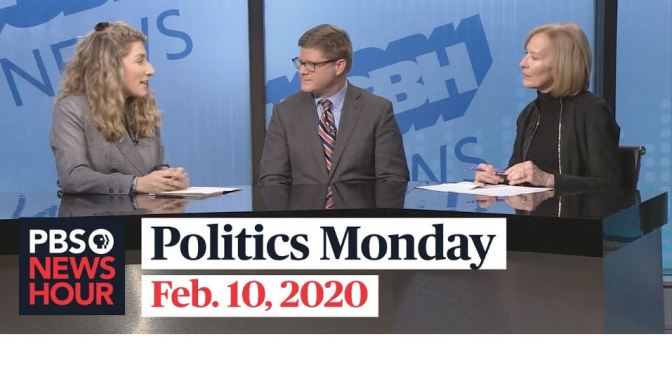
New Hampshire Public Radio’s Lauren Chooljian and James Pindell of the Boston Globe join Judy Woodruff to discuss the latest political news ahead of the New Hampshire Democratic primary, including voters’ levels of excitement and indecision, which candidates have momentum after the confusing Iowa caucuses and President Trump’s objective with rallying in New Hampshire the night before the election.
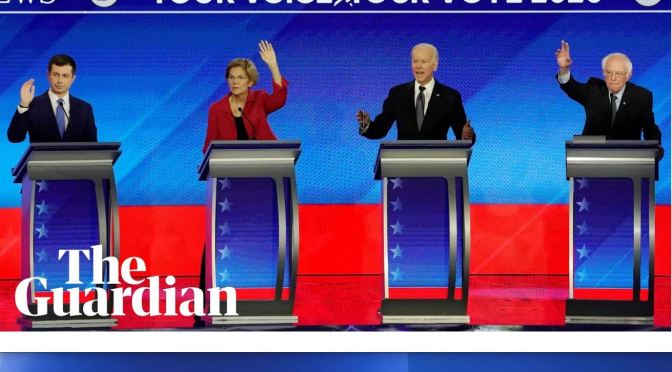
Democratic presidential candidates clashed in a televised debate in New Hampshire on Friday night at the end of a week dominated by the Iowa caucuses chaos and Donald Trump’s acquittal. Attacks were focused against Pete Buttigieg and Bernie Sanders, the two candidates who declared victory in Iowa, as the hottest topics discussed were healthcare and race.
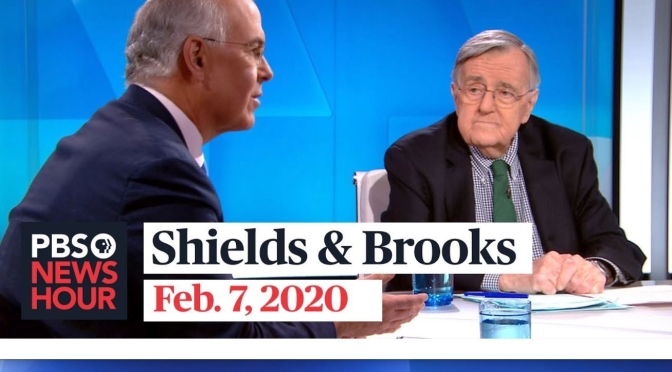
Syndicated columnist Mark Shields and New York Times columnist David Brooks join Judy Woodruff to discuss the week’s political news, including the Senate’s decision to acquit President Trump on both articles of impeachment, Trump’s State of the Union address, the messy Iowa Democratic caucus results and which 2020 Democrats have momentum going into the New Hampshire primary.
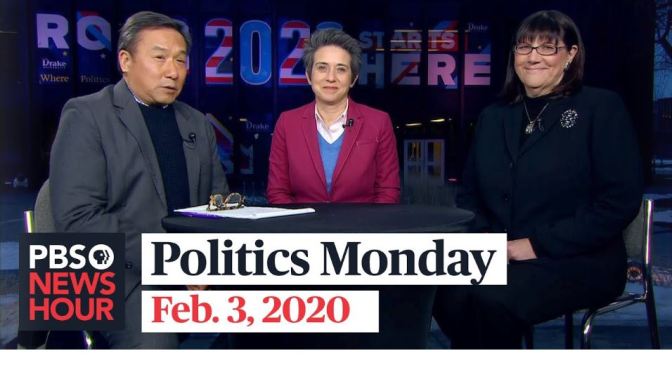
Amy Walter of the Cook Political Report and Radio Iowa’s O. Kay Henderson join John Yang in Iowa to discuss the latest political news, including what voters in Iowa’s first-in-the-nation 2020 Democratic caucuses are considering as they make their selections, polling updates on a “fluid” and “volatile” race and the ongoing pace of campaigning in Iowa.
New York Times columnist David Brooks and Washington Post columnist Ruth Marcus join Judy Woodruff to discuss the week’s political news, including the Senate’s decision not to call witnesses in President Trump’s impeachment trial, Republicans’ varying defenses of Trump’s conduct around Ukraine and what recent polling trends among 2020 Democrats suggest about Monday’s Iowa caucuses.
With voting for 2020 set to begin in Iowa on Monday, “The Daily” sat down with Dean Baquet, the executive editor of The New York Times, to discuss the lessons he — and the organization — learned from 2016. For more information on today’s episode, visit nytimes.com/thedaily.
The media’s coverage of the 2016 presidential campaign has come to be criticized for operating under three key assumptions: that Hillary Clinton was certain to be the Democratic nominee, that Donald Trump was unlikely to be the Republican nominee, and that once Clinton and Trump had become their party’s nominees, she would win.
Dean P. Baquet is an American journalist. He has been the executive editor of The New York Times since May 14, 2014. Between 2011 and 2014 Baquet was managing editor under the previous executive editor Jill Abramson. He is the first black American to serve as executive editor. Wikipedia
The Iowa caucuses are biennial electoral events for members of the Democratic and Republican Parties in the U.S. state of Iowa. Unlike primary elections in most other U.S. states, where registered voters go to polling places to cast ballots, Iowans instead gather at local caucus meetings to discuss and vote on the candidates. During both the presidential and midterm election seasons, registered Iowan voters vote in a per-precinct caucus for the party of which they are registered as a member.[1] The caucuses are also held to select delegates to county conventions and party committees, among other party activities.
NPR’s Tamara Keith and Amy Walter of the Cook Political Report join Judy Woodruff to discuss the latest political news, including whether enough Senate Republicans will vote to hear witnesses in the impeachment trial of President Trump and how 2020 presidential candidates are polling and campaigning in Iowa as its Democratic caucuses approach.
As the US Democratic party takes steps towards choosing who will attempt to win the presidency, Andrew Mueller discusses the candidates’ strengths and weaknesses and asks if they are up to the job.
Andrew is joined by Kara Voght, Asma Khalid, Jacob Parakilas, Olivia Nuzzi, Ryan Williams and Brian Klaas.
News, Views and Reviews For The Intellectually Curious


 Amy Walter of the Cook Political Report and Radio Iowa’s O. Kay Henderson join John Yang in Iowa to discuss the latest political news, including what voters in Iowa’s first-in-the-nation 2020 Democratic caucuses are considering as they make their selections, polling updates on a “fluid” and “volatile” race and the ongoing pace of campaigning in Iowa.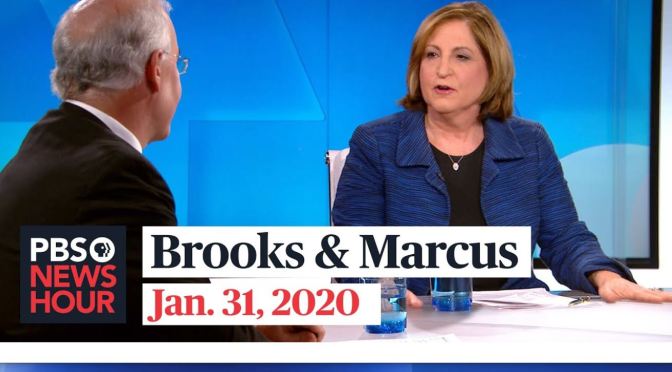
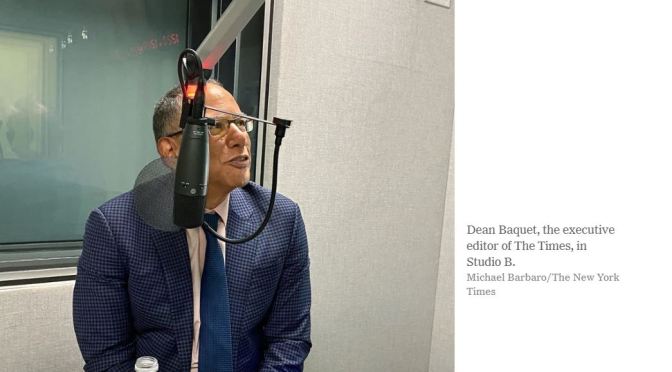
 With voting for 2020 set to begin in Iowa on Monday, “The Daily” sat down with

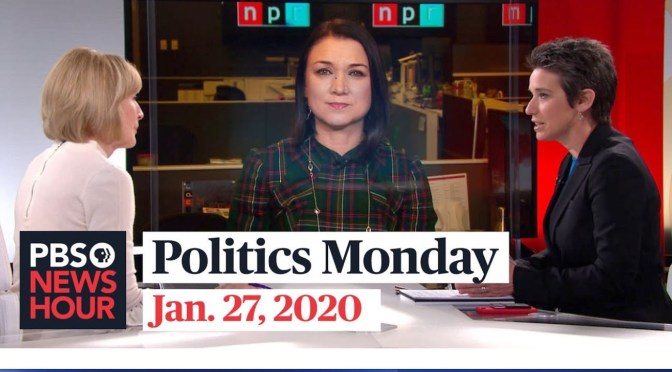

 As the US Democratic party takes steps towards choosing who will attempt to win the presidency, Andrew Mueller discusses the candidates’ strengths and weaknesses and asks if they are up to the job.
 Boomers Daily