Category Archives: Paleontology

Museum Views: The Isle Of Wight – Dinosaur Island

Natural History Museum (August 8, 2023) – The Isle of Wight is a traditional British holiday resort. It’s well-known for its beautiful sandy beaches, dramatic cliffs, stunning countryside and many tourist attractions.

Video timeline: 0:00 A brief history of the Isle of Wight 1:13 Theo Vickers tells us about the geology of the island 1:35 Jack Wonfor talks about the diversity of fossil remains and how it is the best place in Europe for dinosaur discovery 2:02 Dr Susannah Maidment explains as to why the island is so good for dinosaur finds 2:35 Over 20 dinosaur species so far have been discovered on the Isle of Wight 2:52 Prof Paul Barrett tells us about the early palaeontologists, including William Fox and Sir Richard Owen 3:15 The Isle of Wight early dinosaur discoveries helped form much of what we know about dinosaurs today. 3:50 Original dinosaur discoveries are still relevant today. 4:15 New dinosaurs still being found today. 4:33 The dinosaurs found on the Isle of Wight. Iguanodon, Polacanthus, Omithopods, Sauropods, Neovenator and Eotyrannus. 5:26 How could you make your own discovery? 5:34 Techniques for finding dinosaur remains. 6:06 Dinosaur Island, the Isle of Wight’s excellent museum of geology, where there are many dinosaurs and fossils. 6:52 Why the Isle of Wight is a lovely place to visit. 7:08 how it is so easy to find a fossil on the beach.

But did you know that it is also the best place in Europe to find dinosaurs and the fossils of numerous other prehistoric animals, from ammonites to alligators?

Join our palaeontologists Dr Susannah Maidment and Professor Paul Barrett, as well as local experts, to discover what makes the Isle of Wight so special to them.
Science: 2 Million Year-Old DNA Unveils Ancient Greenland Landscape

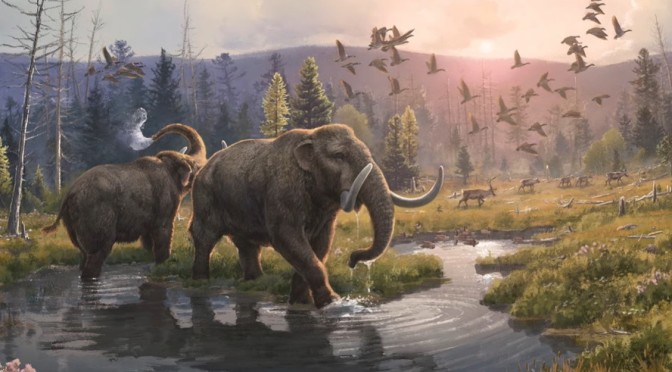
Two million year-old DNA found in frozen soil has been sequenced, revealing a surprising picture of an ancient landscape. Extinct creatures including, unexpectedly, elephant-like mastadons turn out to be among the beasts roaming Greenland. Researcher Eske Willerslev explains how DNA found in the environment can be used to reconstruct the past as so-called ‘eDNA’ becomes a vital tool for palaeontologists.

Read the paper: https://www.nature.com/articles/s4158…

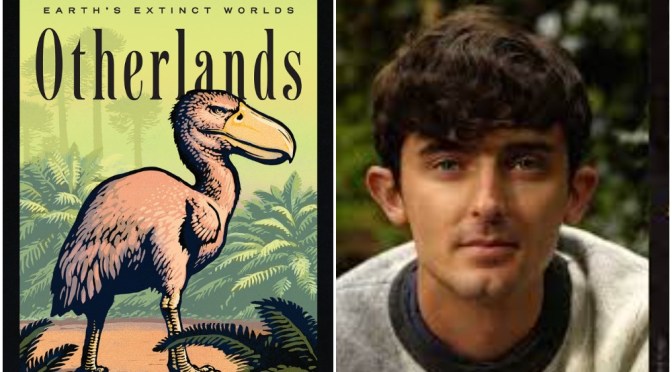
New Books: ‘Otherlands’ By Thomas Halliday (2022)

Views: Hunting Dinosaur Fossils In East Montana

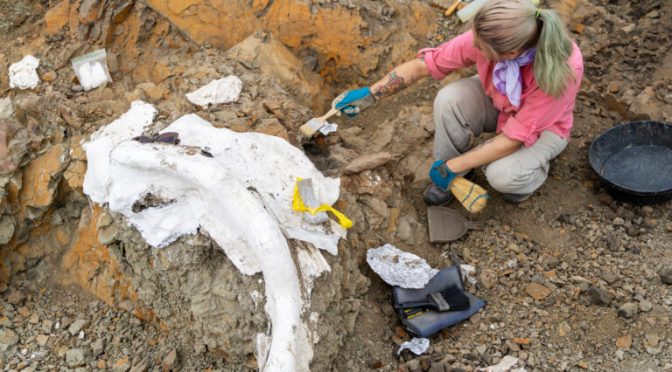
“It’s Cretaceous crime scene work: We have a body — how did it get here?” Kelsie Abrams, Fossil Lab Manager for the UW’s Burke Museum of Natural History and Culture, left her climate-controlled lab to wield jackhammers and shovels on a dusty hillside of the Hell Creek Formation in remote eastern Montana, possibly the best place in the world to find fossils from the Late Cretaceous. In this short film, follow Abrams and the dig team from the field to the lab, as they unravel mysteries from the end of the age of dinosaurs.

New Book Reviews: ‘A (Very) Short History Of Life On Earth’ By Henry Gee (2021)

Paleontology: Largest And Most Complete “T-Rex” Skeleton To Be Auctioned

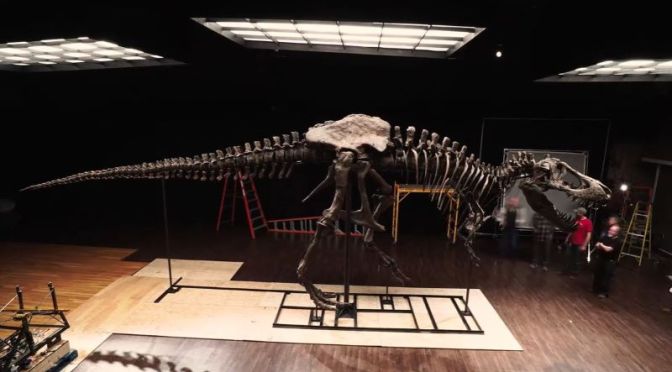
Watch how we installed STAN — one of the most complete T. rex skeletons ever found.

Unearthed in 1987, less than a century after the existence of Tyrannosaurus rex had first become known, STAN — named after his discoverer Stan Sacrison — represents one of the most complete fossil skeletons of the most famous dinosaur species ever to have lived.

Each individual fossil from STAN’s skeleton had to be prised carefully from the rock, then stored and recorded. Following more than 30,000 hours of labour, STAN was erected on a custom mount to reflect his former glory. He was given a public unveiling on Hill City’s Main Street in South Dakota, followed by his global ‘debut’ as the centrepiece of Japan’s T. rex World Exposition in 1995.

Evolution Of Dinosaurs: “The Golden Age Of Paleontology” (Video)

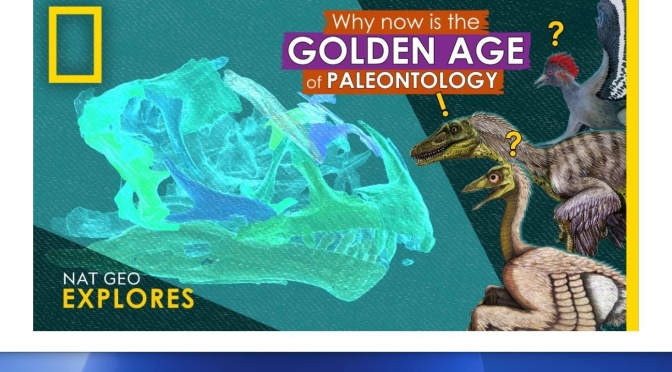
With advancements in technology and access to areas once considered unreachable, the field of paleontology is experiencing a golden age of discovery. Roughly 50 new dinosaur species are found each year, giving us a closer look at their prehistoric world like never before. Our previous understandings of how dinosaurs looked and evolved are being revolutionized, especially in regards to evidence that modern birds descended from dinosaurs. But while it’s exciting to see how incredibly far paleontology has come from the previous generations, it’s equally as thrilling to imagine what new discoveries lie just ahead.