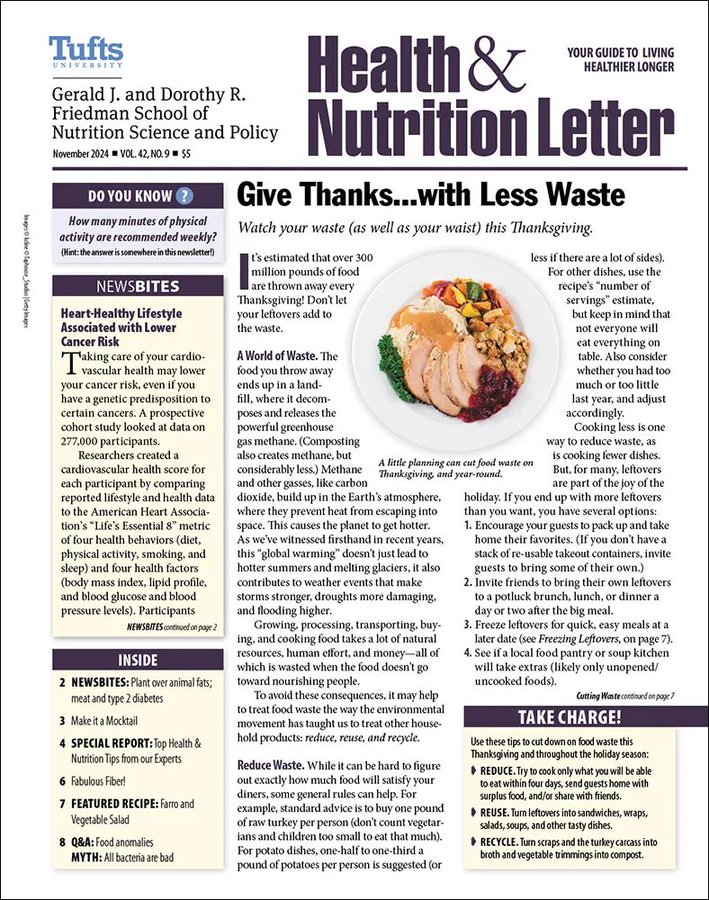
Tufts Health & Nutrition Letter (October 28, 2024): The new issue features ‘Give Thanks…with Less Waste’…

Tufts Health & Nutrition Letter (October 28, 2024): The new issue features ‘Give Thanks…with Less Waste’…
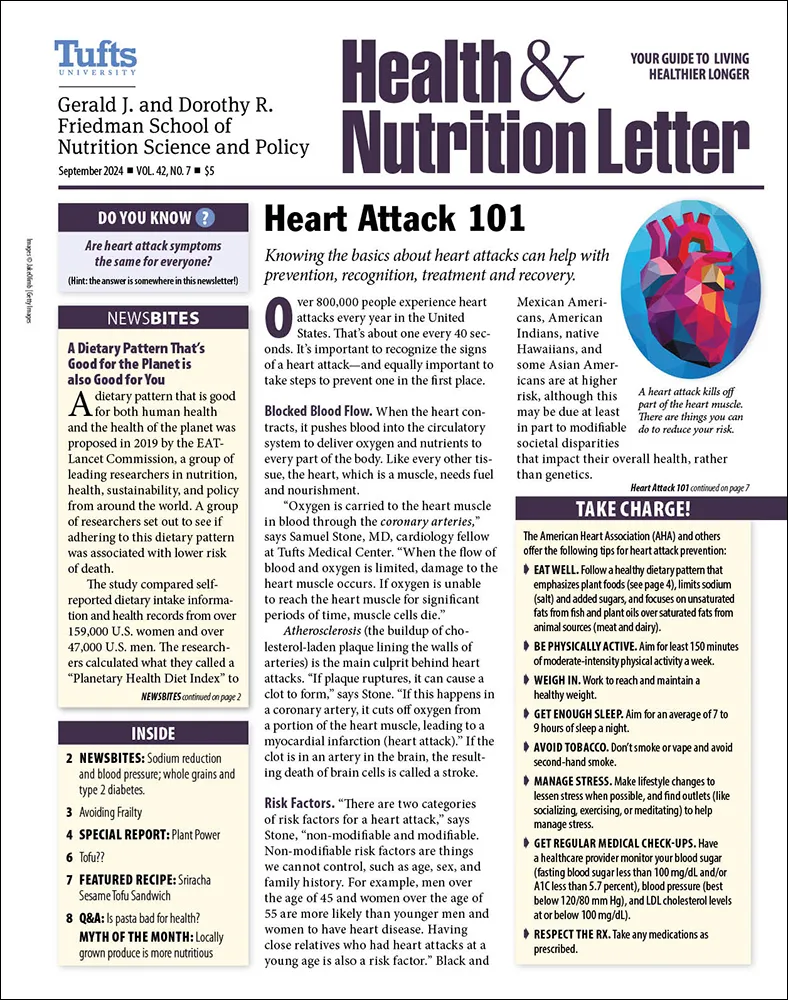

Tufts Health & Nutrition Letter (September 3, 2024): The new issue features Heart Attack 101; Avoiding Frailty; Special Report: Plant Power Tofu??; Is pasta bad for health? and Locally grown produce is more nutritious…
Physical frailty in older age can be avoided. Start now.

We all lose muscle and strength as we age. Frailty is something more. It can take away your health, your vitality, and your independence. But it’s not inevitable.
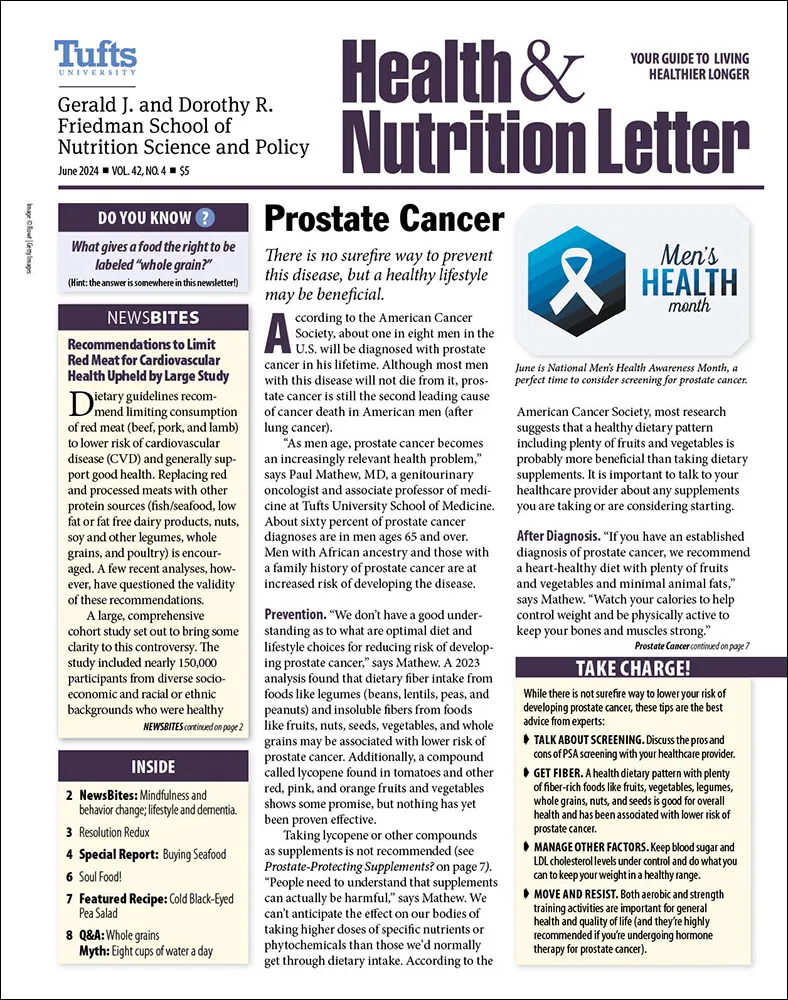
Tufts Health & Nutrition Letter (June 3, 2024): The new issue features ‘Prostate Cancer’ – There is no surefire way to prevent this disease, but a healthy lifestyle may be beneficial…
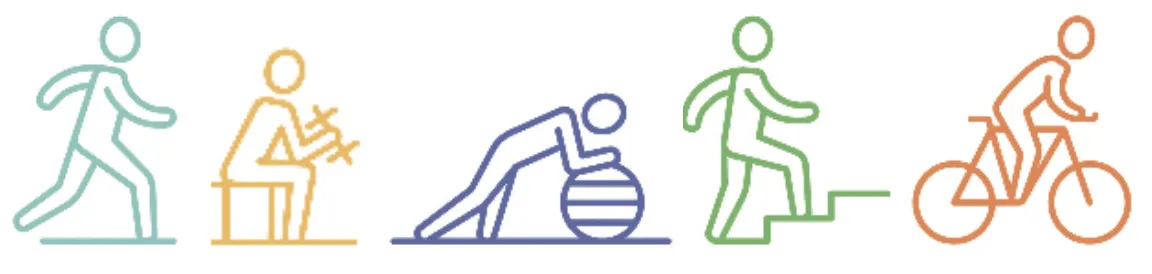
The benefits of physical activity are well-established. Not only can being physically active make you feel and perform better, but it can also reduce the risk of developing many chronic diseases, including cardiovascular disease, type 2 diabetes, and Alzheimer’s disease and other dementias.
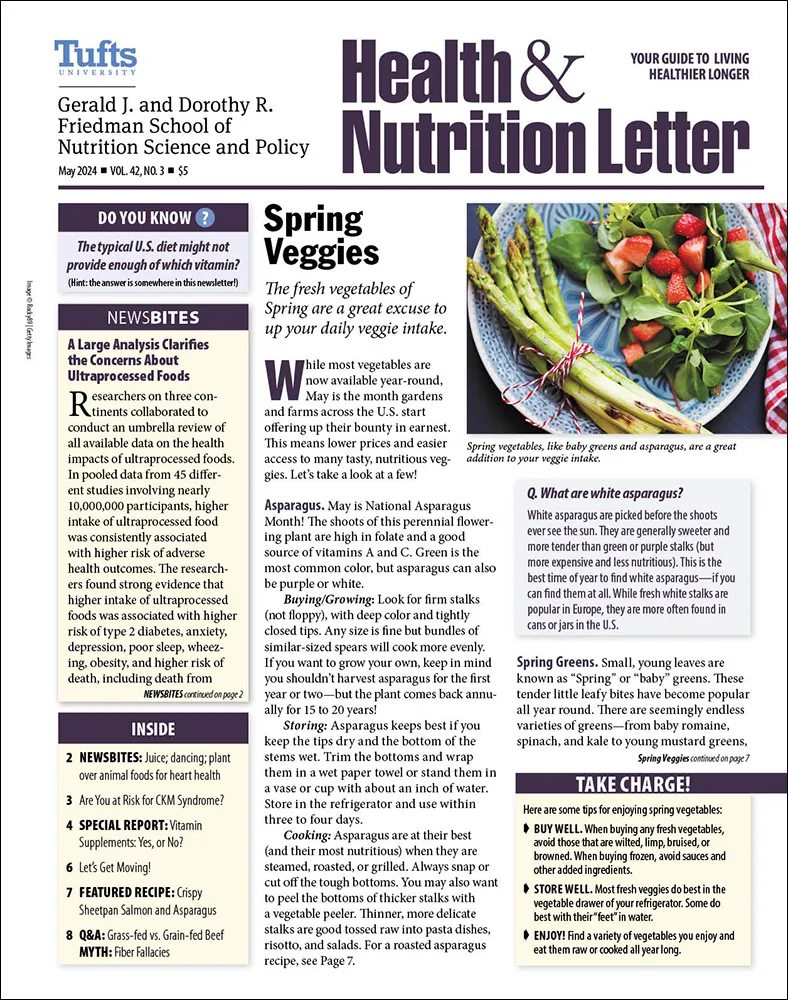
Tufts Health & Nutrition Letter (APRIL 30, 2024): The new issue features Vitamin Supplements – Yes, of No?; A large analysis clarifies the concerns about ultra-processed foods, and more….
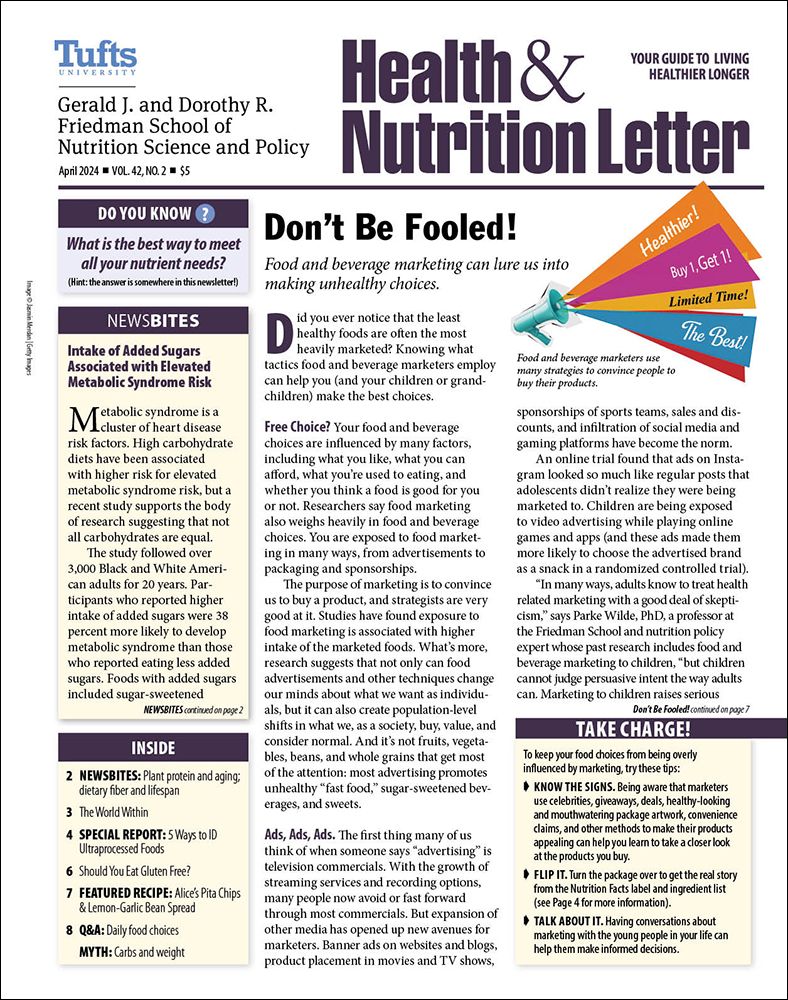
Tufts Health & Nutrition Letter (APRIL 2024): The new issue features 5 Ways to ID Ultraprocessed Foods; Should You Eat Gluten Free?; Q&A: Daily Food Choices and Myth: Carbs and Weight…
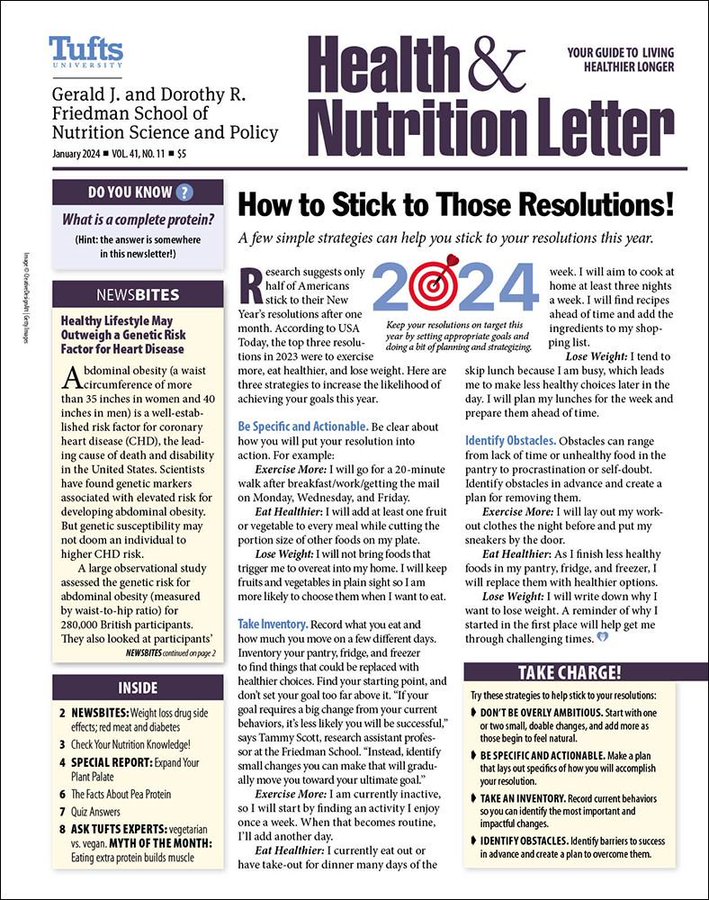
Tufts Health & Nutrition Letter (JANUARY 2024): The new issue features ‘Healthy Lifestyle May Outweigh a Genetic Risk Factor for Heart Disease; How to Stick to Those Resolutions!; Check Your Nutrition Knowledge; Special Report – Expand Your Plant Palate; The Facts About Pea Protein; and more…
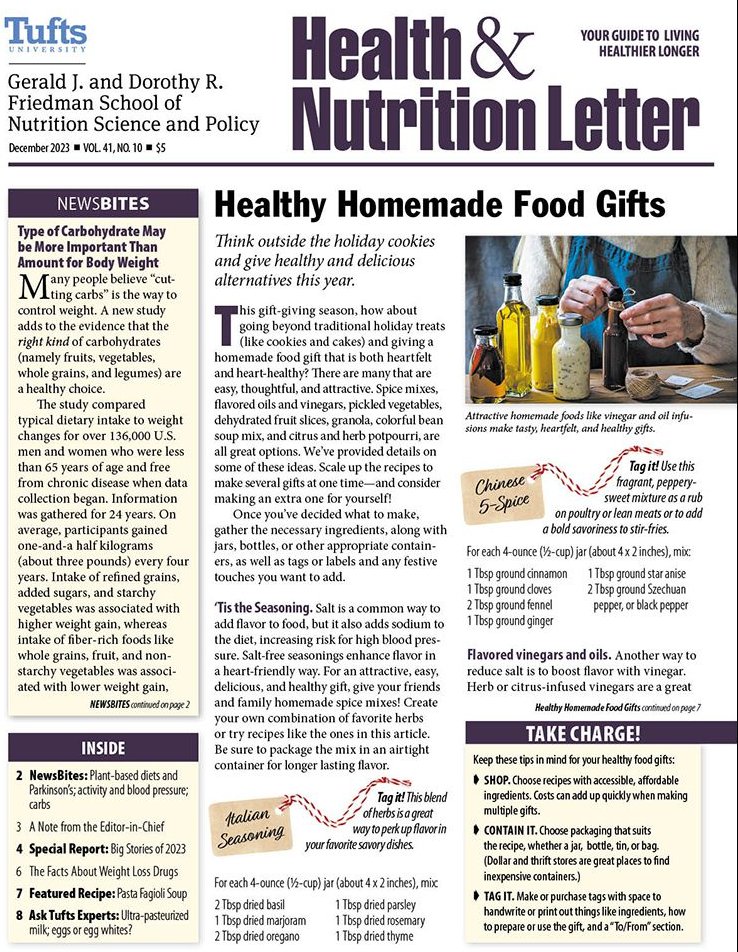
Tufts Health & Nutrition Letter (DECEMBER 2023): The new issue features Type of Carbohydrate May be More Important Than Amount for Body Weight; Beware of “Health-Washing” – Front package health claims can be misleading; Sweetened Beverages and Risk of Adverse Liver Outcomes…
Front-of-package health claims can be helpful—but they can also be misleading. Learn how to tell the difference.
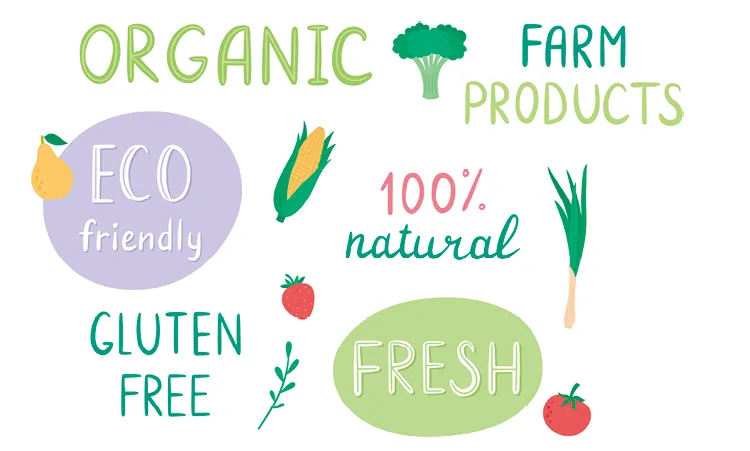
Some health claims on packages or in advertising may be inappropriate or even misleading. This is sometimes referred to as “health-washing.”
Common Claims. Even FDA-approved claims (like organic, “non” or “free,” reduced, light, natural, and naturally raised) don’t guarantee the food or beverage is an overall healthy choice. Here are some red flags to look out for:
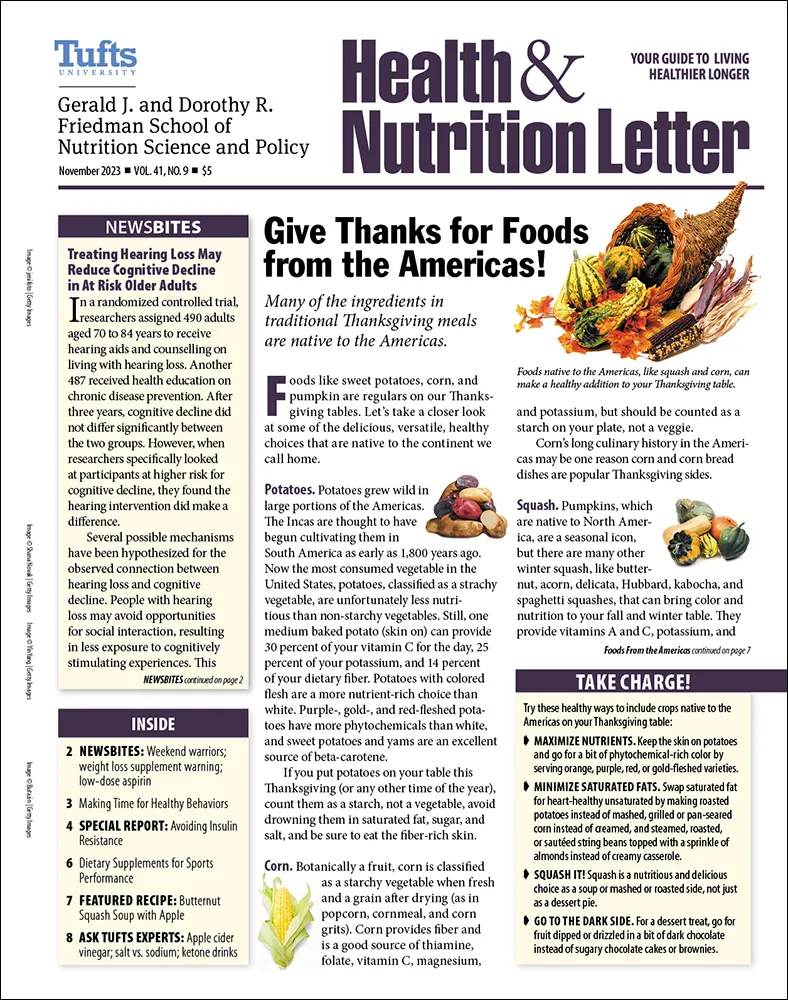
Tufts Health & Nutrition Letter (DECEMBER 2023):

This common condition increases the risk for type 2 diabetes, heart attack, and stroke. You may have it and not know it.
A little planning, prioritization, and creative problem solving can help you reach your behavior change goals.
Many of the ingredients in traditional Thanksgiving meals are native to the Americas.

Tufts Health & Nutrition Letter (August 2023):
There’s nothing like an icy drink or frozen treat to help tame summer swelter, keep you hydrated, quench thirst, and satisfy a sweet tooth. Unfortunately, cool treats are often over-processed and packed with added sugars. Keep your cool with less processed, fruit-forward icy drinks and treats that are as healthy …

 Boomers Daily


