

From a Grocery Dive online review:
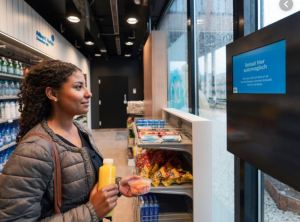 Shoppers have to use a debit card at the door to gain entry to the store. Then they can shop for products and just walk out. Upon exit, customers can verify their purchases against the receipt. No cash is accepted.
“This speaks to the original design thinking behind NanoStore: to make a plug-and-play modular store so it can be easily placed and moved where people need it the most,”
Albert Heijn first unveiled the fully digital store under its AH To Go name in September at its headquarters in Zaandam in the Netherlands, where it was open only to employees. The move to Schiphol Airport gives the company an opportunity to pilot the technology with consumers in a highly trafficked area.
To read more: https://www.grocerydive.com/news/ahold-delhaizes-nanostore-heads-to-the-airport/568170/

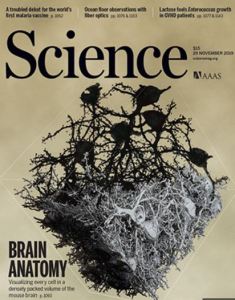 They found that these physically active mice had fewer inflammatory cells (leukocytes) than sedentary mice, an effect they traced to diminished activity of hematopoietic stem and progenitor cells (HSPCs). The lower activity of HSPCs was due at least in part to exercise-induced reduction in the levels of leptin, a hormone produced by fat tissue that regulates cells within the hematopoietic bone marrow niche.
 Syndicated columnist Mark Shields and New York Times columnist David Brooks join Judy Woodruff to discuss the week in politics, including public opinion and legal debate in the impeachment inquiry into President Trump, the shifting race among 2020 Democrats and what we’re thankful for during this holiday week.
 50 years ago, people used film cameras just as we use smartphones in the age of Instagram. They photographed their meals, holidays, loved ones, celebrations, and family reunions. Imagining the past lives of these strangers is the beauty and mystery of The Anonymous Project, which curates just under 300 images from this vast collection of 700,000+ Kodachrome slides. The places, dates, and people may be unknown, but the stories in these snapshots are universally familiar.
 Shortly after George Orwell’s death in 1950, his widow Sonia was visited in London by two representatives of the American film producer, Louis de Rochemont. They sought the rights to Orwell’s novel from five years earlier, Animal Farm. It’s said Sonia took some convincing but eventually agreed, on the promise that de Rochemont would introduce her to her hero, Clark Gable.
 A conventional, live-action adaptation was out of the question given that the book’s main characters were farmyard animals, so an animated movie was decided upon instead. De Rochemont chose to have it made in the UK rather than the US — partly because of lower production costs, partly because he admired the work of British husband-and-wife duo
 AHEAD OF the 2020 American presidential election, John Prideaux, The Economist‘s US editor, talks to Bill Weld, a former governor of Massachusetts,

 “If one imagines a list of the greatest, most influential houses of the twentieth century, it seems highly likely that the mid-century period will dominate,” writes Bradbury in the book’s introduction, going on to name such famous edifices as the three famous glass houses by Philip Johnson, Ludwig Mies van der Rohe, and Lino Bo Bardi, respectively; Richard Neutra’s Kaufmann House; and Luis Barragán’s Cuadra San Cristóbal. “One could, of course, go on.…” he writes.
 Designed to universally retrofit onto most curtain rods, the SwitchBot comes with two hooks that hold it in place and a wheel that moves the bot left or right. Place the SwitchBot between the first and second loops of your curtain or blind, and the bot can now, on command, run up and down the curtain rod, maneuvering your curtains open or closed. SwitchBot runs on an app, but even supports voice commands via your phone or smart speaker, effectively allowing you to have your own “Let there be light” moment by commanding the curtains to open at will. IFTTT and shortcuts support even lets you sync SwitchBot with your alarm, or with the time of the day, thanks to the bot’s in-built light sensor.

 Infections with the Enterococcus bacterium are a major threat in healthcare settings. They can lead to inflammation of the colon and serious illnesses such as bacteremia and sepsis, as well as other complications.
 Their previous research has shown that when harmless strains of microbes are wiped out, often due to treatment with antibiotics, Enterococcus and other harmful types of bacteria can take over due to lack of competition. As part of the new study, which included analysis of microbiota samples from more than 1,300 adults having BMTs, the team confirmed the link between Enterococcus and GVHD.
 Boomers Daily