Patriarchy, Feminism and the Illusion of Progress

By Renee Dellar, Founder, The Learning Studio, Newport Beach, CA
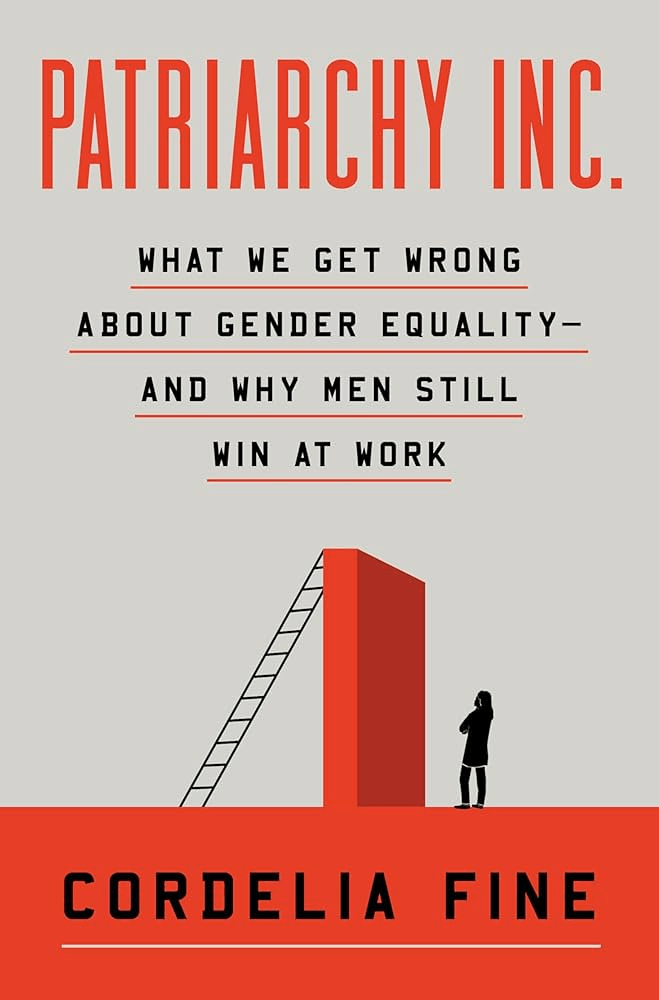
We often imagine patriarchy as a relic—obvious, archaic, and easily challenged. But as generations of feminist thinkers have long argued, and as Cordelia Fine’s Patriarchy Inc. incisively confirms, its enduring power lies not in its bluntness, but in its ability to mutate. Today, patriarchy doesn’t need to roar; it whispers in algorithms, smiles from performance reviews, and thrives in wellness language. This essay argues that Fine’s emphasis on workplace inequality, while essential, is incomplete without a parallel reckoning with patriarchy’s grip on domestic life—and more profoundly, without a reimagining of gender itself. What we need is a psychological evolution: a balanced embodiment of both feminine and masculine energies in all people, if we are to unbuild a system that survives by design.

In 1949, Simone de Beauvoir wrote in The Second Sex, “One is not born, but rather becomes, a woman.” With that sentence, she shattered the myth of biological destiny. Womanhood, she claimed, was not innate but culturally scripted—a second sex constructed through tradition, religion, and expectation. Patriarchy, in her analysis, was no divine order but a human invention: an architecture of dominance designed to reproduce itself through social roles. Fine’s forthcoming Patriarchy Inc. (August 2025) echoes and updates this insight with sharp empirical rigor. In the workplace, she shows, patriarchy has not disappeared—it has evolved. It now markets fairness, monetizes empowerment, and offloads systemic change onto individuals via coaching, productivity hacks, and “confidence workshops” that sell resilience as a substitute for reform.

What makes Fine’s critique vital is not merely that patriarchy persists—it’s how it thrives beneath the very banner of equality. It now cloaks itself in metrics, missions, and diversity gloss. Corporate offices tout inclusion while continuing to reward masculine-coded behaviors and promote male leadership: 85% of Fortune 500 CEOs remain men. Patriarchy, we learn, is not a crumbling wall—it is a self-repairing system. To dismantle it, we must go deeper than metrics. We must examine the energies it suppresses and rewards.

Masculine and Feminine Traits: A New Grammar of Justice

To understand the psychological mechanics of patriarchy, we must revisit the traits society has long coded as masculine or feminine—traits that are neither biological imperatives nor moral absolutes, but social energies shaped over centuries.

  • Masculine traits are typically associated with competition, independence, assertiveness, strength, and linear action. Taken too far, they veer into domination.
  • Feminine traits, by contrast, are linked to empathy, care, intuition, collaboration, and receptivity—qualities that bind rather than divide.

These traits exist in all people. Yet patriarchy has historically overvalued the former and devalued the latter, punishing men for softness and women for strength. A just society must not erase these differences but balance them—within institutions, relationships, and most importantly, within the self.

Simone de Beauvoir: The Architecture of Otherness

De Beauvoir’s diagnosis of woman as “Other”—the deviation from the male norm—remains uncannily relevant. Today’s workplaces replicate that Othering in subtler ways: through dress codes, tone policing, and leadership norms that penalize feminine expression. As Fine notes, women must be confident, but not cold; nurturing, but not weak; assertive, but not abrasive. In other words: perfect. The corporate woman who succeeds by male standards is often punished for violating feminine ideals. The double bind remains—only now it wears a blazer and carries a badge that says “inclusive.”

Friedan, Domesticity, and the New Containment

In 1963, Betty Friedan exposed what she called “the problem that has no name”: the stifling despair of suburban domesticity. Today, that problem has been rebranded. The girlboss, the multitasking mother, the curated freelancer—each is sold as empowered, even as she shoulders the same disproportionate domestic load. Women continue to dominate sectors like education and healthcare, often underpaid and undervalued despite being deemed “essential.” These roles, Fine shows, are praised symbolically while marginalized materially. Even progressive policies like flexible hours and parental leave frequently assume women are the default caregivers, reinforcing the burden Friedan tried to name.

Millett’s Sexual Politics: The Myth of Neutrality

Kate Millett’s Sexual Politics reframed patriarchy as institutional, not interpersonal. Literature, law, and culture all naturalized male dominance. Fine brings that lens to the boardroom. Modern hiring algorithms and promotion pathways may appear neutral, but they are encoded with values that reward masculine norms. Women are urged to “lean in,” but warned not to lean too far. Diversity initiatives often succeed at optics, but fail to shift power: the faces at the table change, yet the hands on the levers remain the same. As Fine argues, equity requires more than visibility—it demands structural rebalancing.

Lorde and the Failure of Inclusion Without Power

Audre Lorde warned that “the master’s tools will never dismantle the master’s house.” Too often, DEI programs use those very tools. Difference is celebrated, but only within safe boundaries. Women of color may be promoted, but without adequate mentorship, institutional backing, or decision-making power, the gesture risks becoming symbolic. Fine channels Lorde’s insight: inclusion without transformation is corporate theater. Real justice requires not just a change in personnel, but a change in priorities, metrics, and values.

Gerda Lerner and the Machine That Adapts

In The Creation of Patriarchy, Gerda Lerner traced patriarchy’s roots to law, religion, and economy, showing it as a machine designed for self-preservation. Fine updates this metaphor: the machine now runs on data, flexibility, and illusion. Today’s labor markets reward 24/7 availability, mobility, and presenteeism—conditions often impossible for caregivers. When women enter male-dominated fields, prestige and pay often decline. The system adapts by downgrading the value of women’s gains. Patriarchy doesn’t just resist change—it mutates in response to it.

The Invisible Burnout: When Women Do Both

As women are pushed to succeed professionally, they’re also expected to maintain responsibility for domestic life. This dual burden—emotional labor, mental load, caregiving—is not equally shared. While women have been pressured to adopt masculine-coded traits to succeed, men have faced little reciprocal cultural push to develop their feminine sides. As a result, many women are performing two identities—professional and maternal—while men remain tethered to one. This imbalance is not just unfair—it is unsustainable.

Men Must Evolve Too: The Will to Change

Cordelia Fine joins American author, theorist, educator, and social critic bell hooks in arguing that men must be part of the liberation project—not as allies, but as participants in their own healing. In The Will to Change, hooks argued that patriarchy damages men by severing them from their emotions, from intimacy, and from ethical wholeness. Fine builds on this, showing how men are rewarded with status but robbed of connection.

What does transformation look like for men? Not emasculation, but evolution:

  • Self-awareness: recognizing one’s emotions, triggers, and limitations.
  • Self-regulation: managing impulses with maturity and intention.
  • Self-compassion: replacing shame with acceptance and care.

These are not feminine traits—they are human ones. And leaders who embody both emotional intelligence and strategic clarity are not only more ethical—they are more effective. Institutions must reward this integration, not punish it.

From Balance to Redesign: What Fine Urges

Fine’s prescriptions are bold:

  • Assume all workers have caregiving roles—not just mothers.
  • Redesign success metrics to value care, collaboration, and emotional labor.
  • Teach gender equity not as tolerance, but as a foundational moral principle.
  • Foster this evolution early—at home, in classrooms, in culture.

This is not incremental reform. It is a new architecture: one that recognizes care as central, emotional labor as valuable, and balance as a mark of strength.

Conclusion: The System That Learns, and the Refusal That Liberates

Patriarchy has endured not because it hides, but because it learns. As Simone de Beauvoir revealed its ontological design, and Gerda Lerner its historical scaffolding, Cordelia Fine now reveals its polished upgrade. Patriarchy today sells resistance as a brand, equity as a product. It launders its image with the very language that once opposed it.

We no longer suffer from a lack of critique. We suffer from a failure to redesign. And so, as Audre Lorde warned, our task is not to decorate the master’s house—it is to refuse it. Not through token representation, but through radical revaluation. Not through balance sheets, but through balanced selves.

To dismantle patriarchy is not to flip the power dynamic. It is to end the game altogether. It is to build something entirely different—where human worth is not ranked, but recognized. Where power is not hoarded, but shared. Where every child, regardless of sex, is raised to lead with empathy and to love with courage.

That future begins not with a program, but with a decision. To evolve. To balance. To refuse the illusion of progress and demand its substance.

RENEE DELLAR WROTE AND EDITED THIS ESSAY UTILIZING AI
NATIONAL REVIEW – SEPTEMBER 2025

National Review (@NRO) / X

NATIONAL REVIEW (July 25, 2025): The latest issue features ‘A New Arsenal of Democracy’ – Defense Industry Special Issue

Tucker Carlson’s Dark Turn

He can’t stop talking about the Jews

Jon Stewart’s F-Bomb Chorus

The minstrelsy of late-night-TV activism. Armond White

What We’re Selling to Ukraine

A perusal of recent U.S. arms sales to Ukraine, approved by the Pentagon office that keeps track of American weapons and supply stockpiles. Jim Geraghty

Moby-Dick, Perpetual Inquiry, and the Sublime

By Intellicurean, July 25, 2025

“Call me Ishmael.”

This iconic first line anchors one of the most enduring openings in American literature. Yet before it is spoken, before Ishmael’s voice emerges on the page, we encounter something more unusual: a kind of literary invocation. The opening pages of Moby-Dick—those dense, eclectic “Extracts” quoting scripture, classical literature, scientific treatises, and forgotten travelogues—do not serve as a traditional preface. Instead, they operate like a ritual threshold. They ask us to enter the novel not as a narrative, but as a vast textual cosmos.

Melville’s fictional “sub-sub-librarian” gathers fragments from Job to Shakespeare to obscure whaling reports, assembling a chorus of voices that have, across centuries, spoken of the whale. This pre-narrative collage is more than ornamentation. It proposes a foundational idea: that the whale lives not only in the ocean, but in language. Not only in myth, but in memory. Not only in flesh, but in thought.

Before the Pequod ever sets sail, Melville has already charted his central course—into the ocean of human imagination, where the whale swims through texts, dreams, and questions that refuse easy resolution.


Proof of Two Lives

“There’s something I find strangely moving about the ‘Extracts’ section,” remarks literary critic Wyatt Mason on The World in Time, a podcast hosted by Lewis Lapham. “It’s proof of two kinds of life. The life of the creature itself, and the life of the mind—the attention we pay over time to this creature.”

Mason’s comment offers a keel for the voyage ahead. In Moby-Dick, the whale is not simply an animal or antagonist. It becomes a metaphysical magnet, a mirror for human understanding, a challenge to the limits of knowing. The “Extracts” and “Etymologies,” often dismissed as digressions, are in fact sacred rites—texts that beg to be read with reverence.

In teaching the novel to incarcerated students through the Bard Prison Initiative, Mason and fellow writer Donovan Hohn describe how these obscure, labyrinthine sections are received not as trivia but as scripture. The students descend into the archive as divers into a shipwreck—recovering fragments of forgotten wisdom, learning to breathe in the pressure of incomprehensibility. “The whale,” Mason repeats, “resides or lives in texts.” And what a library it is.


The Whale as Philosophy

“All my means are sane, my motive and my object mad.”

Harold Bloom, the late sage of literary criticism, would have nodded at Mason’s insight. For Bloom, Moby-Dick was not merely a novel, but “a giant Shakespearean prose poem.” Melville, he believed, was a tragedian of the American soul. Captain Ahab, mad with self-reliance, became for Bloom a Promethean figure—bound not by divine punishment, but by his own obsessive will.

In Bloom’s classroom at Yale in 2011, there were no lecture notes. He taught Moby-Dick like a jazz solo—improvised, living, drawn from a lifetime of memory and myth. “It’s very unfair,” he said, reflecting on the whale hunts—great mammals hunted with harpoons and lances. Yet the Pequod’s most moral man, Starbuck, is also its most proficient killer. A Quaker devoted to peace, he is also the ship’s deadliest lance. This contradiction—gentleness and violence braided together—is the essence of Melville’s philosophy.

The whale, in Bloom’s reading, is sublime not because it symbolizes any one thing—God, evil, justice, nature—but because it cannot be pinned down. It is an open question. An unending inquiry. A canvas for paradox. “Heaven help them all,” Bloom said of the Pequod’s doomed crew. “And us.”


Melville the Environmentalist

“There she blows! There she blows! A hump like a snow-hill! It is Moby Dick!”

Where Bloom heard Melville’s music in metaphor and myth, Richard J. King hears it in science. In Ahab’s Rolling Sea: A Natural History of Moby-Dick (2019), King charts a different map—overlaying Melville’s imagined ocean onto real tides, real whales, real voyages. He sails replica whalers, interviews marine biologists, pores over Melville’s notebooks.

His inquiry begins with a straightforward question: could a sperm whale really destroy a ship? Historical records suggest yes. But King doesn’t stop at anatomy. His portrait of Melville reveals a proto-environmentalist, someone who revered the sea not just as symbol but as system. Melville’s whale, King argues, is a creature of wonder and terror, not just prey but presence.

In an age of ecological crisis, King reframes Moby-Dick as a book not just of metaphor but of environmental ethics. Ishmael’s meandering digressions become meditations on the ocean as moral agent—an entity capable of sustaining and destroying. The sea is no backdrop; it is a character, a god, an intelligence. Melville’s ocean, King suggests, humbles the hubris of Ahab and calls readers to ecological humility.


Rediscovery in Dark Times

“Strike through the mask! How can the prisoner reach outside except by thrusting through the wall?”

Aaron Sachs, in Up From the Depths: Herman Melville, Lewis Mumford, and Rediscovery in Dark Times (2022), picks up the whale’s trail in the 20th century. In 1929, as the world plunged into the Great Depression, the writer and historian Lewis Mumford resurrected Melville from literary oblivion. His biography of the long-forgotten author recast Melville not as a failure, but as a visionary.

For Mumford, Melville was a kindred spirit—a man who, long before the term “modernity” took hold, had already seen its psychic cost. As Mumford watched the rise of industry, mass production, and spiritual exhaustion, he found in Melville a dark prophet. Ahab’s fury was not personal—it was civilizational.

Critics have praised Sachs’s biography as timely and thoughtful. Its thesis is clear: in times of disorientation, literature does more than reflect the world—it refracts it. It preserves vital truths, repurposing them when our present crises demand older insights.

In Sachs’s telling, Moby-Dick is not just a classic; it’s a living text. A lighthouse in the storm. A warning bell. A whale-shaped mirror reflecting our fears, failures, and persistent hope.


The Whale in the Classroom

“Ignorance is the parent of fear.”

The classroom, as Sachs and Mason both suggest, becomes a site of literary resurrection. In prison education programs, students discover themselves in the “Extracts”—not despite their difficulty, but because of it. The very act of grappling with Melville’s arcane references, strange structures, and encyclopedic digressions becomes an act of reclamation.

To teach Moby-Dick in a prison is to raise a sunken ship. Its sentences, like salvaged artifacts, reveal new meaning. Forgotten knowledge becomes fuel for rediscovery. Students, many of whom have been dismissed by society, see in Melville’s endless inquiry a validation of their own intelligence and complexity.

Harold Bloom taught Moby-Dick the same way. Every reading was new. No fixed script, only the swell of thought. He modeled Melville’s method: trust the reader, trust the text, trust the mystery.

The whale resists capture—literal and interpretive. It is not a symbol with a key, but a question without an answer. That resistance is what makes Moby-Dick enduring. It insists on being re-read. Re-thought. Re-discovered.


The Archive That Breathes

“It is not down in any map; true places never are.”

Taken together, the voices of Wyatt Mason, Harold Bloom, Richard J. King, and Aaron Sachs reveal Moby-Dick as something more than literature. It is a breathing archive—a repository of imagination, inquiry, and paradox.

Within its pages dwell theologies and taxonomies, drama and digression, sermons and sea shanties. It houses the ethical weight of ecology, the fury of Ahab, the wonder of Ishmael, and the ghosts of Melville’s century. It defies genre, resists reduction, and insists on complexity.

Melville did not write to close arguments but to open them. He did not believe in neat endings. His whale is the quintessential “true place”: uncapturable, immeasurable, endlessly sublime.

And yet we return. We keep hunting—not with harpoons, but with attention. With interpretation. With awe.


A Final Breach

What, then, do we do with Moby-Dick in the twenty-first century? How do we reconcile Ahab’s consuming fury with Ishmael’s contemplative awe? How do we carry Bloom’s Prometheus, King’s Leviathan, Sachs’s resurrected Melville, and Mason’s classroom in a single imagination?

We read. We reread. We become “sub-sub-librarians”—archivists of ambiguity, curators of complexity. We do not read Moby-Dick for closure. We read it to learn how to remain open—to contradiction, to paradox, to mystery.

But what if we, like Captain Ahab, set off to find Moby Dick and never found the whale?

What if all our intellectual harpoons missed their mark? What if the whale was never there to begin with—not as symbol, not as certainty, not as prize?

Would we call that failure?

Or might we discover, like Ishmael adrift on the coffin-raft, that survival is not about conquest, but endurance? That truth lives not in the kill, but in the quest?

Perhaps Melville’s greatest lesson is that the whale must never be caught. Its sublimity lies in its elusiveness—in its capacity to remain just beyond the reach of definition, control, and meaning. It breaches in metaphor. It disappears in digression. It waits—not to be captured, but to be considered.

We will never catch it. But we must keep following.

For in the following, we become something more than readers.
We become seekers.

THIS ESSAY WAS WRITTEN BY INTELLICUREAN UTILIZING AI

THE NEW YORK TIMES – FRIDAY, JULY 25, 2025

Columbia Walked a Tightrope to $200 Million Settlement With Trump

Talks in Washington. An expert on negotiation. The university chose cooperation with President Trump over litigation, a strategy both pilloried and praised.

Ahead of Shutdown Deadline, Democrats Face a Dilemma on Spending

Democrats are leery of supporting Republican spending measures after the White House forced through clawbacks of funding already approved by Congress.

Gabbard’s Attacks on Barack Obama Put the Attorney General in a Tough Spot

Tulsi Gabbard, the director of national intelligence, gave the Justice Department little warning before demanding an investigation of the former president.

The Conservative Crusade That’s About So Much More Than Epstein

The long history of the right’s obsession with child trafficking means it won’t be easy for Trump to make this story disappear.