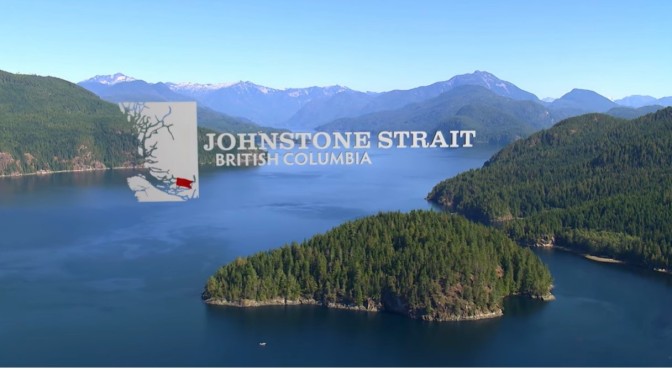

The documentary starts at Johnston Strait before moving further north to the Queen Charlotte Strait and the Broughton Archipelago, coming across stunning natural landscapes and historical sites of the First Nations peoples.

The documentary starts at Johnston Strait before moving further north to the Queen Charlotte Strait and the Broughton Archipelago, coming across stunning natural landscapes and historical sites of the First Nations peoples.

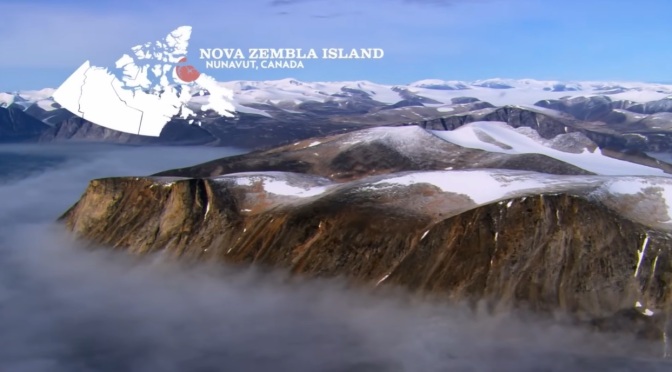
From the towering ice fields lining the waters of Eclipse Sound in the Arctic Archipelago, to the natural wonders of Sirmilik National Park.
Covering 1.5 million square kilometres, or about one seventh of Canada, the Northern Arctic Ecozone extends over most of the nonmountainous areas of the arctic islands and parts of northeastern Keewatin, western Baffin Island, and northern Quebec. It is among the largest arctic ecosystems in the world.
Winters pass in near darkness with the polar night measured in weeks and months rather than hours. Snow may fall any month of the year and usually remains on the ground from September to June. Extremely low temperatures and an average precipitation of about 200 mm per year characterize the climate. When not covered in snow, much of the landscape is typified by barren plains covered in frost-patterned soils and the occasional rock outcrop.
A designated UNESCO World Heritage site, Banff is also Canada’s oldest national park and one of its most popular. Encompassing 6,641 square kilometer of pristine alpine wilderness, the park sits in the heart of the Canadian Rockies and is home to some of North America’s most spectacular scenery. Emerald lakes, snowcapped peaks, waterfalls, glaciers and rich forest provide the backdrop to a wealth of wildlife.
Banff National Park is Canada’s oldest national park, established in 1885. Located in Alberta’s Rocky Mountains, 110–180 kilometres west of Calgary, Banff encompasses 6,641 square kilometres of mountainous terrain, with many glaciers and ice fields, dense coniferous forest, and alpine landscapes.
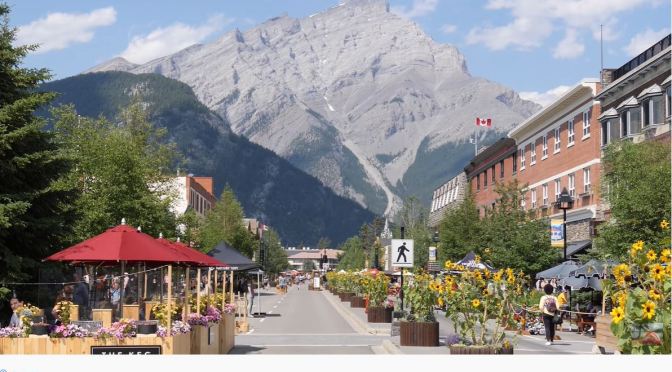
Banff is a resort town in the province of Alberta, located within Banff National Park. The peaks of Mt. Rundle and Mt. Cascade, part of the Rocky Mountains, dominate its skyline. On Banff Avenue, the main thoroughfare, boutiques and restaurants mix with château-style hotels and souvenir shops. The surrounding 6,500 square kilometres of parkland are home to wildlife including elk and grizzly bears.
Located in the heart of Banff National Park, a UNESCO World Heritage Site, the world famous Banff Springs hotel stands as a landmark in the picturesque alpine town of Banff, Alberta. Canada’s “Castle in the Rockies,” has been providing legendary hospitality to our guests for more than 130 years.
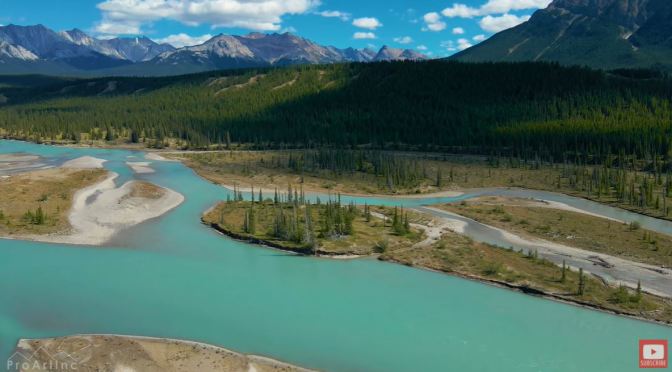
The Cline River is a short river in western Alberta, Canada. It flows from Pinto Lake and joins the North Saskatchewan River at Lake Abraham in west-central Alberta.
Gros Morne National Park is a unique place where everchanging weather and unique geology come together to create unexpected and captivating scenes. After many trips to this wonderful place, 2020 was the decisive year where I finally took the time to capture it’s varying moods through the medium of timelapses.
Gros Morne National Park is a Canadian national park and world heritage site located on the west coast of Newfoundland. At 1,805 km2 (697 sq mi), it is the second largest national park in Atlantic Canada after Torngat Mountains National Park, which has an area of 9,700 km2 (3,700 sq mi).
The park takes its name from Newfoundland’s second-highest mountain peak (at 806 m or 2,644 ft) located within the park. Its French meaning is “large mountain standing alone,” or more literally “great sombre.” Gros Morne is a member of the Long Range Mountains, an outlying range of the Appalachian Mountains, stretching the length of the island’s west coast. It is the eroded remnants of a mountain range formed 1.2 billion years ago. In 1987, the park was awarded World Heritage Site status by UNESCO because “The park provides a rare example of the process of continental drift, where deep ocean crust and the rocks of the earth’s mantle lie exposed.”[1]
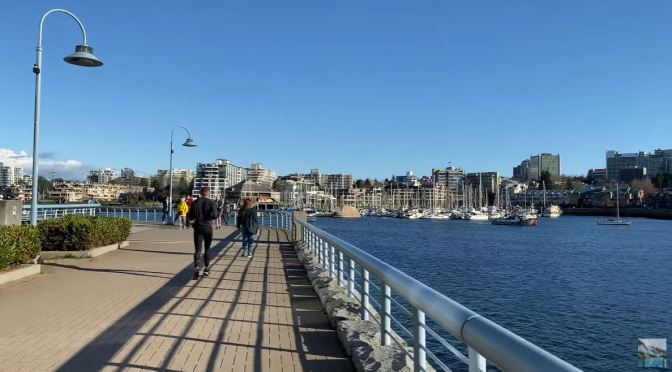
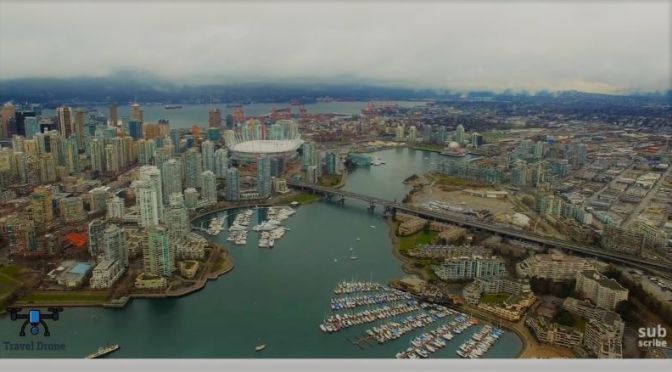
Vancouver, a bustling west coast seaport in British Columbia, is among Canada’s densest, most ethnically diverse cities. A popular filming location, it’s surrounded by mountains, and also has thriving art, theatre and music scenes. Vancouver Art Gallery is known for its works by regional artists, while the Museum of Anthropology houses preeminent First Nations collections.
Filmed and Edited by: Sergii Bogomolov
The film was produced over 5 years and includes scenery of beautiful British Columbia, Canada.
The short presents rarely photographed nature phenomena like temperature inversion aka ‘above the clouds’, Earth shadow, sunbeams / God rays, falling meteor, moonrise, evaporation fog and Milky Way.
The movie pairs urban backgrounds against landscape shots a lot. There is a whole section that involves city and architecture which is then superseded by shots of wilderness landscapes. A notable example in the end of the clip is a juxtaposition of a crescent moon against a mountain which then dissolves to a high-rise. Such comparison was done on purpose.
LOCATIONS
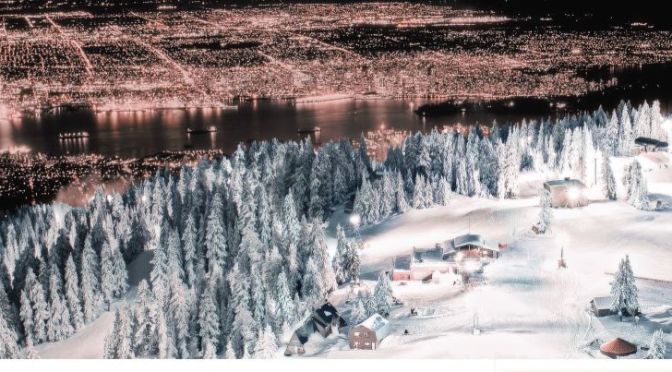
The footage was shot in British Columbia, Canada and includes notable locations in Vancouver (Kitsilano, Grouse Mountain, Ambleside Park, Lions Gate Bridge, Bowen Island, Lighthouse Park, YVR, Capitol Hill, Stanley Park), Whistler (Garibaldi Provincial Park, Spearhead Range), Squamish (Stawamus Chief, Mount Garibaldi) as well as Pemberton, Okanagan, Osoyoos and Vancouver Island.
Vancouver, a bustling west coast seaport in British Columbia, is among Canada’s densest, most ethnically diverse cities. A popular filming location, it’s surrounded by mountains, and also has thriving art, theatre and music scenes. Vancouver Art Gallery is known for its works by regional artists, while the Museum of Anthropology houses preeminent First Nations collections.


 Boomers Daily