
From a Newcastle University news release:
“When fat cannot be safely stored under the skin, it is then stored inside the liver, and over-spills to the rest of the body including the pancreas. This ‘clogs up’ the pancreas, switching off the genes which direct how insulin should effectively be produced, and this causes Type 2 diabetes.”
 This latest paper builds on previous Newcastle studies supported by Diabetes UK showing exactly why Type 2 diabetes can be reversed back to normal glucose control. Those studies led to the large DiRECT trial which showed that Primary Care staff can achieve remission of Type 2 diabetes by using a low calorie diet with support to maintain the weight loss.
A quarter of participants achieved a staggering 15 kg or more weight loss, and of these, almost nine out of 10 people put their Type 2 diabetes into remission. After two years, more than one third of the group had been free of diabetes and off all diabetes medication for at least two years.
In 2020, this approach to management of short duration Type 2 diabetes is to be piloted in the NHS in up to 5,000 people across England, and a similar programme is being rolled out in Scotland.
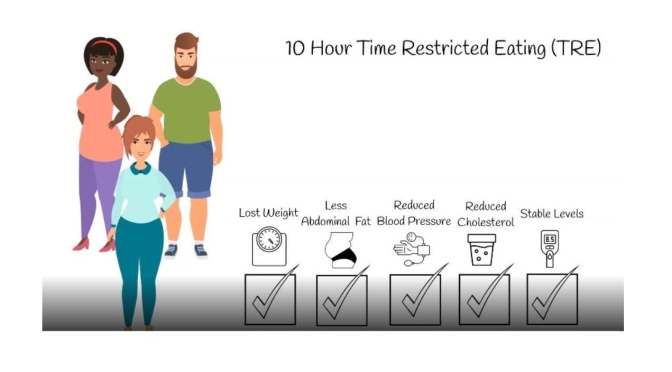
 Ten-hour time-restricted eating (TRE) limits daily dietary intake to a consistent 10-h window, creating a 14-h nightly fast. Researchers studied whether TRE for 12 weeks in people with metabolic syndrome receiving standard medical care (including medications to lower cholesterol and blood pressure) improves markers of health. TRE led to weight loss, healthier body composition (including decreased waist circumference), lower blood pressure and levels of cardiovascular disease-promoting lipids (i.e., “bad cholesterol” levels), and more restful sleep. TRE could be an effective dietary intervention to help those with metabolic syndrome.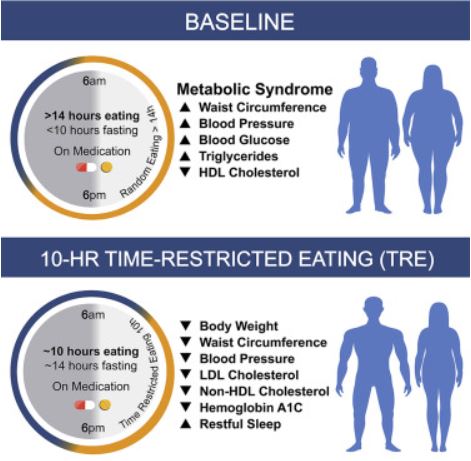

 This joint position statement from the International Atherosclerosis Society and the International Chair on Cardiometabolic Risk Working Group on Visceral Obesity summarises the evidence for visceral adiposity and ectopic fat as emerging risk factors for type 2 diabetes, atherosclerosis, and cardiovascular disease, with a focus on practical recommendations for health professionals and future directions for research and clinical practice.
 Boomers Daily