Tokyo, Japan’s busy capital, mixes the ultramodern and the traditional, from neon-lit skyscrapers to historic temples. The opulent Meiji Shinto Shrine is known for its towering gate and surrounding woods. The Imperial Palace sits amid large public gardens. The city’s many museums offer exhibits ranging from classical art (in the Tokyo National Museum) to a reconstructed kabuki theater (in the Edo-Tokyo Museum).
During Advent, Franziskanerplatz is transformed into a town in miniature crammed with gaily decorated stalls resembling little timber houses.
Located in the heart of Lucerne’s Old Town, the Christmas Market creates a highly evocative seasonal atmosphere. Drawing visitors from near and far, the 70 or so festively decorated stalls offer a host of wares and special gift items.
While the grown-ups savour a wealth of food and drink offerings, the children make a beeline for the Christmas carousel to the appropriately seasonal music of brass ensembles and choirs. The air is laden with the spicy fragrance of punch and mulled wine. In Advent the Lucerne-Lake Lucerne region presents unforgettable events and a real sense of Christmas atmosphere. Enjoy anticipation with traditional Christmas events such as the Samichlausauszug (Father Christmas Procession), Klausjagen (Nicholas Chase), Sternsingen (Christmas Carolling) or atmospheric festive cruises on the lake.
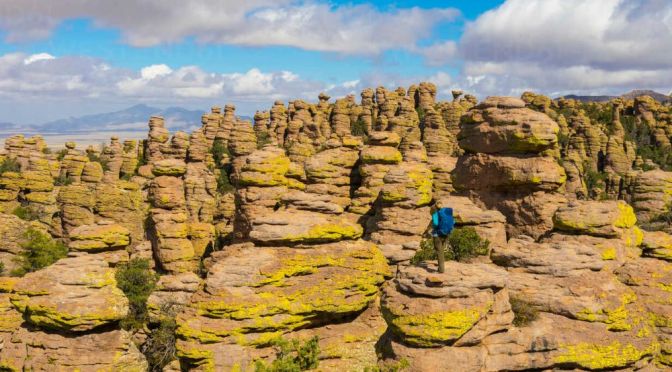
Join ranger Theresa Ferraro as she talks about the history, people, and geology of Chiricahua National Monument—located in one of Arizona’s seven sky islands.
Chiricahua National Monument is a unit of the National Park System located in the Chiricahua Mountains of southeastern Arizona. The monument was established on April 18, 1924, to protect its extensive hoodoos and balancing rocks.
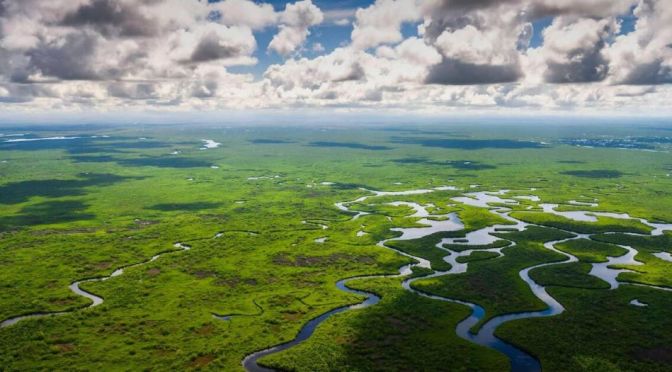
The Everglades is a water world — It’s the widest and slowest river in the United States. But in the heart of this great water body exist secret islands that have outsize importance for the cultural heritage of a people and for the biodiversity of this important wetland. Thousands of these tree islands dot the Everglades.
For generations, the Miccosukee people have called these islands home. And they’ve long understood that the islands are a giver of life in this unforgiving environment. The islands are some of the only dry land around and harbor a surprising diversity of plant and animal life, including: coyotes, bobcat, bear, and even the Florida panther.
But among the scientific establishment, the islands are little understood. Researchers from the Miccosukee tribe are working to understand how animals use the islands and what role they play in the larger Everglades ecosystem. With the islands under threat from outside forces, their studies have taken on increased urgency. What they’re finding could be key to preserving the Miccosukee culture and the balance of life in this great river.
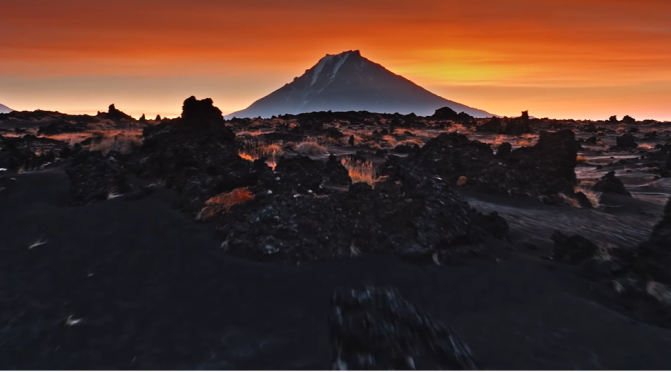
Kamchatka Peninsula, also spelled Kamčatka, Russian Poluostrov Kamchatka, peninsula in far eastern Russia, lying between the Sea of Okhotsk on the west and the Pacific Ocean and Bering Sea on the east. It is about 750 miles (1,200 km) long north-south and about 300 miles (480 km) across at its widest; its area is approximately 140,000 square miles (370,000 square km).
Two mountain ranges, the Sredinny (“Central”) and Vostochny (“Eastern”), extend along the peninsula and rise to 15,584 feet (4,750 metres) in Klyuchevskaya Volcano. The trough between these mountain chains is occupied for much of its length by the Kamchatka River. Of the 127 volcanoes, 22 are still active, as are a number of geysers and hot springs. Most of the active volcanoes lie along a fault line on the eastern flank of the Vostochny Range.
The western coastlands of the Kamchatka Peninsula form a low plain crossed by many rivers and with extensive swamps, while the eastern coast is an alternation of broad gulfs and cliffed, mountainous peninsulas. A small geothermal-power station uses underground steam and is in operation near the southern end of the peninsula.
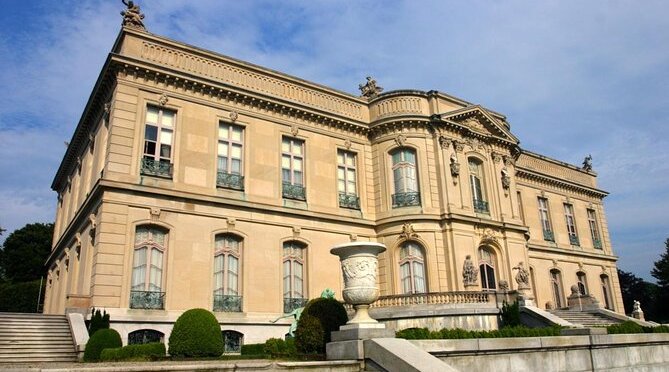
The Elms was the summer residence of Mr. and Mrs. Edward Julius Berwind of Philadelphia and New York. Mr. Berwind made his fortune in the coal industry. In 1898, the Berwinds engaged Philadelphia architect Horace Trumbauer to design a house modeled after the mid-18th century French chateau d’Asnieres (c.1750) outside Paris.
Construction of The Elms was completed in 1901 at a cost reported at approximately $1.4 million. The interiors and furnishings were designed by Allard and Sons of Paris and were the setting for the Berwinds’ collection of Renaissance ceramics, 18th century French and Venetian paintings, and Oriental jades.
The elaborate Classical Revival gardens on the grounds were developed between 1907 and 1914. They include terraces displaying marble and bronze sculpture, a park of fine specimen trees and a lavish lower garden featuring marble pavilions, fountains, a sunken garden and carriage house and garage. These gardens were recently restored.
Mrs. Berwind died in 1922, and Mr. Berwind invited his sister, Julia, to become his hostess at his New York and Newport houses. Mr. Berwind died in 1936 and Miss Julia continued to summer at The Elms until her death in 1961, at which time the house and most of its contents were sold at public auction. The Preservation Society of Newport County purchased The Elms in 1962 and opened the house to the public. In 1996, The Elms was designated a National Historic Landmark.
A short tour of The Breakers in Newport, Rhode Island in mid-December, 2021. The Breakers, which is owned by the Preservation Society of Newport County, is the “grandest of Newport’s summer ‘cottages,'” as the Preservation Society puts it on their website, and I personally thought it lived up to that.
The Breakers is the grandest of Newport’s summer “cottages” and a symbol of the Vanderbilt family’s social and financial pre-eminence in turn-of-the-century America.
Commodore Cornelius Vanderbilt (1794-1877) established the family fortune in steamships and later in the New York Central Railroad, which was a pivotal development in the industrial growth of the nation during the late 19th century. The Commodore’s grandson, Cornelius Vanderbilt II (1843-1899), became Chairman and President of the New York Central Railroad system in 1885, and purchased a wooden house called The Breakers in Newport during that same year.
News, Views and Reviews For The Intellectually Curious





 Boomers Daily