
From a Stanford Medicine online release:
 “For patients with severe but stable heart disease who don’t want to undergo these invasive procedures, these results are very reassuring,” said David Maron, MD, clinical professor of medicine and director of preventive cardiology at the Stanford School of Medicine, and co-chair of the trial, called ISCHEMIA, for International Study of Comparative Health Effectiveness with Medical and Invasive Approaches.
“The results don’t suggest they should undergo procedures in order to prevent cardiac events,” added Maron, who is also chief of the Stanford Prevention Research Center.
Patients with severe but stable heart disease who are treated with medications and lifestyle advice alone are no more at risk of a heart attack or death than those who undergo invasive surgical procedures, according to a large, federally-funded clinical trial led by researchers at the Stanford School of Medicine and New York University’s medical school.
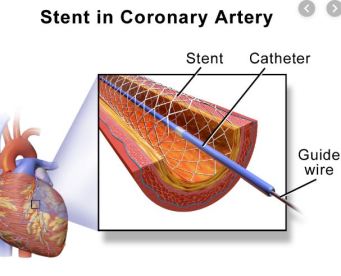
The trial did show, however, that among patients with coronary artery disease who also had symptoms of angina — chest pain caused by restricted blood flow to the heart — treatment with invasive procedures, such as stents or bypass surgery, was more effective at relieving symptoms and improving quality of life.
To read more: http://med.stanford.edu/news/all-news/2019/11/invasive-heart-treatments-not-always-needed.html

 “A simple example would be copper and fiber wires. When you’re putting wires in a new facility, it’s easier to put in many more than you need that moment because putting them in 5 years from now or 10 years from now is quite hard. Something like 85 percent of our copper wires and fiber optic cables are dark right now because we know we’re going to need them in the future.”
 Boomers Daily