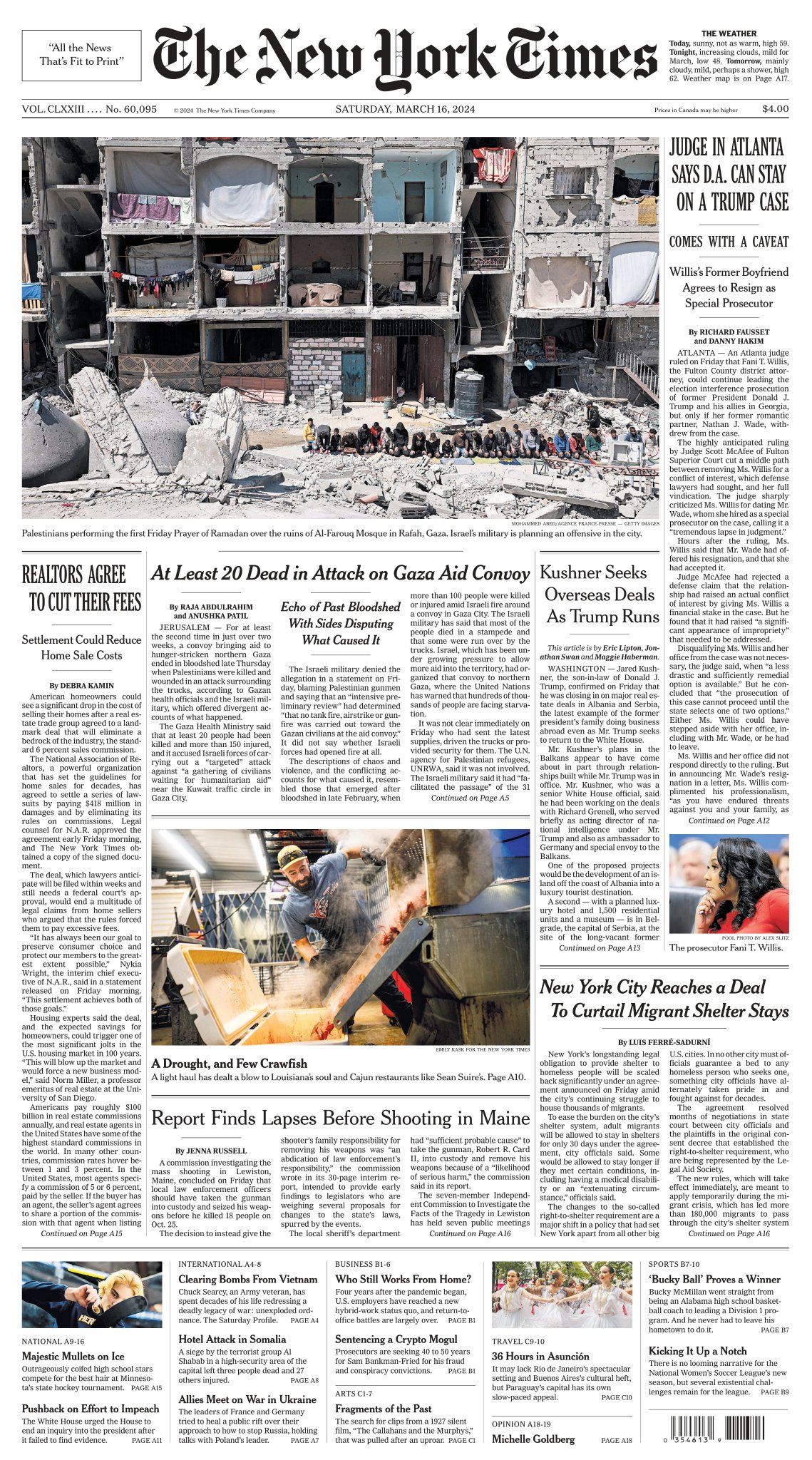
The National Association of Realtors will pay $418 million in damages and will amend several rules that housing experts say will drive down housing costs.
Another Gaza Aid Convoy Ends in Violence, With at Least 20 Killed
The Gaza Health Ministry accused Israel of a “targeted” attack. Israel’s military denied the accusation, blaming Palestinian gunmen for the violence.
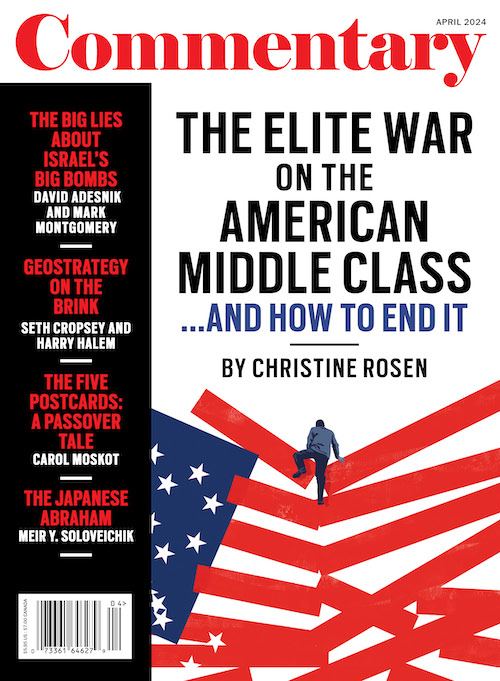
Being middle class in America used to mean something—something socially transformative, something even revolutionary. The American middle class represented a form of national social order never before seen on this earth—cultural domination not by the very rich and very educated, or the political domination either by tyrants or the mob, but by a mass of people, relatively well-to-do, who felt themselves fortunate in their circumstances. That was what made the American middle class different from the French or English bourgeoisie. Its members believed, and the country believed, that they were the nation’s backbone, its true governing class, and its moral compass.
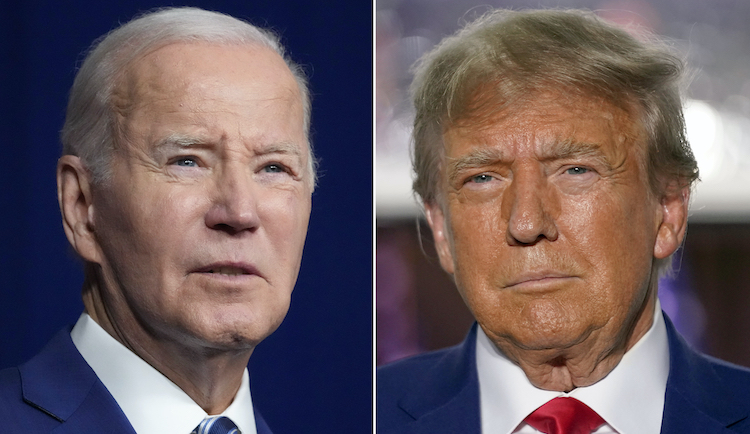
President Joe Biden and former president Donald Trump squared off four years ago and are on track for the first major-party rematch since 1892. Biden and Trump are the oldest presidential candidates in history, and each man has an established political brand. Biden first won federal office in 1972, and it’s been over a decade since the GOP nominated someone other than Donald Trump. The 2024 election is like all the SIRIUS XM oldies stations—Classic Vinyl, Classic Rewind, Rock and Roll Hall of Fame Radio—rolled into one.
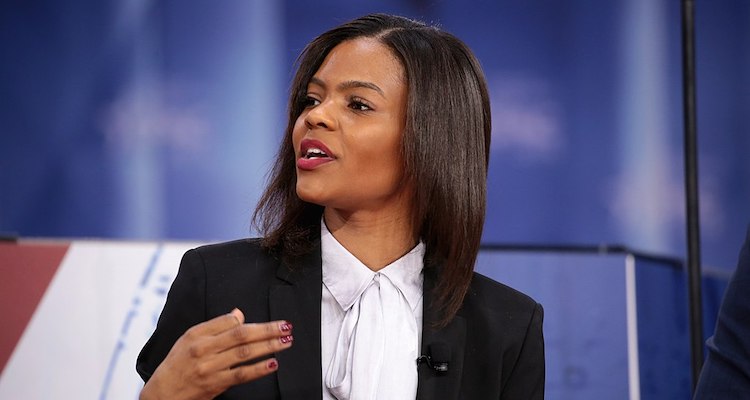
If you had never heard of Candace Owens until recently, you aren’t alone. Less than a decade ago, she was an unknown college dropout working as a marketing professional in New York, writing pieces for her company’s website about the “bat-s—t crazy antics of the Republican Tea Party.” Then, suddenly, she claimed to have experienced a political conversion. She told the libertarian political commentator Dave Rubin in 2017, “I became a conservative overnight. . . . I realized that liberals were actually the racists. Liberals were actually the trolls.”
The top Senate Democrat, the highest-ranking Jewish elected official in the United States, spoke from the Senate floor to condemn Prime Minister Benjamin Netanyahu and call for elections to replace him.
Mainstream parties are changing laws to protect government institutions. Critics say the changes risk undermining democracy.
Snakes in the Grass — and Under the Piano, by the Pool and in the Prison
Business is good for snake catchers in Australia, as the period of brumation, a sort of hibernation for reptiles, is shrinking — a result of the warming earth.
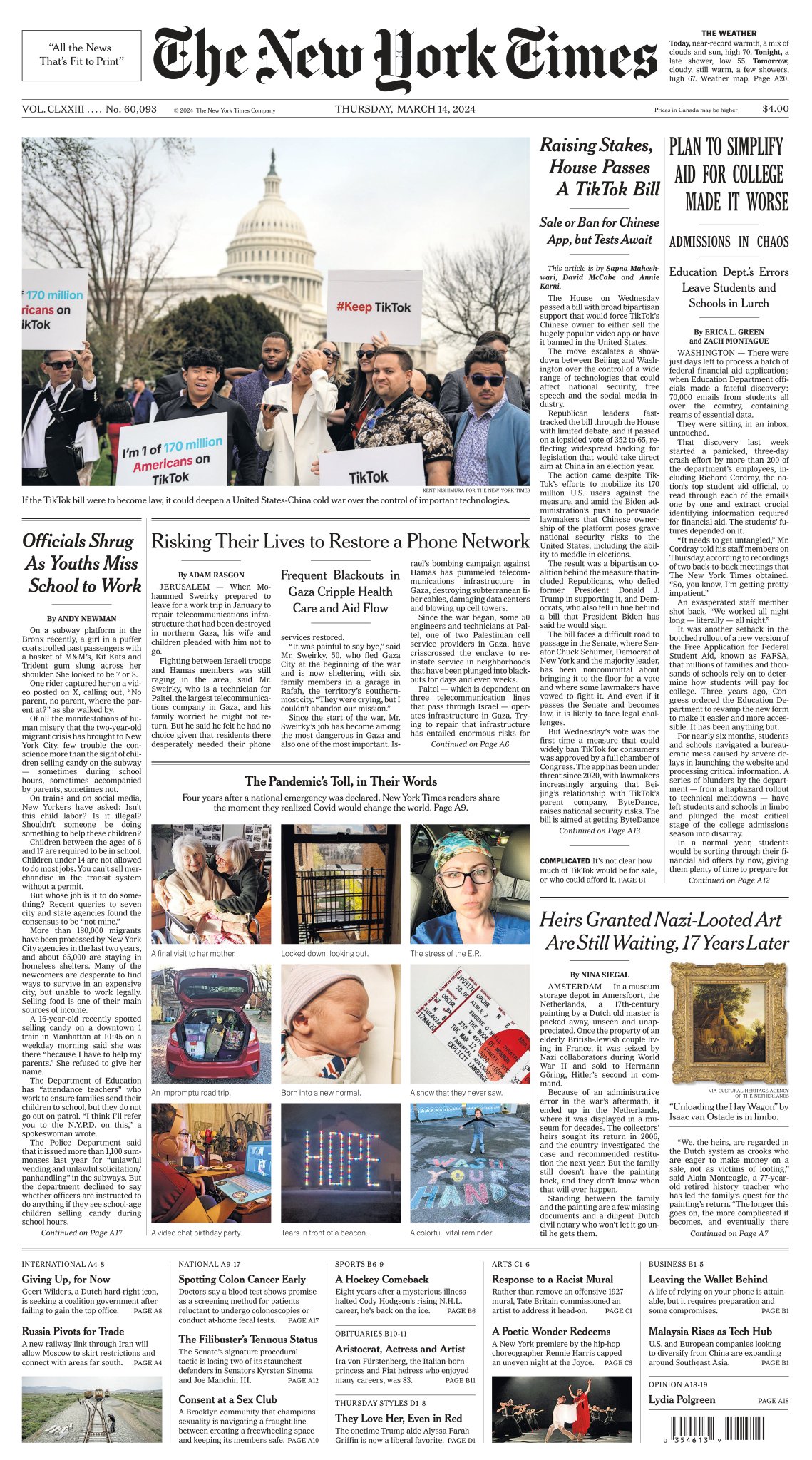
The legislation received wide bipartisan support, with both Republicans and Democrats showing an eagerness to appear tough on China.
They Sell Candy Instead of Going to School. New York Isn’t Stopping Them.
Letting children work in the train system during school hours breaks several laws and rules. But a series of agencies said it was not their place to stop the practice.
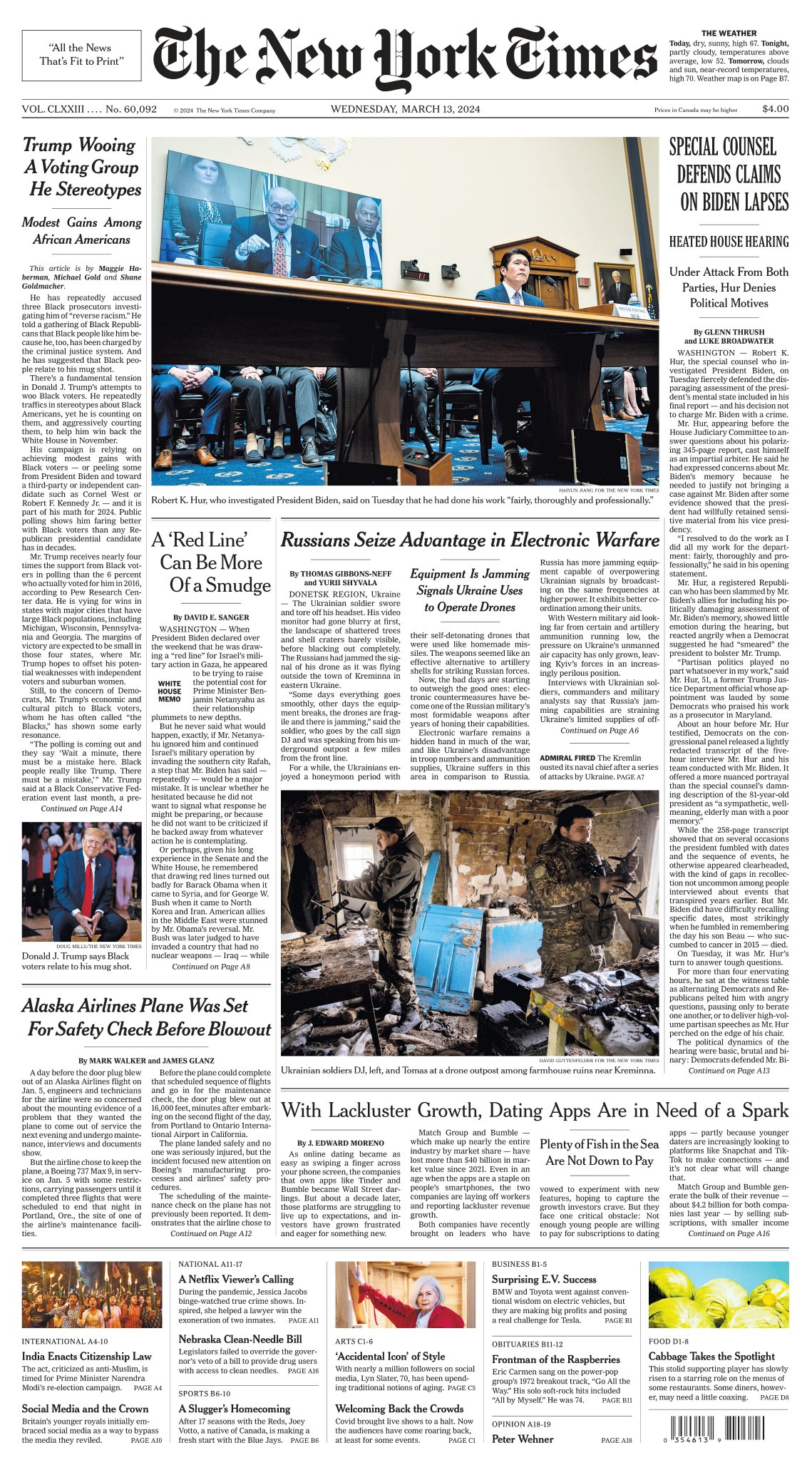
At a hearing, Republicans peppered Robert K. Hur about his justifications for not charging the president, and Democrats rebuked him for broad assertions about Mr. Biden’s memory.
Trump Courts Black Voters Even as He Traffics in Stereotypes
The former president traffics in stereotypes about Black Americans, yet he is counting on them, and aggressively courting them, in seeking to return to the White House.
Jamming’: How Electronic Warfare Is Reshaping Ukraine’s Battlefields
Drones have become a critical weapon for both sides, but a lack of coordination among troops has put Ukraine at a disadvantage.
The Globalist (March 11, 2024): We get the latest results from Portugal’s elections and ask what’s next for the nation’s government as the far-right gains ground.
Plus: we discuss the likelihood of a ceasefire in Israel and Gaza before Ramadan, get the headlines from the Balkans and find out who wins big at the 2024 Academy Awards.
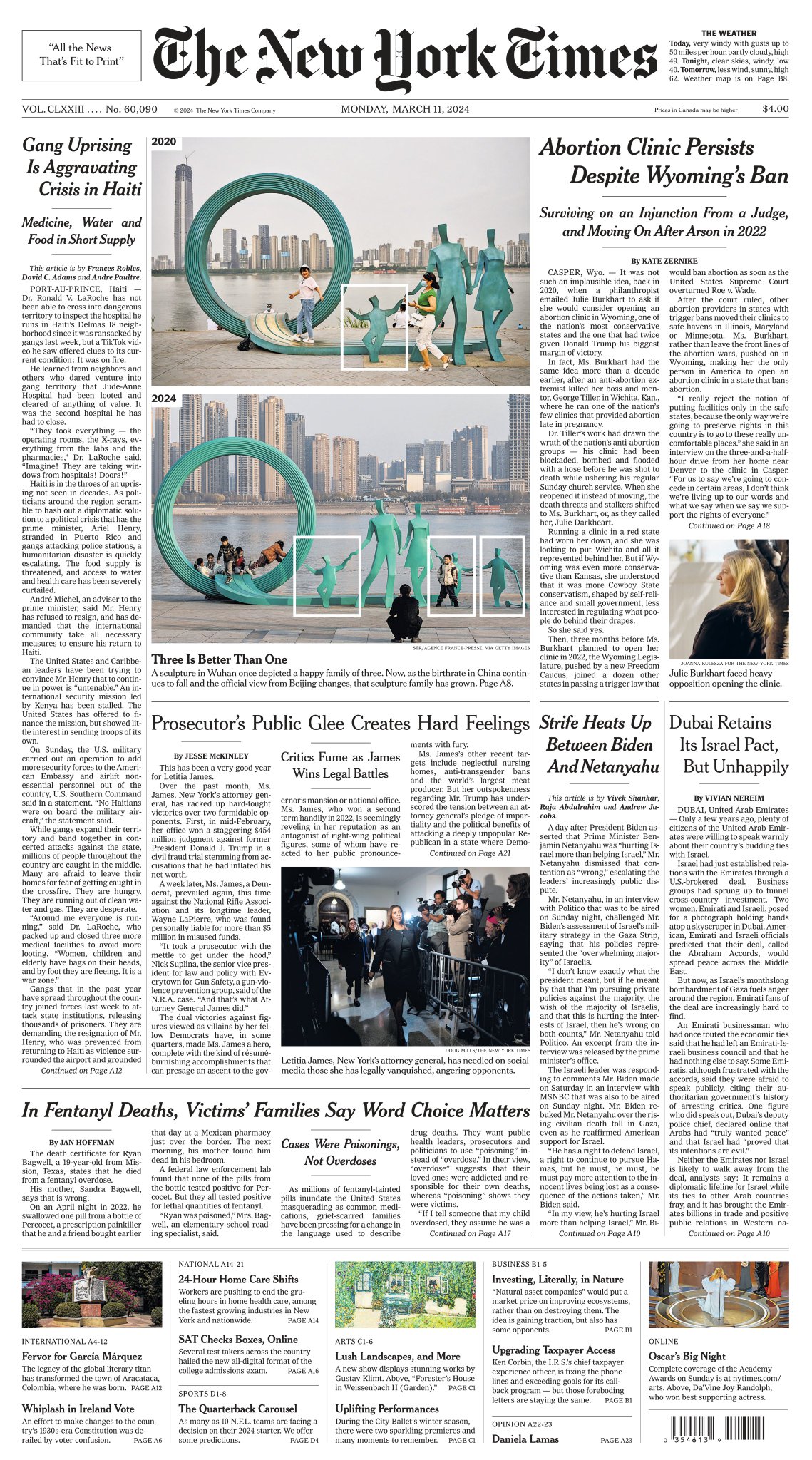
The only abortion clinic left in the state has been protested and set on fire, rebuilt and opened as Wyoming grapples with what it means to be conservative in a post-Roe nation.
As gangs have united in concerted attacks against the state, the prime minister is stranded in Puerto Rico, and food, water, fuel and medical care are in short supply.
The United Arab Emirates has maintained its links to Israel throughout the war in Gaza, but the relationship, built on a U.S.-brokered deal, is under pressure as anger against Israel grows.
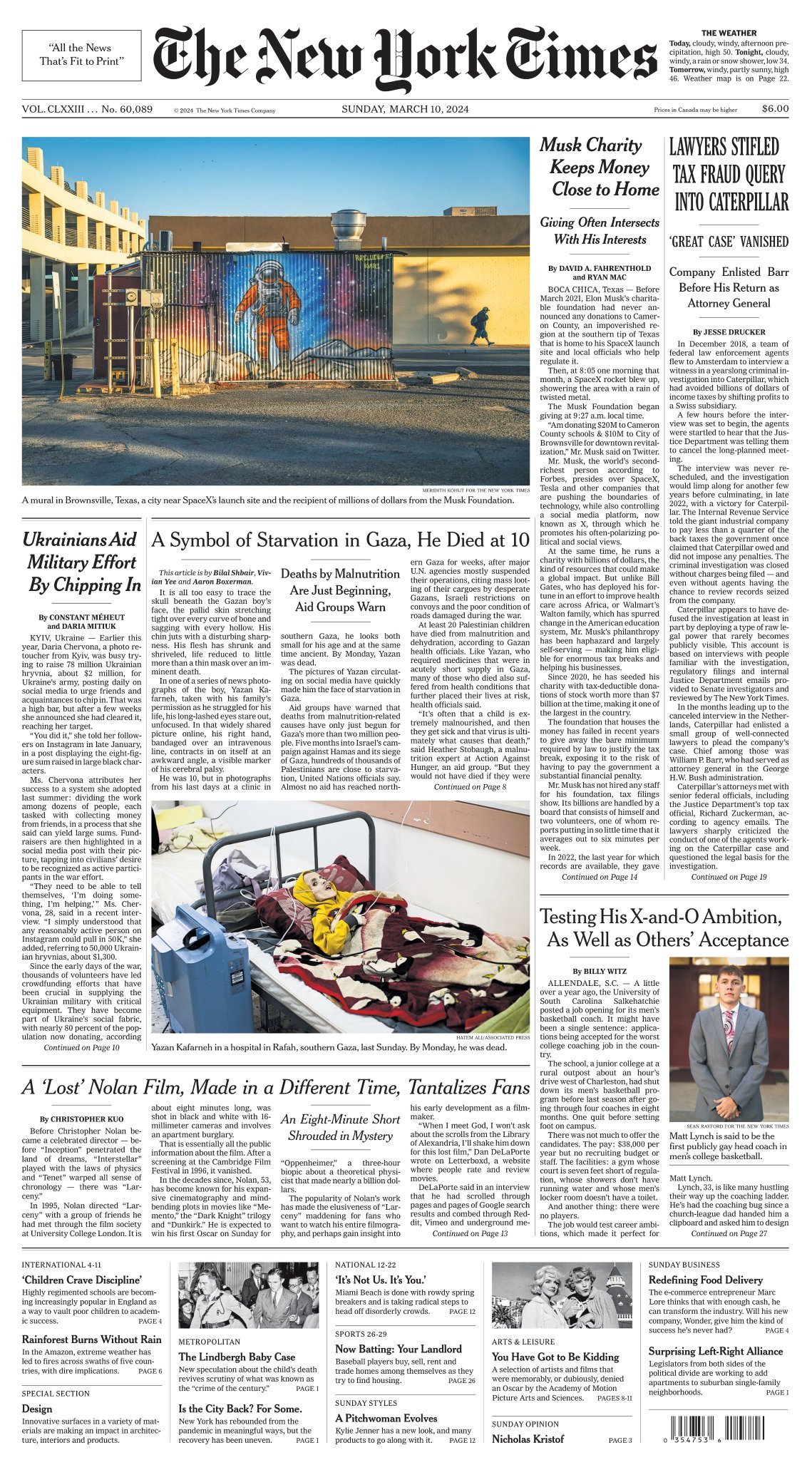
After making billions in tax-deductible donations to his philanthropy, the owner of Tesla and SpaceX gave away far less than required in some years — and what he did give often supported his own interests.
Fund-raisers are borrowing heavily from business techniques to keep donations flowing to the military. The latest trend? Broad approaches that rely on networks of friends and acquaintances.
The 10-Year-Old Boy Who Has Become the Face of Starvation in Gaza
The harrowing image of a skeletal Yazan Kafarneh circulated widely on social media and has served as a graphic warning about the enclave’s dire food situation.
Monocle on Saturday, March 9, 2024: US lawmakers have passed a bill that would remove TikTok from app stores – but will the ban go ahead?
And does dark matter actually exist? Join Vincent McAviney and Yassmin Abdel-Magied for this as well a background on the potential ceasefire in Sudan during Ramadan. Plus: Monocle’s Tomos Lewis interviews the CEO of the Academy of Motion Picture Arts and Sciences ahead of the celebrations tomorrow and the director of the London Book Fair, Gareth Rapley, joins us to discuss next week’s event.
News, Views and Reviews For The Intellectually Curious






 Boomers Daily