Infants are born with the ability to babble and cry in the accents of their mothers through a combination of neurological, physical, and environmental responses.
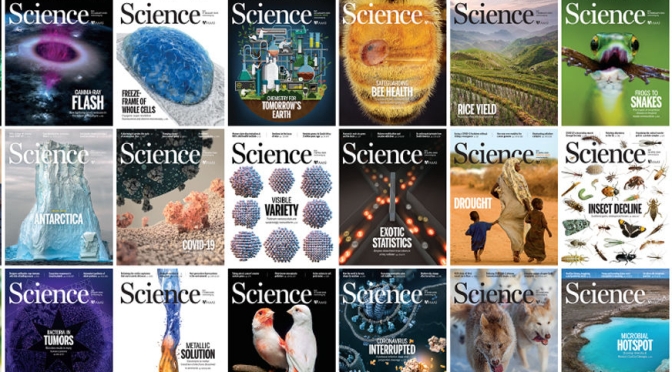
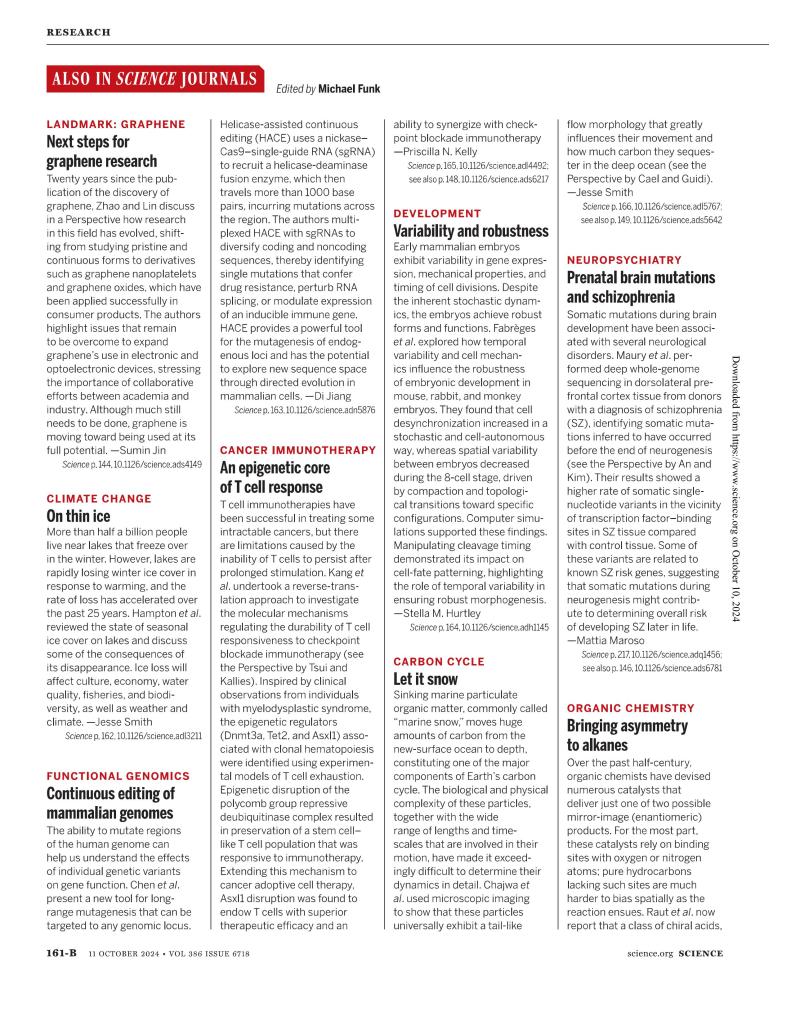
‘Science Magazine – September 19, 2024: The new issue features‘Worth The Effort’ – Removing derelict fishing gear reduces monk seal entanglement rates…
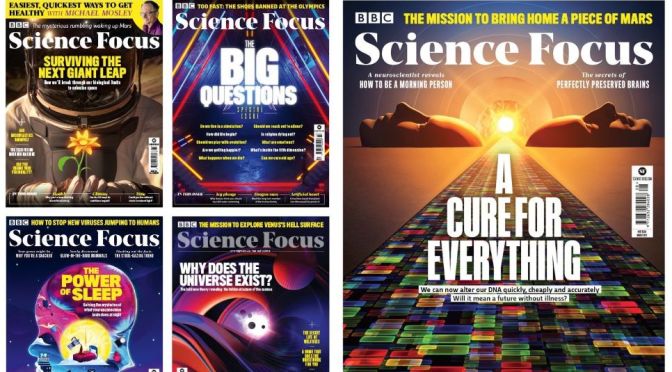
Beneath Europa’s icy crust is a salty ocean, perhaps the best place in the Solar System to look for life. A NASA spacecraft will soon set off to probe the jovian moon
The technical knowledge of Egyptian architects once again exceeds expectations. Was Egypt’s oldest pyramid, the Step Pyramid of Djoser, built using some seriously high-tech kit? And what’s with the huge, unexplained cavity that’s been discovered in the Great Pyramid of Giza?
Living fossils
Meet the creatures for whom time has almost stood still. These animals give us a glimpse into what life was like millions of years ago, and show us just how resilient some groups have been to the calamitous events that have consigned others – such as the dinosaurs – to extinction.
A mysterious UFO
There’s a mysterious object hurtling at one million miles per hour across the Milky Way. It’s moving so fast that it could exit the Milky Way entirely – and scientists are still trying to figure out what it is. Not quite a planet and not quite a star, so what is it?
Proba-3
The Proba-3 mission aims to unravel the mysteries of the Sun’s atmosphere by creating artificial eclipses on demand. But achieving this feat means teaching two spacecraft to perform a complicated dance with an unprecedented level of precision. If the mission is successful, scientists will be able to study the Sun’s corona in unprecedented detail, ushering in a new era for space observation.
Plus
Impostor syndrome: Ever feel like you’re an impostor, who’s bluffing their way through life? You’re not alone. Even the world’s most brilliant minds suffer from the fear of being ‘found out’. But what causes impostor syndrome? And more importantly, how can you overcome it?
Q&A: Boost your general knowledge! This issue: How do I break free of blame culture? How often should I change my toothbrush? How are identical twins created? Did dinosaurs have fleas? Why does my computer screen look so weird when I take a picture of it? What’s the smelliest animal? And more.
Sleep gadgets: A bad night’s sleep can follow you for days, making you tired and grumpy. Our tech experts have rounded up the best gadgets to help perfect your sleep routine and make the most of your shut-eye.
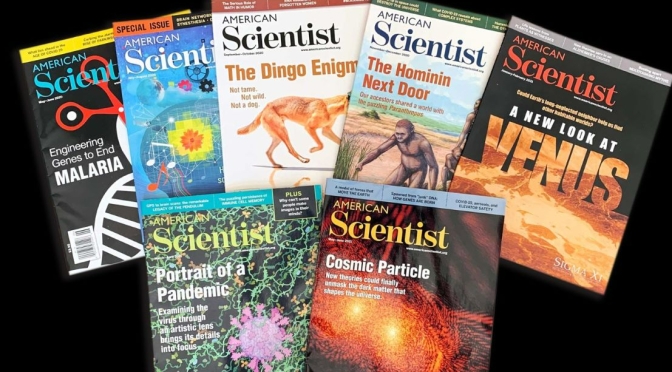
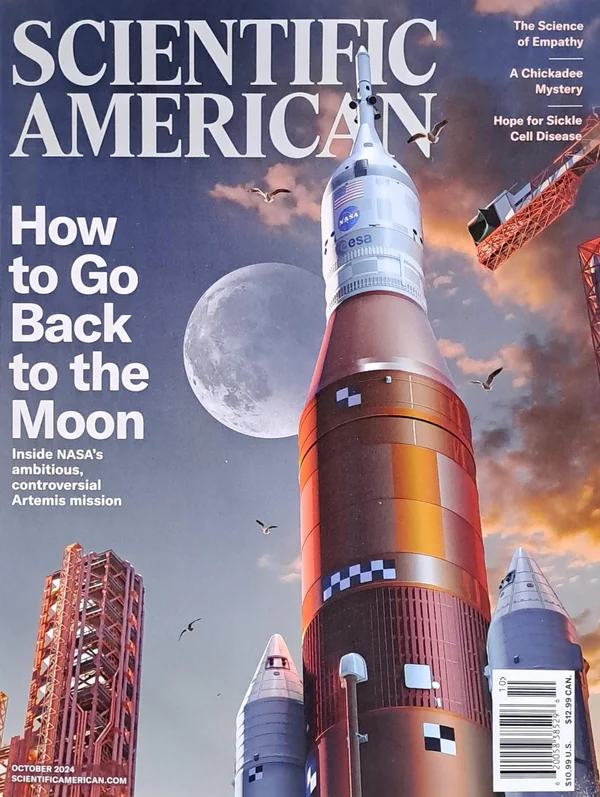
Scientific American (September 16, 2024): The October 2024 issue features ‘How To Go Back To The Moon’ – Inside NASA’s ambitious, controversial Artemis mission; The science of Empathy and Hope for Sickle Cell Disease…
‘Science Magazine – August 29, 2024: The new issue features‘Micronuclear Collapse’ – Mitochondria-derived reactive oxygen species disrupt micronuclear envelopes…














 Boomers Daily