
Tag Archives: Research

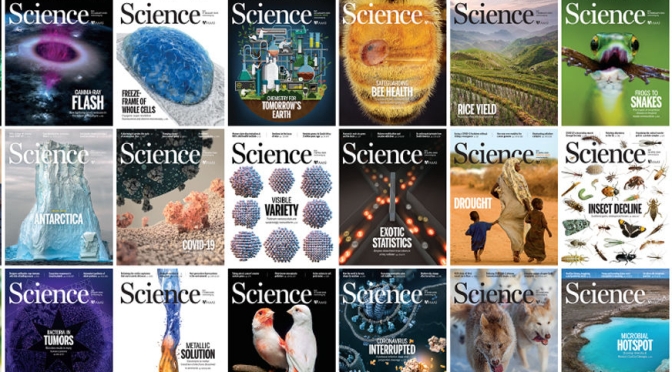
Research Preview: Science Magazine – May 31, 2024

Current Issue Cover

Science Magazine – May 230, 2024: The new issue features ‘Cuckoo Coevolution’ – Host matching drives lineage divergence…

After crisis in interstellar space, stream of Voyager 1 data resumes

Before its computer crashed, venerable NASA probe may have entered mysterious new region beyond the Solar System

Theory of sleep as a brain cleanser challenged

Mouse study contradicts landmark finding, but some question its methodology

Mysterious sea urchin plague is spreading rapidly

Pathogen that kills victims within days leaps from Caribbean to Red Sea

Research Preview: Science Magazine – May 24, 2024

Science Magazine – May 23, 2024: The new issue features ‘Decoding the Brain’ – A cell-by-cell exploration of neuropsychiatry; Does a breakdown in the body’s internal chatter drive aging…

Decoding the Brain

A cell-by-cell look at neuropsychiatric diseases

Mapping the brain’s gene-regulatory maze

DNA sequences are connected to genes and functions in the developing and adult brain

How the German cockroach conquered the world

DNA study implicates medieval warfare and colonial trade

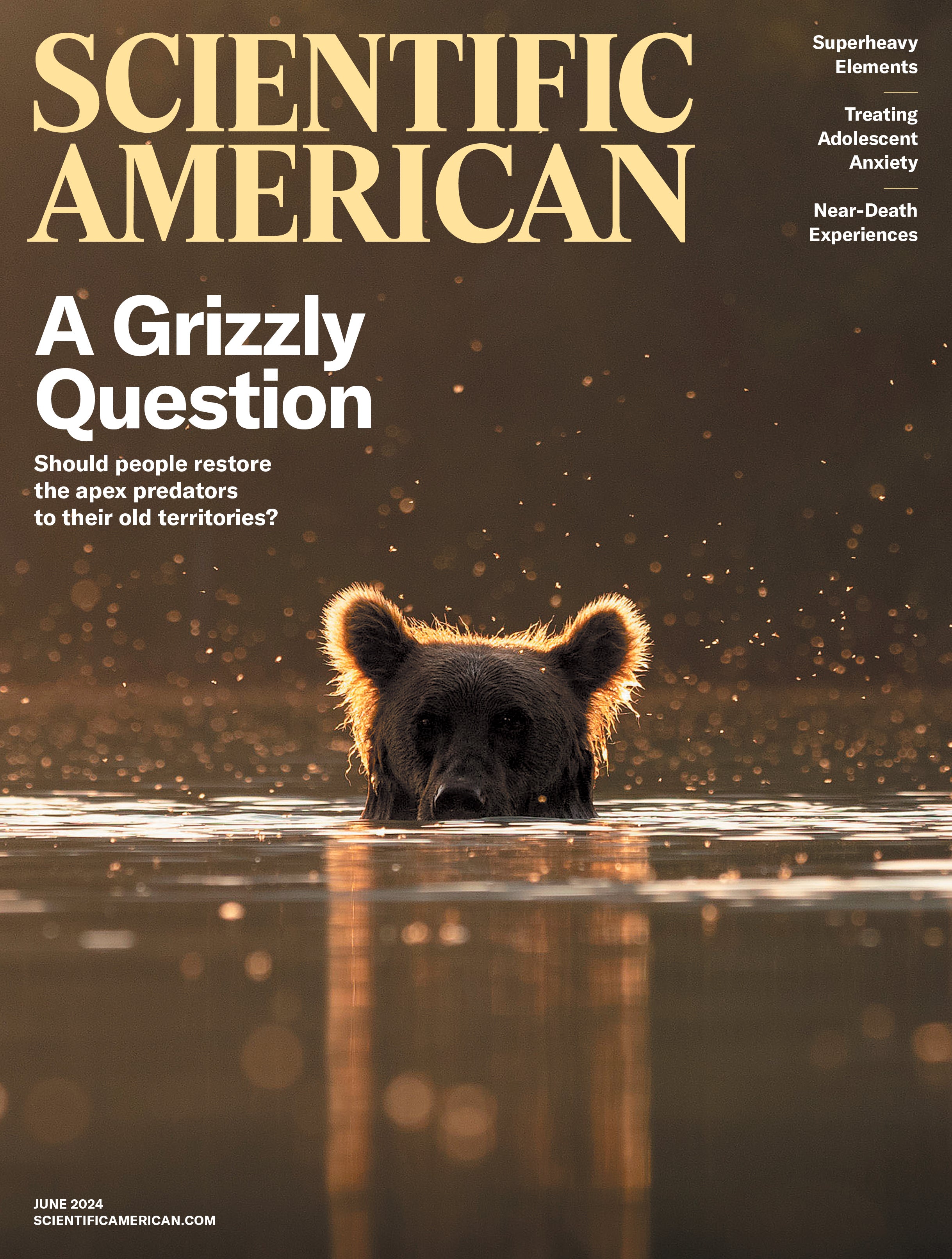
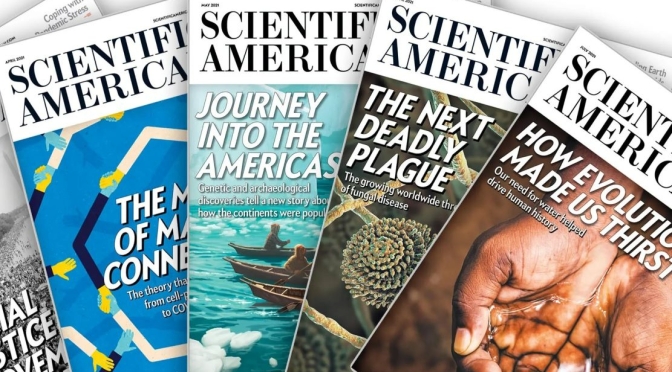
Scientific American Magazine – June 2024

Readers Respond to the February 2024 Issue | Scientific American

Scientific American (May 15, 2024)The June 2024 issue features:

Grizzly Bears Will Finally Return to Washington State. Humans Aren’t Sure How to Greet Them

BENJAMIN CASSIDY

Lifting the Veil on Near-Death Experiences

RACHEL NUWER

Research Preview: Science Magazine – May 10, 2024

Science Magazine – May 9, 2024: The new issue features ‘Volcanic Moon’ – Billions of years of activity on Jupiter’s moon Io…

Australia bets big on optical quantum computing

In AU$940 million deal, PsiQuantum will build “utility scale” facility

Report offers harsh verdict on global polio vaccine switch

Draft evaluation calls 2016 decision to change oral vaccines a “failure”

To probe outbreak, BSL-3 labs plan to infect cows with flu virus

Novel effort comes as study finds key receptor for avian flu virus in udders, where the virus flourishes

Research Preview: Science Magazine – May 3, 2024

Current Issue Cover

Science Magazine – May 2, 2024: The new issue features ‘Superspreading Seeds’ – Influencers spread health messages across remote villages; making sense of evidence on early childhood education; Brain and muscle clocks cooperate to resist aging…

A scientist is likely to win Mexico’s presidency. Not all researchers are rejoicing

A helicopter in midair with three bighorn sheep suspended from it.

Claudia Sheinbaum Pardo would be first researcher to lead the country, but critics worry she’ll be as hostile to science as her predecessor

Which wild animals carry the COVID-19 virus? An ambitious U.S. project aims to find out

Scientists test bighorn sheep, bears, moose, rats, and dozens of other species to track how SARS-CoV-2 moves between humans and wildlife

Research Preview: Science Magazine – April 26, 2024

Science Magazine – April 25, 2024: The new issue features ‘Born to Explore’ – Exploratory tendency leads to diversification; Can science address loneliness?; Vitamin D, microbiota, and cancer immunity; A safer version of a 140-year-old chemical reaction…

Microbes and vitamin D aid immunotherapy

Vitamin D modulates intestinal epithelial cell function to enhance antitumor microbes

The gut microbiome has been shown to modulate the response of cancer patients to therapy, but precisely how microbiota affect anticancer immunity is still being elucidated. Giampazolias et al. report that vitamin D bioavailability in mice influences the composition of the gut microbiome (see the Perspective by Franco and McCoy). After dietary manipulation, vitamin D levels were observed to affect gut bacteria, which in turn improved cancer immunotherapy and antitumor immunity. In humans, low vitamin D levels were correlated with tumor development, and gene signatures of vitamin D activity were associated with improved patient responses to immunotherapy. These findings highlight the connection between vitamin D and the immune system through gut bacteria and may have applications for improving cancer therapies.

The power of curiosity

Lake Tanganyika contains one of the most impressive adaptive radiations, with about 250 species of cichlid occupying a variety of niches. Much research has focused on understanding the drivers of this and other adaptive radiations. Trembo et al. looked in depth at 57 of these cichlid species with regard to their behavior, ecomorphology, and genomics. They found that one behavior in particular, a tendency to explore, was related to niche adaptation, and they identified a regulatory gene that is highly associated with this behavior. These findings suggest the existence of an adaptive syndrome driven in part by a tendency to explore what is new.

Research Preview: Science Magazine – April 19, 2024

Current Issue Cover

Science Magazine – April 18, 2024: The new issue features ‘Designed To Bind’ – Deep learning for protein and ligand modeling…

Brightest gamma ray burst ever emerged from collapsing star

NASA’s JWST telescope traces burst to a supernova but finds a puzzling lack of heavy elements

Native lizards taught to avoid toxic toads by released toadlets

Exposing monitor lizards to thousands of young cane toads helped them survive once the adult toads invaded

Hiring ban disrupts research at Florida universities

Suit seeks to overturn state law targeting graduate and postdocs from China and other “countries of concern”

Giant planets ran amok soon after Solar System’s birth

Meteorites suggest tumult occurred around the time of the Moon’s formation

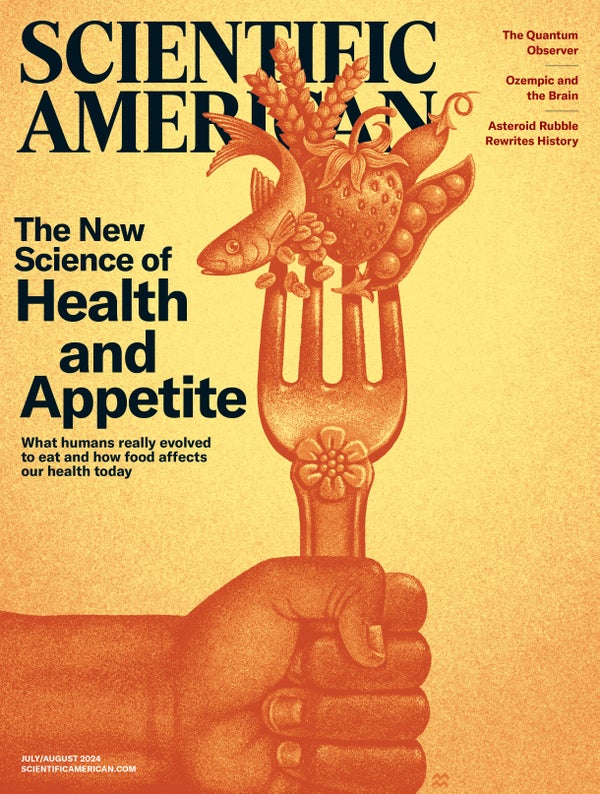
Scientific American Magazine – May 2024

Scientific American Volume 330, Issue 5 | Scientific American

Scientific American (April 17, 2024): The May 2024 issue features:

Fire Forged Humanity. Now It Threatens Everything

Ancient prophecies of worlds destroyed by fire are becoming realities. How will we respond?

The Secret to the Strongest Force in the Universe

New discoveries demystify the bizarre force that binds atomic nuclei together

Ideas & Research: Harvard Magazine May/June 2024

May-June 2024 | Harvard Magazine

HARVARD MAGAZINE May/June2024 :

Plants on a Changing Planet

Benton Taylor with cottonwood saplings in a greenhouse at the Arnold Arboretum

How long will the world’s forests impound carbon below ground?

by Jonathan Shaw

MARYVILLE, Tennessee, lies near the foothills of the Great Smoky Mountains, a range home to more tree species than exist in all of Europe. Benton Taylor grew up amidst this abundance, but as a boy, he barely noticed the plants. In the nearby national park, a family friend was raising—together with a menagerie of other mammals—a pair of bears orphaned as cubs. Taylor dreamed of studying these apex denizens of the forest, who forage at the top of the food chain. But as his education and understanding grew, his curiosity shifted to seed-dispersing animals, plants, and the soil and nutrients that sustain them: a trip down the trophic pyramid, driven by an appreciation of forests as ecological systems in which plants are primary producers. “Now I’ve half moved into the basement,” jokes the assistant professor of organismic and evolutionary biology, whose research encompasses the strategies plants use to obtain essential nutrients such as nitrogen, and how that, in turn, affects their ability to store another vital element with a global climate impact: carbon.

Diversifying Diet – A little-known diet improves cardiovascular health through several distinct mechanisms. 

by Nina Pasquini

An illustration of foods included in the portfolio diet.

DIVERSIFYING one’s assets is useful not only in finance but also in diet, according to an October study from the Harvard T.H. Chan School of Public Health (HSPH). Though not many people have heard of the “portfolio diet”—consisting of plant-based foods proven to lower unhealthy cholesterol, such as nuts, oats, berries, and avocados—it is one of the easiest ways to improve long-term cardiovascular health. “The idea was that each of these foods lowers cholesterol quite minimally, but if you make a whole diet based on these different foods, you will see large reductions in [unhealthy] cholesterol,” said Andrea Glenn, an HSPH postdoctoral research fellow in nutrition and the lead author of the study. The more of these foods one eats, the higher the protection—but one need not include them all to reap the diet’s benefits, she said. “Like a business portfolio, you can choose the ones you want.”

The Gravity of Groups

Mina Cikara in a classroom with two groups of students

Mina Cikara explores how political tribalism feeds the American bipartisan divide.

by Max J. Krupnick

Research Preview: Science Magazine – April 5, 2024

Current Issue Cover

Science Magazine – April 4, 2024: The new issue features ‘Lucy At 50’ – Fifty years ago in Ethiopia, paleoanthropologists unearthed the 3.2-million-year-old skeleton known as “Lucy” and transformed our views of humanity’s origins.

LUCY’S WORLD

Was Lucy the mother of us all? Fifty years after her discovery, the 3.2-million-year-old skeleton has rivals

Intelligent textiles are looking bright

Flexible fiber electronics couple with the human body for wireless tactile sensing

First page of PDF