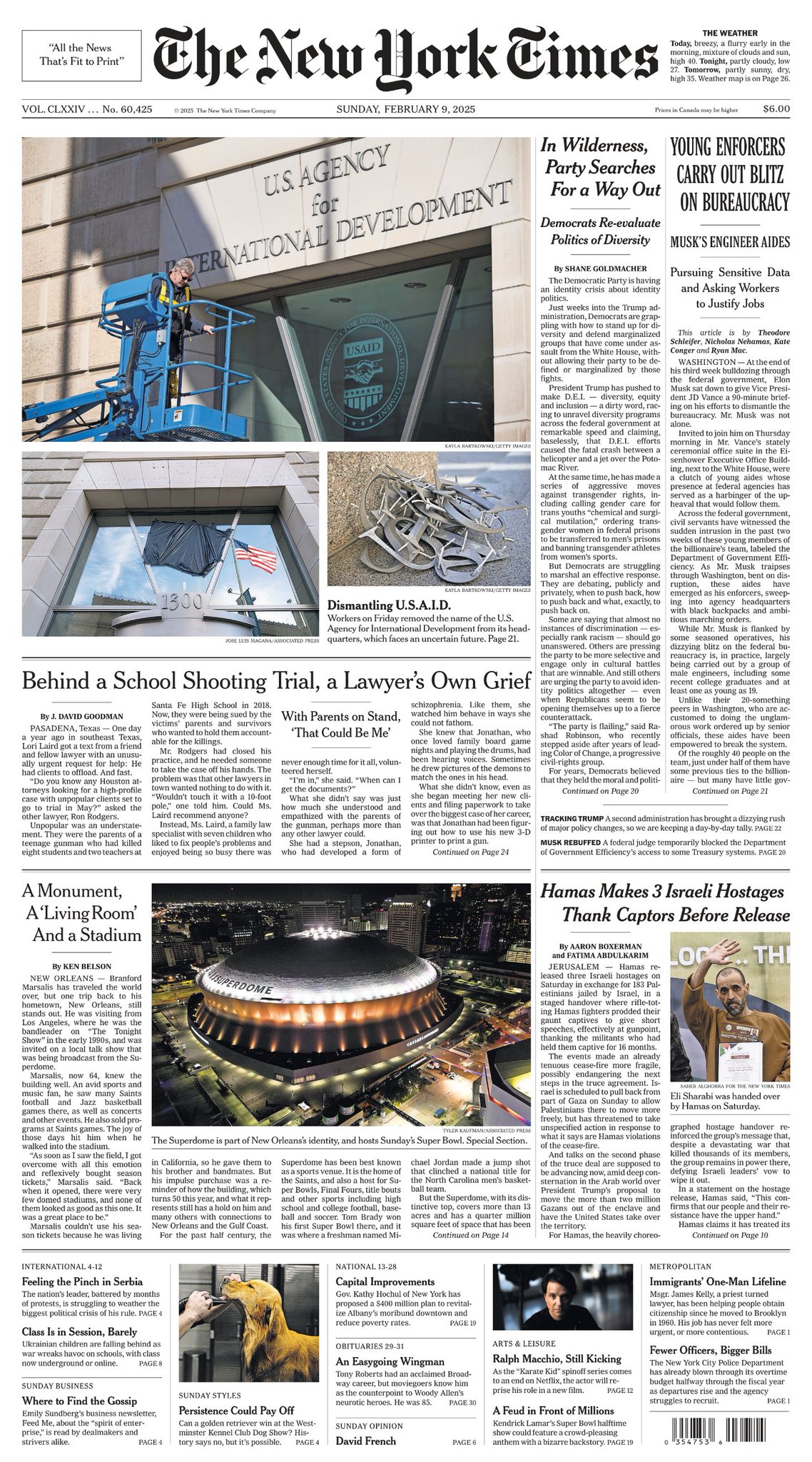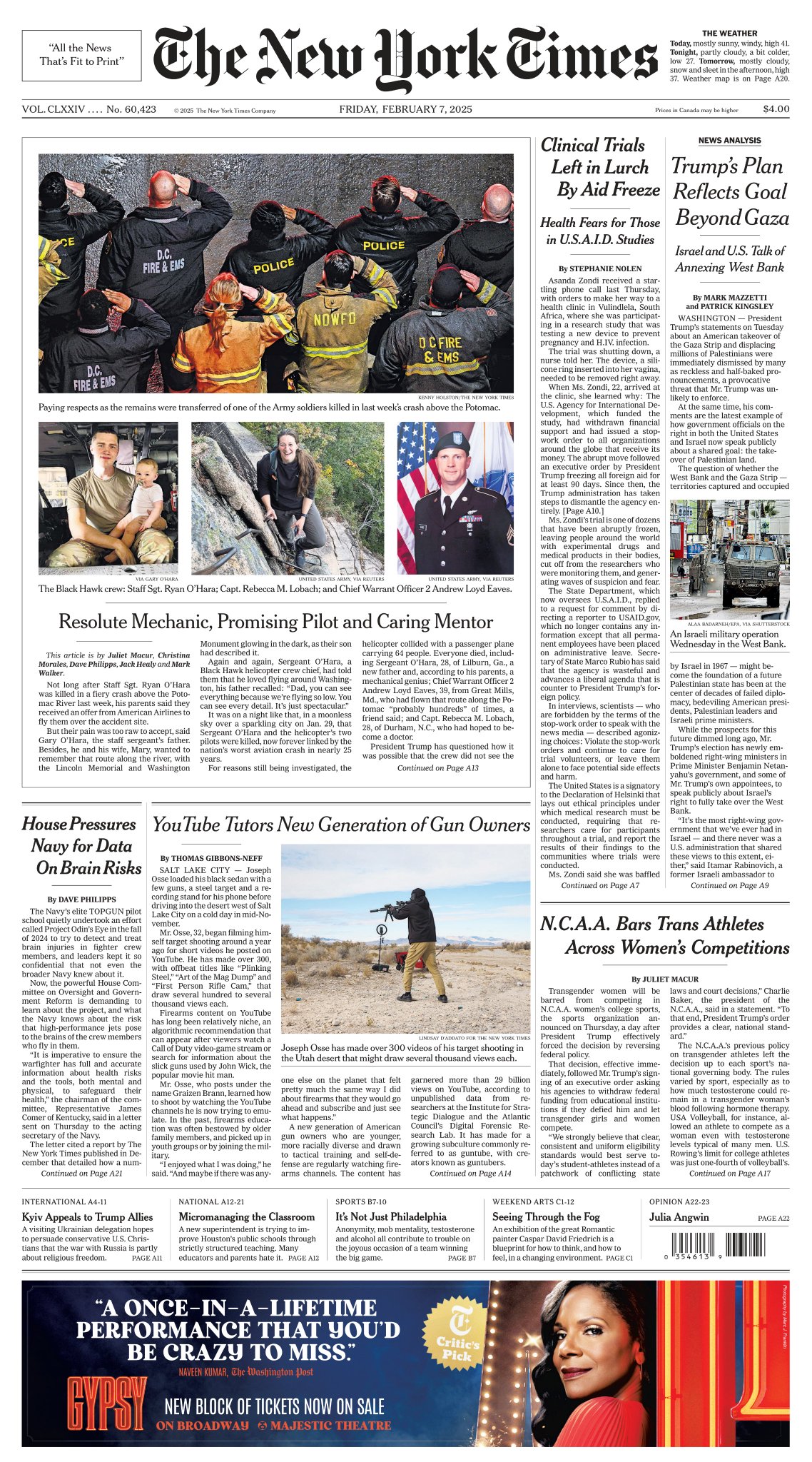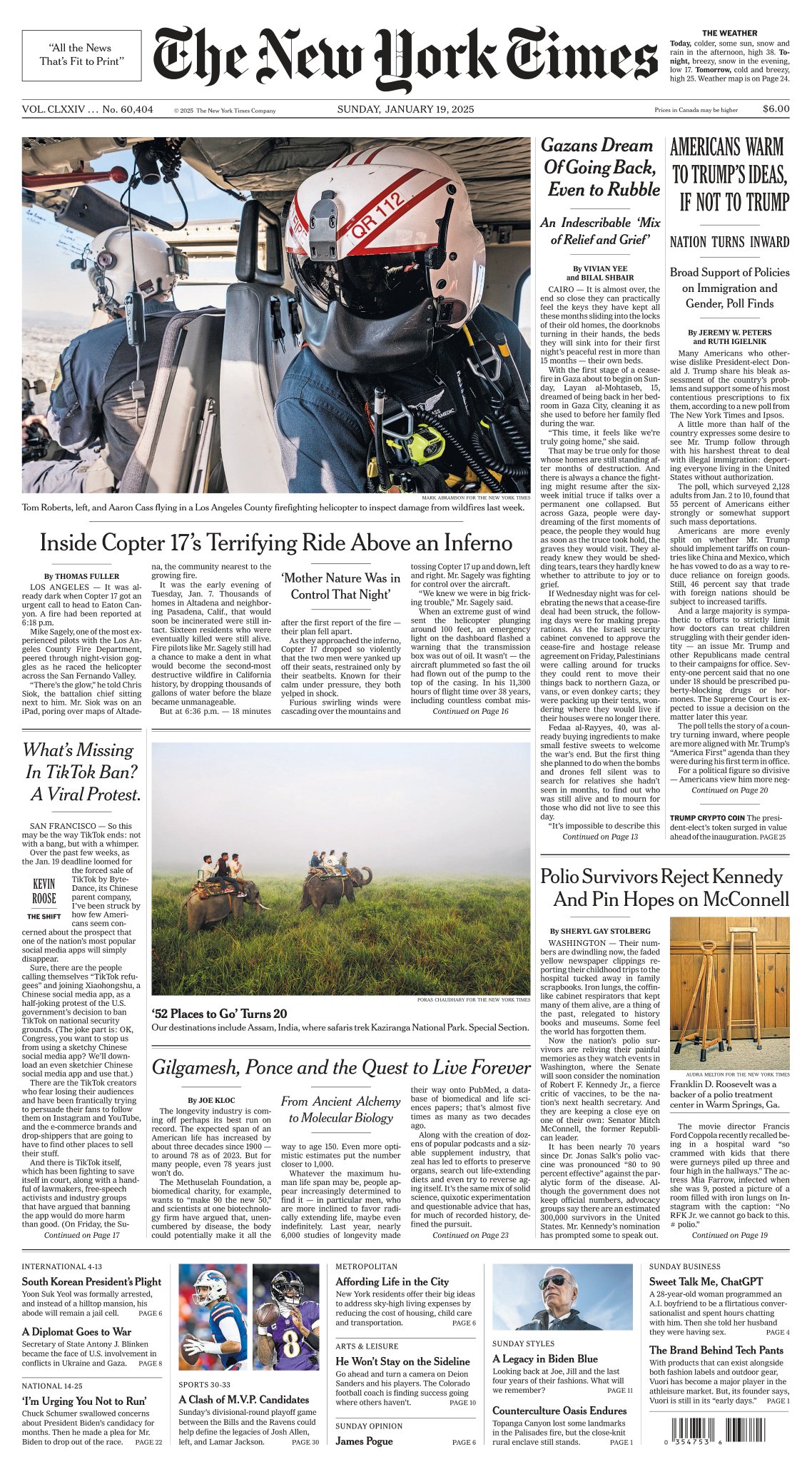
“There were too many houses to protect, and not enough engines,” one fire captain in Los Angeles said. Though fire officials say they were well-prepared and simply overwhelmed by the elements, questions are being raised about whether the intensity of modern fires requires a new playbook.
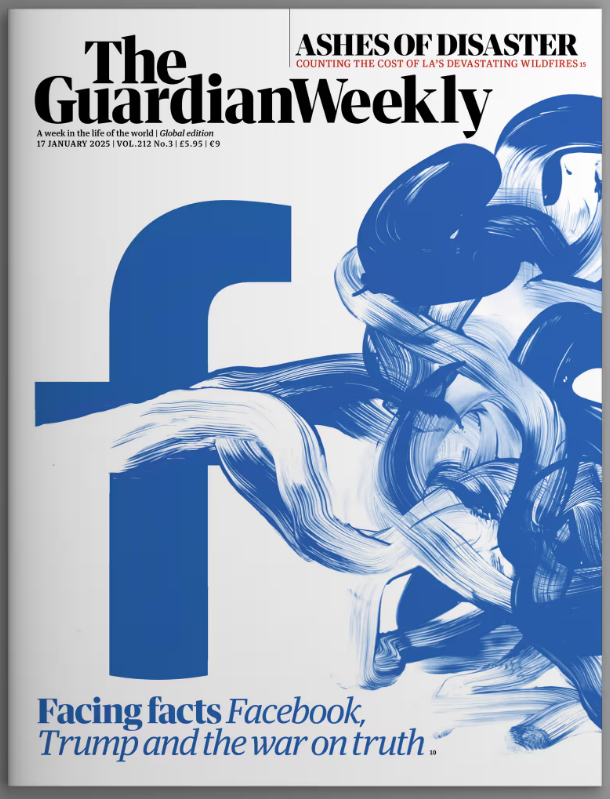
After visiting President-elect Donald J. Trump in November, Mr. Zuckerberg decided to relax Meta’s speech policies. He asked a small team to carry out his goals within weeks. The repercussions are just beginning.
Putin Gets a Snub in the Vast Wine Cellars of a Former Soviet Republic
The Russian president celebrated his 50th birthday at a winery in Moldova. After the invasion of Ukraine, it moved the bottles he was given away from public view.
NEW HUMANIST MAGAZINE – WINTER 2024/2025 ISSUE: The new issue features ‘Our Cyborg Future?’
The new age of the cyborg?
Neurobiologist and journalist Moheb Costandi explores the rapidly-developing world of brain-computer interfaces. For some people, these devices are already transforming lives – but the technology is quickly overtaking the ethics.
A dangerous calculation
Peter Ward unpicks the dark philosophy of the tech billionaires and how it is infiltrating some of our most powerful organisations.
There’s a product for that
A recent film, The Substance, explored the growing pressure on all of us – particularly women – to modify our bodies, not only through make-up and cosmetic procedures but also through digital filters. Clare Chambers, professor of political philosophy at the University of Cambridge, talks to us about the power of resistance and allowing our bodies to be “good enough”.
New life in the veins
Peter Salmon recounts the bizarre history of blood transfusion – and why the super-rich remain fascinated by its possibilities.
Major studies of Albert Einstein’s work contain minimal, if any, reference to the role of German mathematician Emmy Noether. Yet, she was crucial in resolving a paradox in general relativity through her theorem connecting symmetry and energy-conservation laws, published in 1918. When Noether died in 1935, Einstein called her “the most significant creative mathematical genius thus far produced since the higher education of women began”. In this book about her for the general reader, physicist Lee Phillips brings Noether alive.
Silk Roads
Sue Brunning et al. British Museum Press (2024)
The first object discussed in this lavishly illustrated British Museum exhibition book reveals the far-ranging, mysterious nature of the Silk Roads. It is a Buddha figure, excavated in Sweden from a site dated to around ad 800, and probably created in Pakistan two centuries earlier. No one knows how it reached Europe or its significance there. As the authors — three of them exhibition curators — admit, it is “impossible to capture the full extent and complexity of the Silk Roads in a single publication”— even by limiting their time frame to only five centuries.
The Last Human Job
Allison Pugh Princeton Univ. Press (2024)
A century ago, notes sociologist Allison Pugh, people doing their food shopping gave lists to shop workers, who retrieved the goods then haggled over the prices. The process epitomized what she terms connective labour, which involves “an emotional understanding with another person to create the outcomes we think are important”. A healthy society requires more connective labour, not more automation, she argues in her engaging study, which observes and interviews physicians, teachers, chaplains, hairdressers and more.
Becoming Earth
Ferris Jabr Random House (2024)
According to science journalist Ferris Jabr, his intriguing book about Earth — divided into three sections on rock, water and air — is “an exploration of how life has transformed the planet, a meditation on what it means to say that Earth itself is alive”. If this definition sounds similar to the Gaia hypothesis by chemist James Lovelock and biologist Lynn Margulis, that is welcome to Jabr, who admires Lovelock as a thinker and personality. He also recognizes how the 1970s hypothesis, which evolved over decades, still divides scientists.
Into the Clear Blue Sky
Rob Jackson Scribner (2024)
Earth scientist Rob Jackson chairs the Global Carbon Project, which works to reduce greenhouse-gas emissions and improve air and water quality. His book begins hopefully on a visit to Rome, where Vatican Museums conservators discuss the “breathtaking” restoration of the blue sky in Michelangelo’s fresco The Last Judgement, damaged by centuries of grime and visitors’ exhalations. But he ends on a deeply pessimistic note on a research boat in Amazonia, which is suffering from both floods and fires: the “Hellocene”.
The New Criterion – The September 2024 issue features‘The red star returns’; The trouble with Delmore; Churchill endures; Charles Ive’s “let out” souls; Theater, Arts, Music and The Media….
Arresting scenes
On John Constable’s The Hay Wain & the foundations of the West.
We write as The New Criterion’s annual period of aestivation enters its home stretch. The cicadas are buzzing, the days are noticeably shorter, and the leaves—some of them—are already edged with brown. Certain summers feature quiet expanses of lazy days. This one was different. In July, Donald Trump, except for the tip of his right ear, dodged a would-be assassin’s bullet; Joe Biden dropped (or, we now know, was pushed) out of the 2024 presidential race but, as of this writing, remains president; Kamala Harris, Biden’s vice president, stepped into the vacancy and magically became the new candidate for president, choosing the Minnesota governor Tim Walz as her running mate.