

A.M. Edition for Dec. 21. Gabriel Boric’s landslide win could empower him to embark on a big economic revamp of the market economy and that has unsettled investors. WSJ’s Ryan Dube explains how the former student protest leader plans to raise taxes and dismantle a private pension system in Latin America’s richest nation. Peter Granitz hosts.
Tag Archives: Omicron

Politics: The New Normal Has Arrived, Metaverse Lords, Future Of Europe
A selection of three essential articles read aloud from the Christmas double issue of The Economist. This week: has the new normal already arrived? Plus, meet the lords of the metaverse (10:10) and, a century apart, two men with very different dreams contend for Europe’s future (17:50).

Science: Brain Cells Wired To The Matrix, DeepMind Search Engine, Omicron
In a step towards creating intelligent cyborg brains, Cortical Labs in Melbourne have trained lab-grown brain organoids to play a classic 1970s video game. The team explains how the brain cells live in a Matrix-like, simulated world, where all they know is Pong.
And there’s more AI news, as the team digs into DeepMind’s invention of a ‘search engine’ style supercomputer, one much smaller than its competitors. The team discusses sleep, and how manipulating the hypnagogic phase of sleep can lead to bursts of creativity. As the holiday season approaches, Omicron shows no signs of letting up, so the team brings you up to speed on what we know so far. And they bring two bird related stories, one about the superpowers of zebra finches and the other about the link between personality types and feather colours in turkeys. On the pod are Rowan Hooper, Penny Sarchet, Michael Le Page, Clare Wilson and Matt Sparkes. To read about these stories and much more, subscribe at newscientist.com/podcasts.
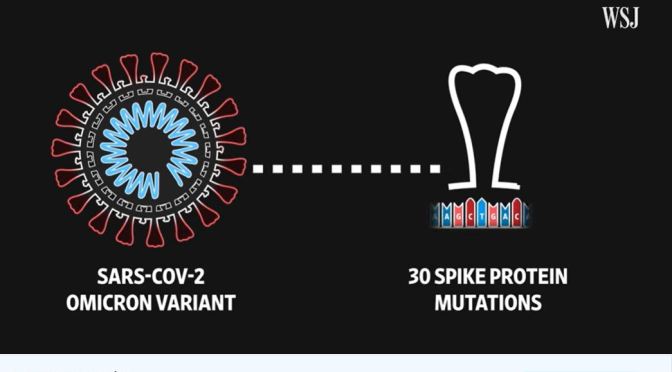
Covid-19: Why Omicron Concerns Scientists (WSJ)
The B.1.1.529 variant was first reported to WHO from South Africa on 24 November 2021. The epidemiological situation in South Africa has been characterized by three distinct peaks in reported cases, the latest of which was predominantly the Delta variant. In recent weeks, infections have increased steeply, coinciding with the detection of B.1.1.529 variant. The first known confirmed B.1.1.529 infection was from a specimen collected on 9 November 2021.
This variant has a large number of mutations, some of which are concerning. Preliminary evidence suggests an increased risk of reinfection with this variant, as compared to other VOCs. The number of cases of this variant appears to be increasing in almost all provinces in South Africa. Current SARS-CoV-2 PCR diagnostics continue to detect this variant. Several labs have indicated that for one widely used PCR test, one of the three target genes is not detected (called S gene dropout or S gene target failure) and this test can therefore be used as marker for this variant, pending sequencing confirmation. Using this approach, this variant has been detected at faster rates than previous surges in infection, suggesting that this variant may have a growth advantage.
 Boomers Daily