
Tag Archives: New York Times Book Review

The New York Times Book Review – January 21, 2024

Image

THE NEW YORK TIMES BOOK REVIEW (January 19, 2024): The latest issue features the excitement over advance copy reviews of a January novel, Kaveh Akbar’s “Martyr!” …“You’ve got to read this,” one editor said. “One of the most electric novels I’ve read in a long while,” another said. This kind of thing — everyone thrilled by the same book — is unusual at the TBR, and explains why “Martyr!,” about a grieving young man’s search for meaning, graces our cover this week.

A Death-Haunted First Novel Incandescent With Life

This colorful illustration features a large red bird and a horse’s head and neck, both adorned with Farsi letters, as well as a skyward-bound airplane and a black-hooded figure with many faces holding a torch in one hand and a sword in the other. These details are laid over a backdrop of blue-green mountains and yellow sky.

In “Martyr!,” the poet Kaveh Akbar turns a grieving young man’s search for meaning into a piercing family saga.

Martyr!, by Kaveh Akbar

Reviewed by By Junot Díaz


Cyrus Shams, the aching protagonist at the heart of Kaveh Akbar’s incandescent first novel, is a veritable Rushdiean multitude: an Iranian-born American, a “bad” immigrant, a recovering addict, a straight-passing queer, an almost-30 poet who rarely writes, an orphan, a runner of open mics, an indefatigable logophile, a fiery wit, a self-pitying malcontent. But above all else Cyrus is sad; profoundly, inconsolably, suicidally sad.

Here are the books discussed in this week’s episode:

  • “Knife,” by Salman Rushdie
  • “James,” by Percival Everett
  • “The Book of Love,” by Kelly Link
  • “Martyr,” by Kaveh Akbar
  • “The Demon of Unrest,” by Erik Larson
  • “The Hunter,” by Tana French
  • “Wandering Stars,” by Tommy Orange
  • “Anita de Monte Laughs Last,” by Xochitl Gonzalez
  • “Splinters,” by Leslie Jamison
  • “Neighbors and Other Stories,” by Diane Oliver
  • “Funny Story,” by Emily Henry
  • “Table for Two,” by Amor Towles
  • “Grief Is for People,” by Sloane Crosley
  • “One Way Back: A Memoir,” by Christine Blasey Ford
  • “The House of Hidden Meanings: A Memoir,” by RuPaul
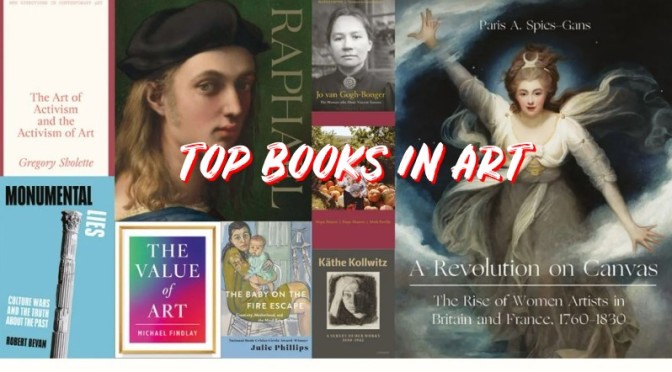
New York Times Reviews: Best Art Books In 2023

Photographs of the covers of six of the books discussed, featuring drawings, photographs and colorful paintings.

The New York Times Books (December 14, 2023): Best Art Books of 2023 – The art critics of The Times select their favorites, from Botticelli to Vermeer, Lucy Lippard’s memoir, and Wade Guyton’s intelligent rereading of Manet.

‘Botticelli Drawings’ By Furio Rinaldi (Fine Arts Museums of San Francisco/Yale).

Botticelli’s portrait of Simonetta Vespucci, in profile, shows how the artist’s effortless squiggles cohere into the subject’s curly hair.

His strawberry-blond Venus on a wind-propelled scallop shell still pulls Florence’s tourists from the gelateria to the Uffizi — but a rarer Botticelli feast is currently on offer in San Francisco, where the Legion of Honor is presenting the first exhibition ever of this Renaissance master’s fragile drawings (through Feb. 11). In this authoritative catalog, Rinaldi makes several new attributions, including two exquisite head studies of a man gazing upward and a woman with modestly lowered eyes. For a Florentine in the later 15th century, the core of painting was disegno (“design,” but also “drawing”), and Botticelli put drawing first. Delicate highlights of white and yellow show the light on tensed muscles or bowed heads. Effortless squiggles cohere into Simonetta Vespucci’s curled hair or John the Baptist’s camel cloak. His line feels spring-loaded; his saints and angels seem ready for the dance floor; his paintings’ grace and vigor started with a pen.

‘Abraham Ángel: Between Wonder and Seduction’ Edited by Mark A. Castro (Dallas Museum of Art; distributed by Yale University Press).

A portrait, in profile, of the artist Manuel Rodríguez Lozano, in dominant brown colors.

Like Vermeer, the Mexican portraitist Abraham Ángel, who died at age 19 in 1924, left little behind. His 20 extant works (on view in Dallas through next January) reproduce beautifully in a slim but convincing catalog that doesn’t overstate the case. Ángel’s preferred substrate was cardboard, and the bumpy nap of it really shows in these pages. So do the Fauve-like colors he used to outline his sitters. (Instead of black he preferred blues and browns, as Alice Neel would.) Playfully primitive, these knowing likenesses (among them Ángel’s tutor and lover, Manuel Rodríguez Lozano) combined Mexico’s burgeoning populist aesthetic with a private romanticism that seems nonetheless to have sought clarity on the promise of his country’s Revolution.

‘Woven Histories: Textiles and Modern Abstraction’ Edited by Lynne Cooke (University of Chicago Press).

A wall hanging from “Woven Histories.”

This major looker of an exhibition catalog loosens up the warp and weft of conventional views of modern art — all those tight-knotted hierarchical categories (high versus low, art versus craft) on which our institutions and markets still rest — and demonstrates the universe of formal and conceptual brilliance that has always traveled on a parallel track. The sheer variety of work produced by more than 50 artists chosen by the book’s editor, Lynne Cooke, will knock your socks off. (Just wait till you see what’s happening in the field of basketry alone.) So will the visual imaginations of individual geniuses we already know like Anni Albers, Ruth Asawa, Gego, Lenore Tawney and Sheila Hicks, and the others we’re introduced to here.

READ MORE

Books: The New York Times Book Review – Nov 27, 2022

Illustration by Eleanor Taylor

New York Times Book Review – November 27, 2022:

A Life of Shirley Hazzard, Sublime Chronicler of Affairs of the Heart

A new biography by Brigitta Olubas is the first to examine the life of the Australian novelist celebrated for her refined poetic fiction and acute moral vision.

Big ‘Pippin’: The Harmony and Dissonance of an American Classic

Elysa Gardner’s “Magic to Do” goes backstage at Bob Fosse and Stephen Schwartz’s 1972 musical about a lost prince.

Read Your Way Through Mexico City

Juan Villoro, who spent over two decades perfecting one book about Mexico City, recommends reading on the city he loves. “Mexico is too complex,” a visitor said. “It needs to be read.”

Books: The New York Times Book Review – Sept 4, 2022

The New York Times Book Review 04 September 2022

Stephen King’s ‘Fairy Tale’: A Portal to a Fantasy Kingdom

In King’s latest novel, a teenage boy discovers another world beneath a backyard shed.

Why Did Some Cubans Inject Themselves With H.I.V.?

“Sacrificio,” a novel by Ernesto Mestre-Reed, imagines an extreme counterrevolutionary movement during desperate times.

Newly Published, From Lost Worlds to Whale Talk

Previews: New York Times Book Review – May 1, 2022

Preview: New York Times Book Review – April 24

Read more

Books: ‘When We Cease To Understand The World’ By Benjamín Labatut (2021)

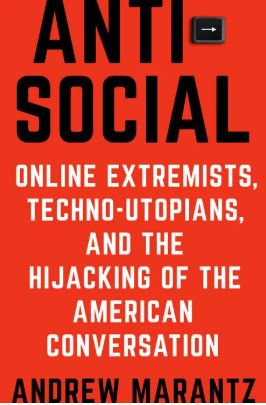
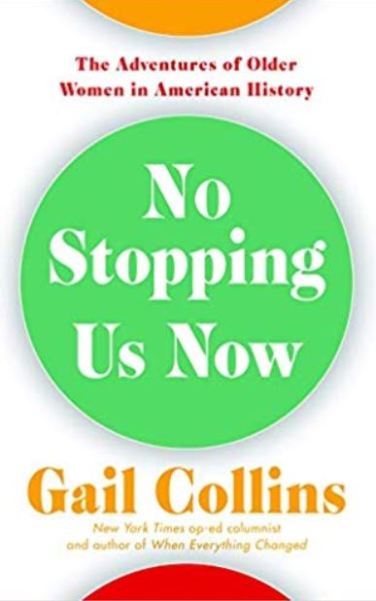
Book Review Podcasts: “Antisocial” By Andrew Marantz, “No Stopping Us Now” By Gail Collins (NYT)

AntiSocial Andrew Marantz

From the New York Times Book Review:

“Antisocial,” the new book by Andrew Marantz, plainly states its subject in its subtitle: “Online Extremists, Techno-Utopians, and the Hijacking of the American Conversation.” In order to write it, Marantz immersed himself in corners of the internet most of us would go out of our way to avoid.

Gail Collins visits the podcast this week to discuss her new book, “No Stopping Us Now,” an eye-opening chronicle of older women’s journey to progress in the United States over the years. “It used to be, the whole vision of your life if you were a woman was that you got married, you had children and, once the children were grown, you were old — done,” 

No Stopping Us Now Gail Collins

Collins says on the podcast this week. “That was the thing I was looking at: What counted as old, and then what did women do when they got to what was regarded as old? How did they use it, how did they fight it?”

To read more: https://www.nytimes.com/2019/11/08/books/review/Andrew-Marantz-Gail-Collins-interview.html