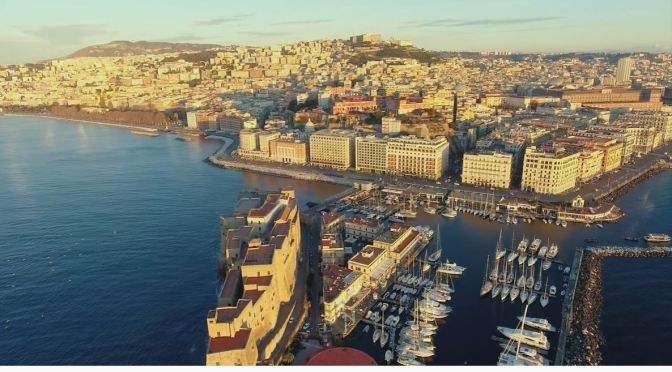
Stef Hoffer Films (June 30, 2023) – Napoli is one of Europe’s most diverse and fascinating cities, and an intriguing place to travel to. Often misunderstood, this Italian city has some of the country’s most beautiful architecture, ancient historic sites, delicious food, interesting traditions, and a friendly, welcoming people.
Located in the Southern Campania region, Napoli (or Naples) has a very different character from most other Italian cities.
In this travel documentary, I’m exploring the streets of Napoli and its surroundings. From the buzzing, narrow alleys of the old city center to the grand churches and cathedrals. From historic palaces and castles to mysterious underground tunnels. And from ancient archaeological sites under the shadow of Mount Vesuvius to one of Italy’s most beautiful stretches of coastline.
Naples, a city in southern Italy, sits on the Bay of Naples. Nearby is Mount Vesuvius, the still-active volcano that destroyed nearby Roman town Pompeii. Dating to the 2nd millennium B.C., Naples has centuries of important art and architecture. The city’s cathedral, the Duomo di San Gennaro, is filled with frescoes. Other major landmarks include the lavish Royal Palace and Castel Nuovo, a 13th-century castle.
I have seen Naples from his vantage of a ship anchored offshore — one of the most sublime locations in the world, that sweep of coast stacked with apricot, carmine, azure and rose villas; the blue, blue U of the harbor; the emphatic Vesuvius anchoring the view.
Frances Mayes
In October of 1820, typhus raged in Naples. With his artist friend, Joseph Severn, the British poet John Keats rocked in the city’s harbor for 10 days, not nearly the quaranta giorni — 40 days — that give us our word quarantine.
Before this journey, Keats always felt intense melancholy. In “On Seeing the Elgin Marbles for the First Time,” he wrote “… mortality / Weighs heavily on me like unwilling sleep.” (And in the smooth pentameter of “Ode to a Nightingale”: “I have been half in love with easeful death.”) Not a holiday, this voyage out of England was a desperate trip to the sunny climate of Italy. His cough had grown steadily worse. Since the morning he’d seen a splotch of blood on his pillow, he knew he had little chance of surviving the consumption that had invaded his lungs. His last-ditch: Go to Rome. Meanwhile, exile at sea.





 Boomers Daily