Walk East – Mutianyu Great Wall (慕田峪长城), built in 5400 m long, is regarded as the “Essence of Great Wall in Ming Dynasty”. This great wall, linking Gubeikou (古北口) in the east and Juyongguan (居庸关) in the west, was served as the vital military strategic point from the ancient time. Moreover, Mutianyu section is the “longest great wall in China” so far and since protection work is well done here, tourists can now see its original appearance and enjoy the real ancient culture of great wall. Also, spectacular natural scenery in Mutianyu Great Wall always impresses visitors here for its abundant vegetation.
History of Mutianyu Great Wall
Mutianyu was originally a small mountain village before with fluctuating mountains and lush trees. For its vital and special situation, Mutianyu had been an important martial barrier for long time. And till Ming dynasty, a series of war broke out. In order to protect the national capital and the imperial mausoleum of Ming dynasty, the Emperor Zhu Yuanzhang (朱元璋) ordered his general Xu Da (徐达) to build this great wall in 1368. Although Mutianyu Great Wall has experience damages and reparation for several times, it is the most-preserved section of great wall relics of Ming dynasty.
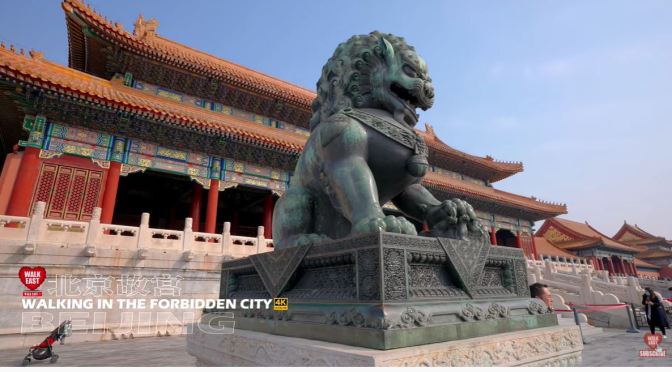
The Forbidden City is the palatial heart of China. Constructed in 1420, during the early Ming Dynasty, it is China’s best-preserved imperial palace, and the largest ancient palatial structure in the world.
As one of the five most important palaces in the world, the grand halls and walls proudly display the essence and culmination of traditional Chinese architecture, fitting for the capital city of the world’s largest nation.
For more than six centuries, the Forbidden City has awed all those who have travelled from near and far to explore its 900 golden-roofed buildings, set amid moats, gardens, and plazas, where thousands of people lived and worked in service of the world’s largest and most sophisticated pre-modern empire. Marco Polo called it “the greatest Palace that ever was;” Simon Leys praised its architectural genius; and Franz Kafka viewed it as an impressive yet alarming symbol of power.
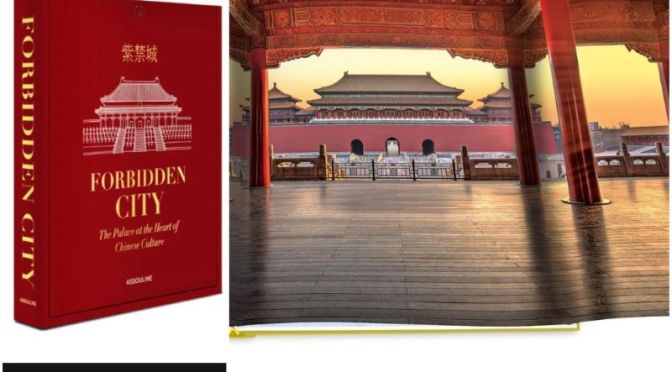
In this compelling addition to Assouline’s Ultimate Collection, Pulitzer Prize-winning author Ian Johnson guides readers through the magnificent and storied palace built by China’s Yongle Emperor to serve as the seat of the Ming dynasty. Weaving in history and events of the past six centuries and featuring more than 100 photographs, artworks, and historical artifacts, this luxury tome conjures life in this imperial sphere—a small city unto itself, in which soldiers, eunuchs, concubines, and merchants resided alongside the royalty they served. A stunning homage to the grand beauty of one of the most complex structures in all of history, Forbidden City reveals that 600 years after its construction, this royal monument endures as the physical and spiritual heart of Chinese civilization. This volume is presented in a regal, glossy red box reminiscent of traditional Chinese lacquerware, and that features a delicately carved map of the Forbidden City’s grounds.
1500 years before the construction of the Ming Dynasty wall was constructed, the Han Dynasty defended the borders of China from invaders with a Great Wall of their own.
News, Views and Reviews For The Intellectually Curious




 Boomers Daily