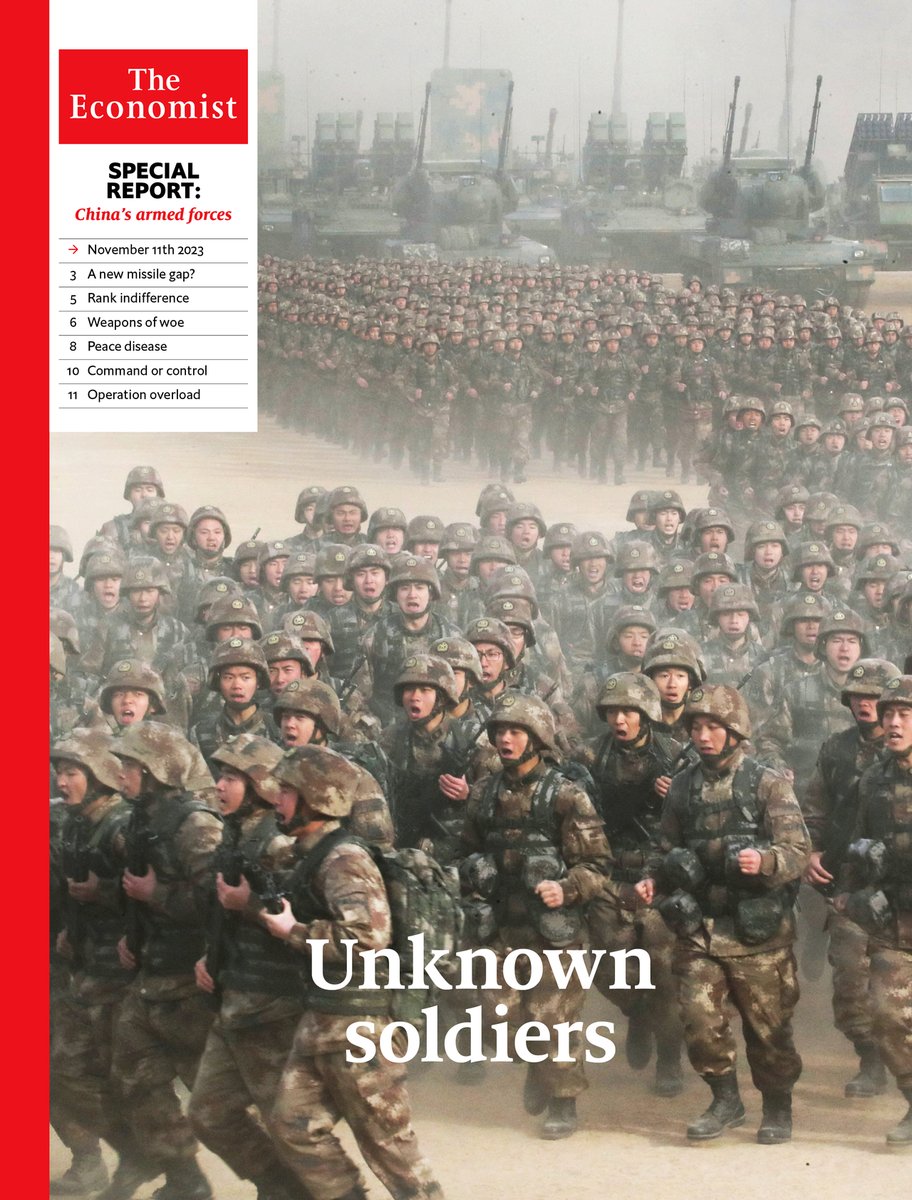
The Economist SPECIAL REPORTS – CHINA’S ARMED FORCES (NOVEMBER 11, 2023): Overestimating China’s armed forces would be dangerous; Unknown soldiers – The People’s Liberation Army is not yet as formidable as the West fears; Rank indifference – China is struggling to recruit enough highly skilled troops; Weapons of woe – From hypersonic missiles to undersea drones, the PLA is making leaps…
Overestimating China’s armed forces would be dangerous, argues Jeremy Page
In 1957 america was gripped by fears of a “missile gap” with the Soviet Union. The Kremlin had stunned the world with a test flight of an intercontinental ballistic missile (icbm) and the launch of Sputnik. An American intelligence report predicted that by 1962, the Soviets could have 500 icbms, outstripping America’s arsenal. When word of that leaked, a political furore erupted. Eyeing the presidency from his Senate seat, John F. Kennedy demanded action to prevent a Soviet “shortcut to world domination”.
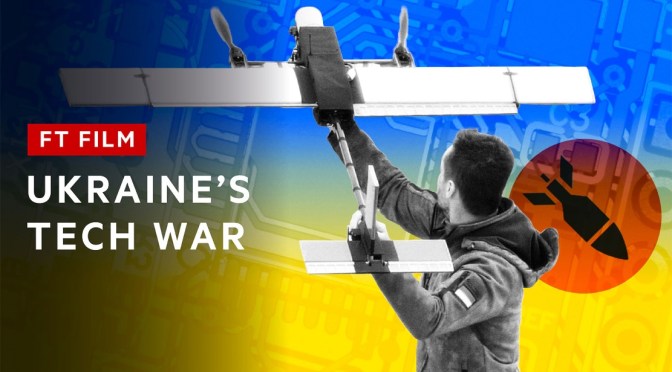
Financial Times (July 25, 2023) -From the production of cheap battlefield drones to AI-powered missile detection, Ukrainian tech start-ups, IT workers and volunteers have been developing military tech and putting themselves on the front line of the war effort
Video timeline:00:00 Ukraine’s tech war 00:39 The growing tech sector 01:28 The tech start-up: Respeecher and AI voice cloning 03:35 The miltech start-up: Zvook and AI missile detection 05:32 A digitally-focused country 08:00 A fully-fledged drone war 09:06 The drone start-up 11:17 Drones: the growth of the market 12:41 Why drones? 14:13 Drones and the women’s veteran movement 16:00 Ukrainian resilience 16:30 Air Alert! Ajax Systems 19:30 It’s not just about drones 20:12 The anti-drone gun: DroneUA 21:04 Who’s winning the tech war? 22:45 The army of robots 23:36 A new Israel? 24:46 The war has changed us
China is expanding its military arsenal with new drones, including stealth versions and those that can swarm and drop bombs. WSJ compares the tech and design of these drones with their U.S. counterparts to see how Beijing is equipping its military for possible future conflict. Photo composite: Sharon Shi
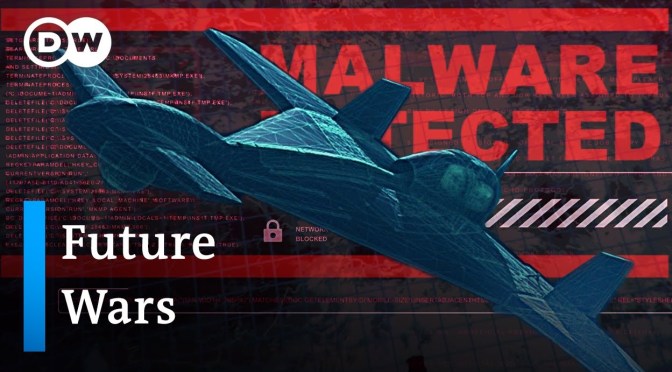
The world is entering a new era of warfare, with cyber and autonomous weapons taking center stage. These technologies are making militaries faster, smarter, more efficient. But if unchecked, they threaten to destabilize the world. DW takes a deep dive into the future of conflict, uncovering an even more volatile world.
Chapters 00:00 – Introduction 02:37 – The Cyber Nuclear Nightmare 17:05 – Flash Wars And Autonomous Weapons 30:12 – Trading Markets And Flash Crashes 31:45 – Time To Act
Where a cyber intrusion against a nuclear early warning system can unleash a terrifying spiral of escalation; where “flash wars” can erupt from autonomous weapons interacting so fast that no human could keep up. Germany’s Foreign Minister Heiko Maas tells DW that we have already entered the technological arms race that is propelling us towards this future. “We’re right in the middle of it. That’s the reality we have to deal with.” And yet the world is failing to meet the challenge. Talks on controlling autonomous weapons have repeatedly been stalled by major powers seeking to carve out their own advantage. And cyber conflict has become not just a fear of the future but a permanent state of affairs. DW finds out what must happen to steer the world in a safer direction, with leading voices from the fields of politics, diplomacy, intelligence, academia, and activism speaking out.
Armed drones are growing in military importance as conflicts around the world have proven the utility of these effective tools of war. Companies in China, Turkey, and Russia, among others, have developed advanced remotely piloted aircraft that can use guided weapons on and off the battlefield.
The widespread use of drones in Iraq and Afghanistan by the United States to target and kill insurgents jump started a new chapter in the history of conflict. These high flying and remotely piloted aircraft could engage targets with impunity while the operators were safely working in a ground control station. Keeping the crews out of danger also made the drones politically cheap to use over dangerous skies.
Now more and more countries are gaining this military capability for their own purposes. “At the moment, we’ve seen over 100 states worldwide using military drones and that number is growing significantly” said Wim Zwijnenburg, Project leader, Humanitarian Disarmament at PAX. “We have over 20 states that are using armed drones in conflicts or outside of armed conflicts.”
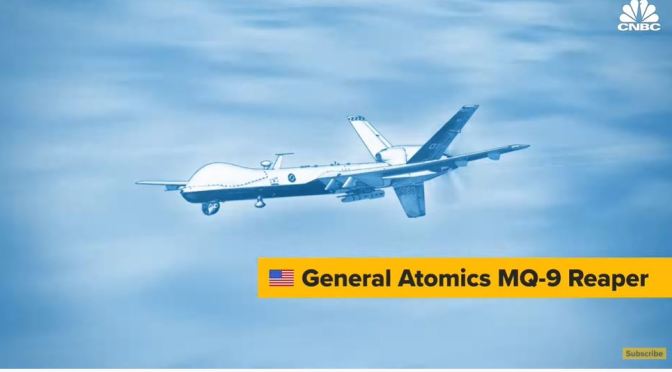
Although larger and more complex drones, like the General Atomics MQ-9 Reaper are not cheap to develop or operate, smaller drones are becoming more ubiquitous in conflict zones. Limiting the proliferation of these smaller drones, and the ability to weaponize them, is a regulatory nightmare for government agencies around the world.
“Drones are just model airplanes with great sensors on them. And all of these are dual use and have been used in the civilian realm” said Ulrike Franke, a Senior Policy Fellow at the European Council on Foreign Relations. “And in fact, drones have risen enormously in the civilian realm over the last five to 10 years. And so controlling their export is really difficult.”
News, Views and Reviews For The Intellectually Curious





 Financial Times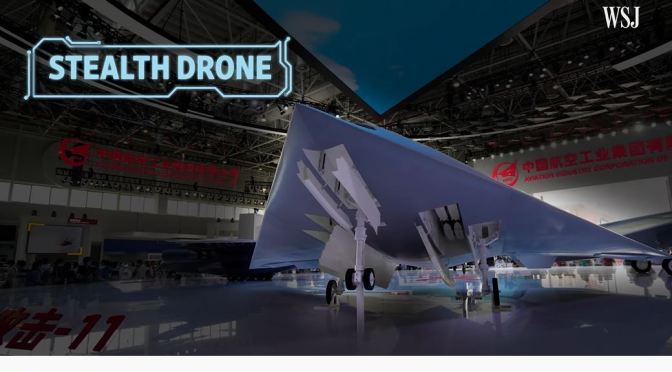
 Boomers Daily