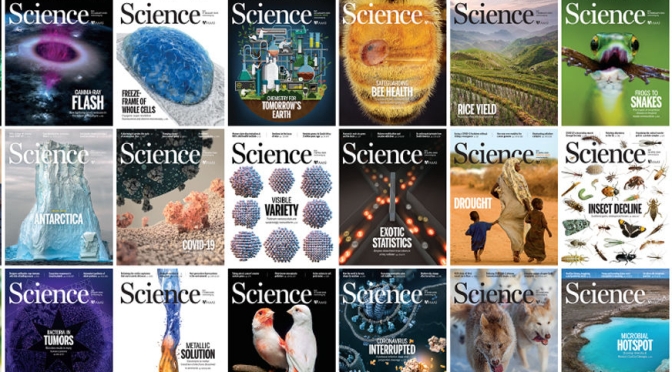
‘Science Magazine – May 2, 2024: The new issue features ‘Superspreading Seeds’ – Influencers spread health messages across remote villages; making sense of evidence on early childhood education; Brain and muscle clocks cooperate to resist aging…
‘Science Magazine – April 25, 2024: The new issue features ‘Born to Explore’ – Exploratory tendency leads to diversification; Can science address loneliness?; Vitamin D, microbiota, and cancer immunity; A safer version of a 140-year-old chemical reaction…
Vitamin D modulates intestinal epithelial cell function to enhance antitumor microbes
The gut microbiome has been shown to modulate the response of cancer patients to therapy, but precisely how microbiota affect anticancer immunity is still being elucidated. Giampazolias et al. report that vitamin D bioavailability in mice influences the composition of the gut microbiome (see the Perspective by Franco and McCoy). After dietary manipulation, vitamin D levels were observed to affect gut bacteria, which in turn improved cancer immunotherapy and antitumor immunity. In humans, low vitamin D levels were correlated with tumor development, and gene signatures of vitamin D activity were associated with improved patient responses to immunotherapy. These findings highlight the connection between vitamin D and the immune system through gut bacteria and may have applications for improving cancer therapies.
The power of curiosity
Lake Tanganyika contains one of the most impressive adaptive radiations, with about 250 species of cichlid occupying a variety of niches. Much research has focused on understanding the drivers of this and other adaptive radiations. Trembo et al. looked in depth at 57 of these cichlid species with regard to their behavior, ecomorphology, and genomics. They found that one behavior in particular, a tendency to explore, was related to niche adaptation, and they identified a regulatory gene that is highly associated with this behavior. These findings suggest the existence of an adaptive syndrome driven in part by a tendency to explore what is new.
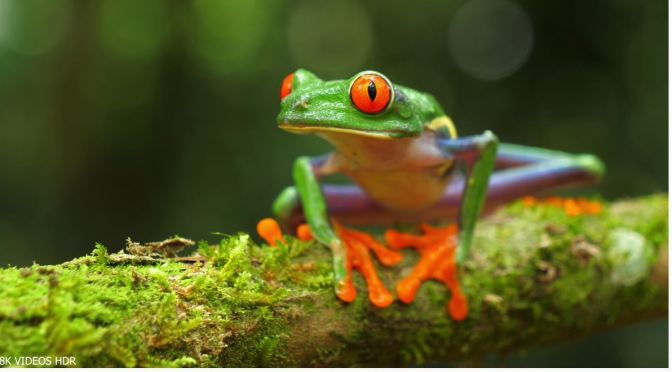
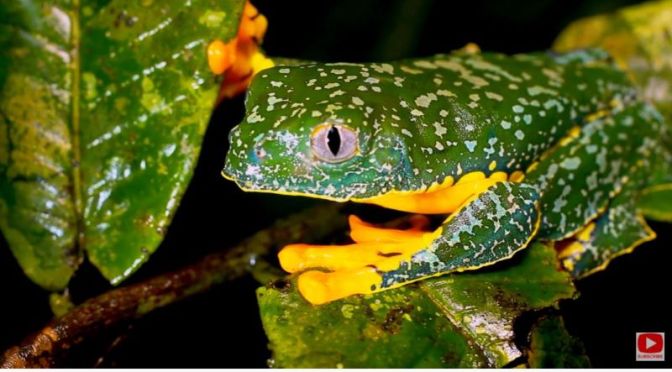
In this video you can see rainforest butterflies, lizards, blue jeans poison dart frog, treefrogs, glass frogs, squirrel monkey, capuchin monkey, red colobus monkey, silvery gibbon, peccary, lemur, chameleon, jaguar, three toed sloth and beautiful colored birds as jacobin, toucan, maccaw, parrot, hummingbirds, tanager, motmot, quetzal, from different rainforest areas as Caribbean, Costa Rica, Brazil, Madagagascar.
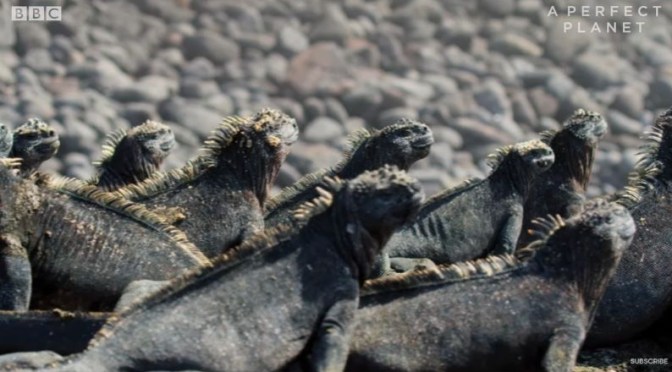
This sea-diving lizard only has 30 minutes to search for food before his muscles seize up.
The marine iguana, also known as the sea iguana, saltwater iguana, or Galápagos marine iguana, is a species of iguana found only on the Galápagos Islands. Unique among modern lizards, it is a marine reptile that has the ability to forage in the sea for algae, which makes up almost all of its diet.
The Galápagos Islands is a volcanic archipelago in the Pacific Ocean. It’s considered one of the world’s foremost destinations for wildlife-viewing. A province of Ecuador, it lies about 1,000km off its coast. Its isolated terrain shelters a diversity of plant and animal species, many found nowhere else. Charles Darwin visited in 1835, and his observation of Galápagos’ species later inspired his theory of evolution.
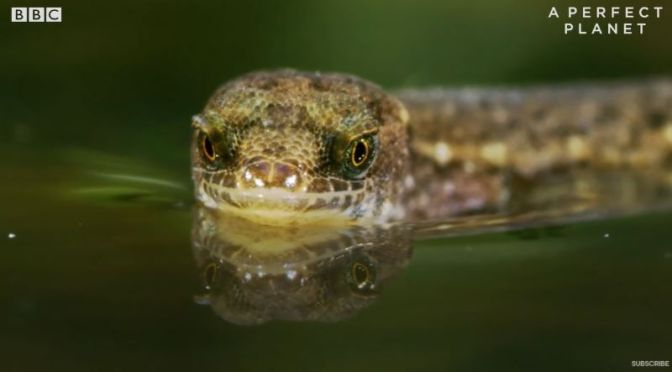
This little pygmy gecko has an amazing superpower, that helps it survive in the wet season.
The Amazon pigmy gecko is a species of lizard in the Sphaerodactylidae family found in northern South America in Colombia, Venezuela, the Guianas, Brazil, Ecuador, and northern Peru.
Reptiles are a class of vertebrates made up mostly of snakes, turtles, lizards, and crocodilians. These animals are most easily recognized by their dry, scaly skin. Almost all reptiles are cold-blooded, and most lay eggs—though some, like the boa constrictor, give birth to live young. Instead of possessing gills like fish or amphibians, reptiles have lungs for breathing.
News, Views and Reviews For The Intellectually Curious





 Boomers Daily