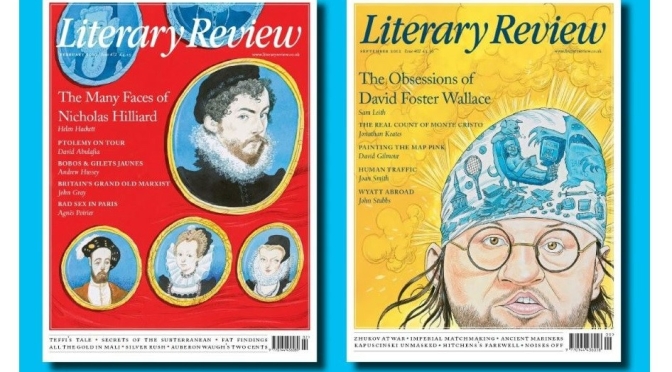
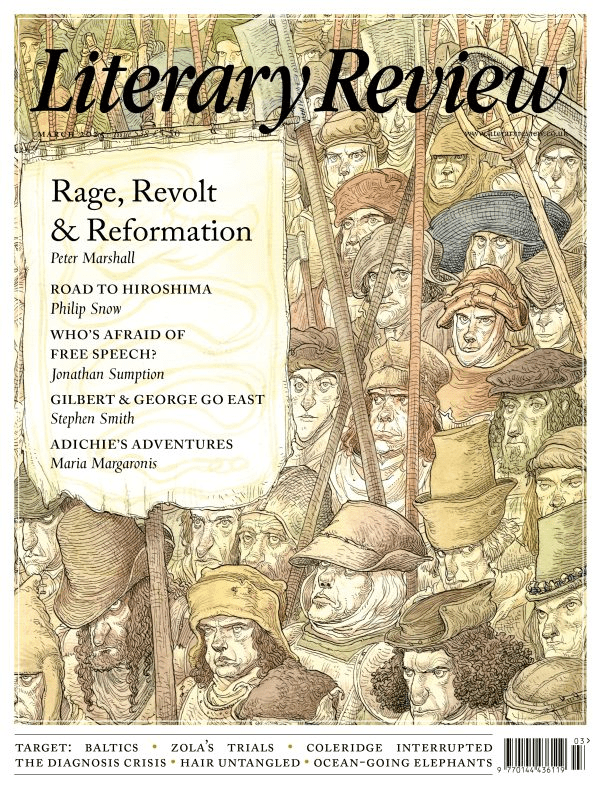
LITERARY REVIEW (March 1, 2025): The latest issue features…

LITERARY REVIEW (March 1, 2025): The latest issue features…

LITERARY REVIEW (February 1, 2025): The latest issue features ‘Sebald’s Critical Eye’…
The Travels of Norman Lewis by John Hatt (ed) – review by Nicholas Rankin
The Hohenzollerns and the Nazis: A History of Collaboration By Stephan Malinowski (Translated from German by Jefferson Chase)
The Library of Ancient Wisdom: Mesopotamia and the Making of History By Selena Wisnom
Between Two Rivers: Ancient Mesopotamia and the Birth of History By Moudhy Al-Rashid


Literary Review – December 2, 2024: The latest issue features ‘Mandeville’s Dangerous Idea’
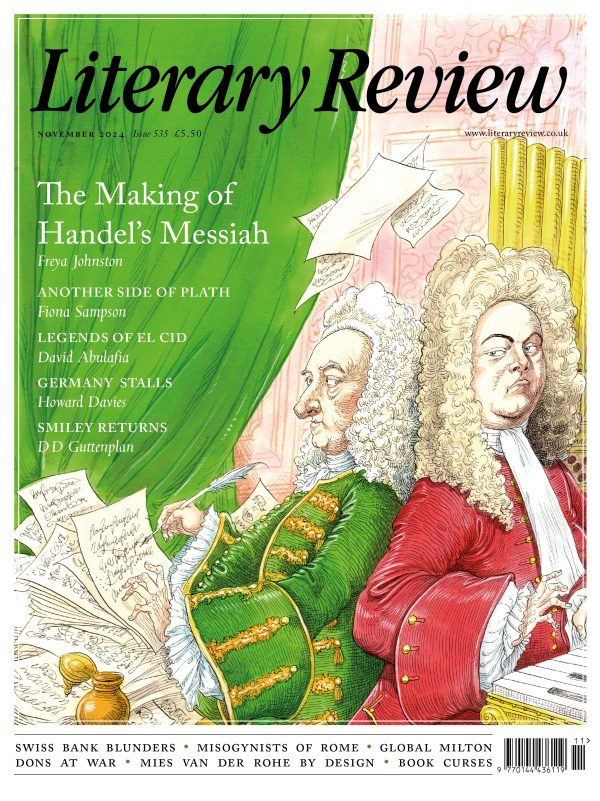
Literary Review – November 2, 2024: The latest issue features ‘The Making of Handel’s Messiah’; Another Side of Plath; Legends of El Cid; Germany Stalls and Smiley Returns…
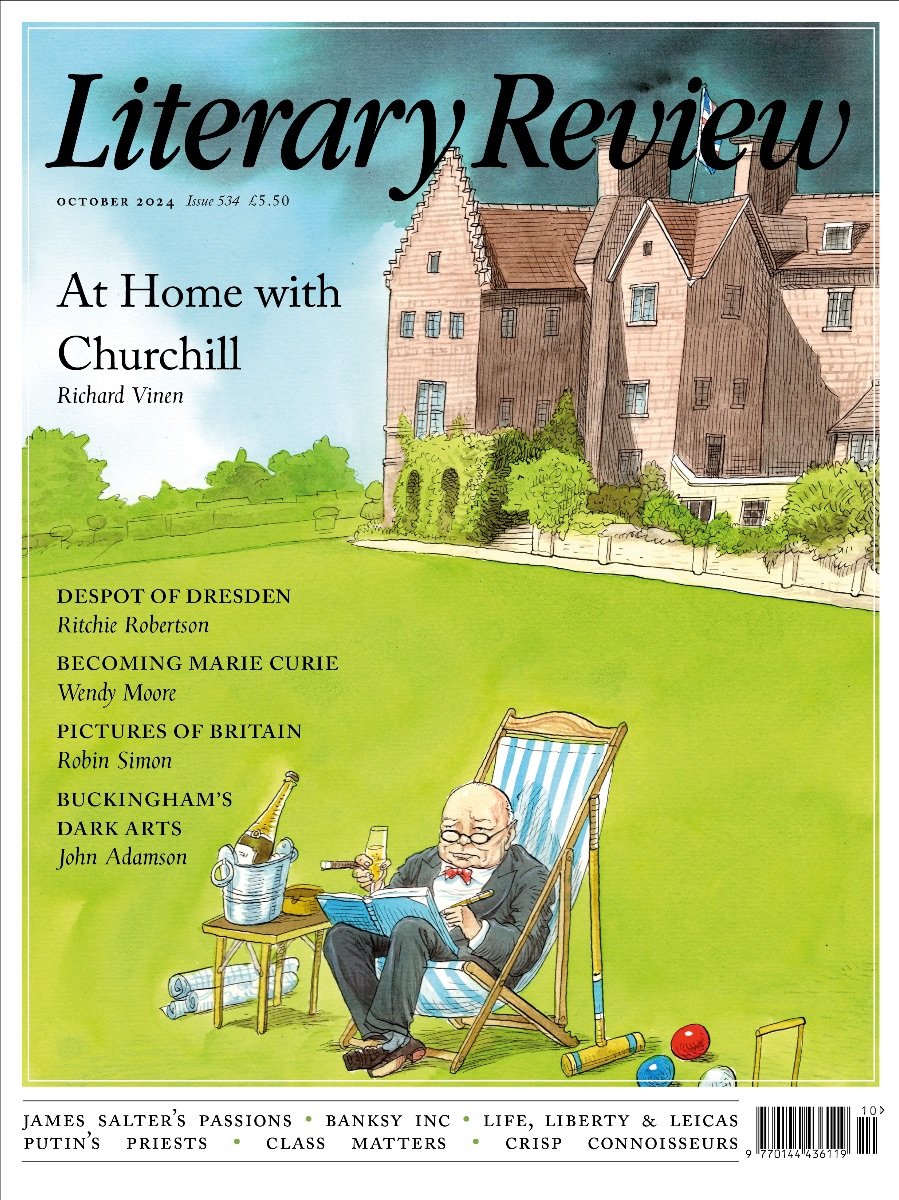
Literary Review – October 2, 2024: The latest issue features Richard Vinen on Churchill; @wendymoore99 on Marie Curie; Ritchie Robertson on Augustus the Strong; @robinsimonbaj on British art and @tomlamont on James Salter
‘It’s not a bad life for the leaders of the British bourgeoisie! There’s plenty for them to protect in their capitalist system!’ So wrote Ivan Maisky, the Soviet ambassador in London, after his first visit to Winston Churchill’s country house at Chartwell in Kent. He described the house thus: ‘A wonderful place! Eighty-four acres of land … all clothed in a truly English dark-blue haze.’
Frederick Augustus (1670–1733), elector of Saxony and king of Poland, owed his sobriquet ‘the Strong’ to such feats as crushing a tin plate in his hand (mentioned by Rilke in the ‘Fifth Duino Elegy’) and to his vigorous sex life. Contemporaries credited him with fathering 354 illegitimate children; Tim Blanning soberly reduces the number to eight. This biography is concerned not with court gossip, however, but with Augustus’s political career and cultural achievements. Blanning celebrates Augustus as the virtual creator of the once-magnificent city of Dresden, where the kings of Saxony resided, and hence, surprisingly, as ‘a great artist, arguably the greatest of his age’.

Literary Review – September 3, 2024: The latest issue features @claire_harman on female detectives; @WomackPhilip on childhood reading; Georgina Adam on art market scandal; @dannykellywords on ageing rockstars and @mathewparris3 on the Queen
‘If there is an occupation for which women are utterly unfitted, it is that of the detective,’ claimed the Manchester Weekly Times in 1888 – already behind the times, it seems, as women had been acting the part for years, albeit invisibly. They had started to feature in detective fiction too. It was studying the burgeoning market in ‘lady detective’ stories post-1860 that led Sara Lodge to wonder who the fantasy sleuths were modelled on, and why the Victorians found them so disturbing and alluring.
It is hard to think of a person more qualified to write this book. In addition to being an art historian, a prolific writer, a lecturer and a broadcaster, James Stourton is also a former chairman of Sotheby’s UK. He joined the auction house in 1979 and left in 2012 to become a senior fellow at the Institute of Historical Research.

Literary Review – August 3, 2024: The latest issue features ‘Rise and Fall of the Cromwells’; Thom Gunn’s demons; Prams and paintbrushes; Children of Atatürk; Friedrich in nature…

Literary Review – July 2, 2024: The latest issue features ‘A Tale of Two Fabulists’, North America Ablaze, Pascal Decoded, League of Dictators and Roffey’s Rage…
American Civil Wars: A Continental History, 1850–1873 By Alan Taylor
A mountain of historical studies testifies to enduring interest in the American Civil War, a conflict still politically relevant in a nation riven over how to remember it. Those doubting that there is anything fresh to say about the bloodiest event in the republic’s history should read Pulitzer Prize winner Alan Taylor’s brilliant, panoramic account of the conflict.
Travellers in the Golden Realm: How Mughal India Connected England to the World By Lubaaba Al-Azami
One contender for the title of centre of the civilised world in the early 17th century is the Mughal Empire. Lubaaba Al-Azami describes it as ‘a global capital and commercial hub’. The Mughal Empire reached its zenith between the reigns of Babur, the first emperor, who established the ‘golden realm’ in 1526, and his great-great-great-grandson the sixth emperor, Aurangzeb, who died in 1707. This was a time when the artists of the fabulously wealthy Mughal dynasty were building the Taj Mahal and writing and illuminating the Padshahnama.
Vertigo: The Rise and Fall of Weimar Germany 1918–1933 By Harald Jähner (Translated from German by Shaun Whiteside)
Takeover: Hitler’s Final Rise to Power By Timothy W Ryback
The Weimar Republic (so called as the parliament which drafted its constitution in 1919 sat in Weimar owing to unrest in Berlin) lasted for fourteen years and four months, two years longer than the Third Reich that succeeded it. Its history is beset with ironies. Its first president, Friedrich Ebert, a social democrat (and a former innkeeper), turned out to be the embodiment of petit-bourgeois conservatism. Having ditched the monarchy, he made a bargain with the army: they would defend the nascent republic in return for maintaining the old officer corps. This enabled the regime to survive five chaotic years marked by numerous violent attempts to overthrow it from both the Left and the Right.
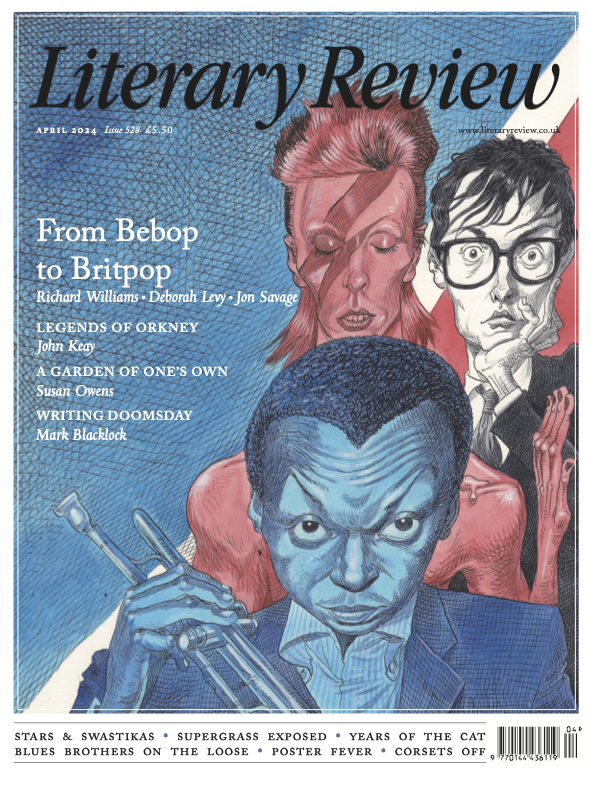
Literary Review – April 2, 2024: The latest issue features ‘From Bebop to Britpop’; Legends of Orkney; A Garden of One’s Own and Writing Doomsday…
By JOHN KEAY
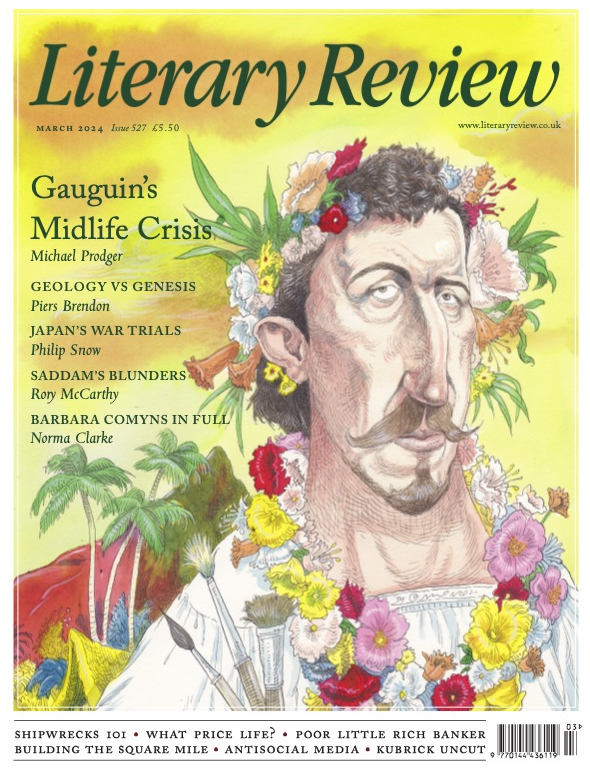
Literary Review – March 1, 2024: The latest issue features ‘Gaughin’s Midlife Crisis’; Geology vs Genesis; Japan’s War Trials; Saddam’s Blunderers and Barbara Comyns in Full…
“The Showman: The Inside Story of the Invasion That Shook the World and Made a Leader of Volodymyr Zelensky” By Simon Shuster
As someone who has to consume quite a lot of Russian media, I can tell you that if there is one common denominator, it’s that whether we’re talking about a shouty TV news programme (less Newsnight, more a kind of geopolitical Jeremy Kyle Show), a stodgy government newspaper of record or a racy tabloid, no one has a good word for Volodymyr Zelensky.
Kubrick: An Odyssey By Robert P Kolker
There are, I have long suspected, two types of cinephiles: those who think Stanley Kubrick’s 2001: A Space Odyssey (1968) is a masterpiece and those who think it’s a relentless bore. Early in their new biography of the film director, Kubrick: An Odyssey, Robert P Kolker and Nathan Abrams make clear which camp they belong to, describing the scene in which the astronaut Frank Poole jogs around (and around and around and around) the spaceship Discovery as ‘one of the most lyrical passages in film history’.
 Boomers Daily