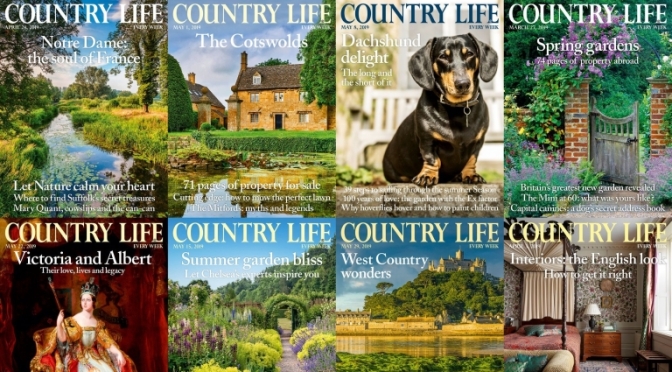
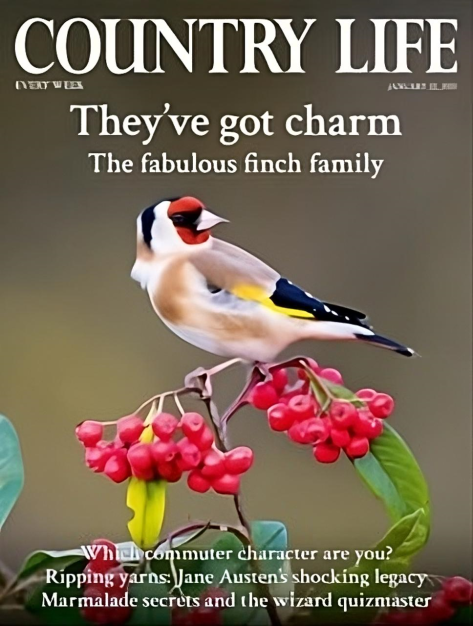
COUNTRY LIFE MAGAZINE (January 21, 2025): The latest issue features ‘They’ve got charm’ – The fabulous finch family; Which commuter character are you?; Ripping yarns – Jane Austen’s shocking legacy; Marmalade secrets and the wizard quizmaster…

COUNTRY LIFE MAGAZINE (January 21, 2025): The latest issue features ‘They’ve got charm’ – The fabulous finch family; Which commuter character are you?; Ripping yarns – Jane Austen’s shocking legacy; Marmalade secrets and the wizard quizmaster…

00:00 – Introduction to the Most Breathtaking Home 01:12 – The Location Centred Brief 02:36 – Approaching the Home 03:09 – Walkthrough of the House 04:11 – Restrained Interior Styling 05:44 – The Kitchen Design and Appliances 07:21 – A Balanced Material Palette 08:29 – Curating The Views 09:21 – Proud Moments
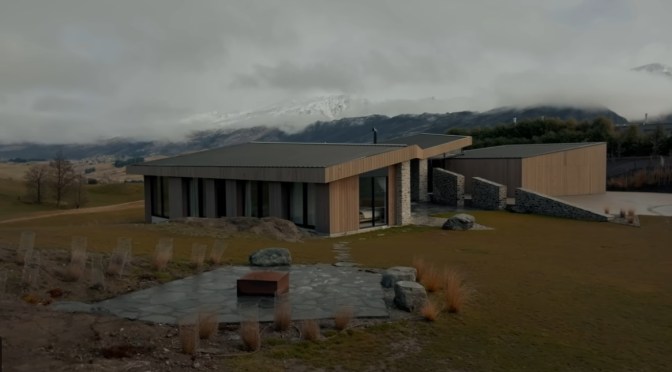
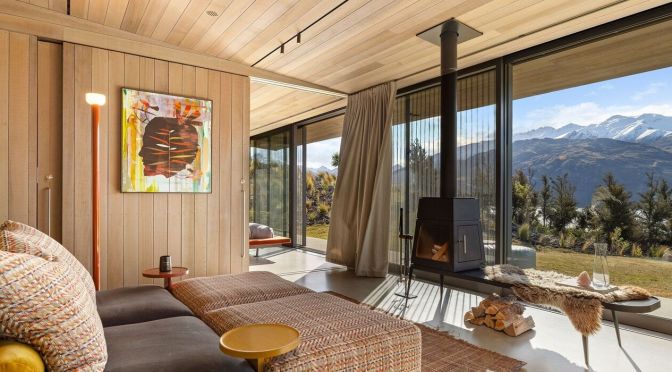
What defines it, however, is the site’s staggering 360-degree views to The Remarkables, Coronet Peak and the Crown Range, and the architects’ response to these multifaceted aspects. “We’ve done a few houses in this area and, over the years, we’ve developed an approach that’s firstly about identifying the significant views,” says Richard Naish, founder of RTA Studio.
Though Naish acknowledges that the perspectives are a gift, he believes good architecture is more about the control and release of views. This philosophy underscored RTA Studio’s approach to crafting the most breathtaking home shaped by nature. The roof lines played heavily into this idea; designed to follow the contours of the land and echo the surrounding topography, the roof dips in parts and soars in others, creating views both vast and precise.


Country Life Magazine (December 10, 2024): The latest issue features ‘The Christmas Double Issue’…
The Revd Dr Colin Heber-Percy considers the Christmas story told in familiar rituals
Frost casts a garden’s structure into sharp relief. Tiffany Daneff enters a sparkling world

The Dean of St Albans chooses a canvas full of uplifting light for dark times
Kate Green pays tribute to Dame Ninette de Valois, the ‘godmother of ballet’
In the first of two articles, John Goodall traces the saintly history of the ancient abbey church of St Albans, Hertfordshire

The feisty robin is the undisputed avian king of Christmas. Mark Cocker wonders why
From weaving wreaths to corralling choristers, the work is ramping up for country people, who talk to Kate Green and Paula Lester

Catriona Gray meets the artists capturing Nature’s beauty in gold
Stop and listen to Nature’s voice, urges John Lewis-Stempel

Hanging treasured decorations is all part of the magic. Matthew Dennison opens the bauble box
Deborah Nicholls-Lee dares to unveil the mysterious figure
Take on our quizmaster — and, more importantly, your family and friends
Melanie Cable-Alexander buckles up for riotous country-house-corridor games

Harry Pearson takes over the world with the classic board game
Jonathan Self chortles at British comedy

The spirit of Christmas works its magic on a curmudgeonly baronet in Kate Green’s tale
Natural scents win for Arabella Youens
The sheep and its patient guardians have long delighted artists, finds Michael Prodger

Knitting, diamonds and Giles Coren’s treats
Is the perfect rural habitation real, wonders John Lewis-Stempel
Modern mince pies are but pale shadows of the past, believes Neil Buttery

Who can resist a roastie? Not Emma Hughes, nor anyone else in their right mind
Melanie Johnson builds a gingerbread house
Glazed and succulent, the Christmas ham is the king of the feast for Tom Parker Bowles

Give wine time to age, urges Harry Eyres
John Lewis-Stempel gathers in the holly, once divine diadem, now a cow’s Christmas feast
Labour’s family-farm tax will mean ruin for a beleaguered sector, says Minette Batters
Sam Leith opens the well-worn covers of the childhood books we will always cherish

From frogs to rat armies, the natural world has inspired countless ballets. Laura Parker straps on her pointe shoes for the bunny hop
Michael Billington awards his accolades to the stars — and the scourges — of the stage
Operas with food and wine may be rousing, but there are perils, warns Henrietta Bredin
Country Life reviewers select their top books

Country Life Magazine (December 3, 2024): The latest issue features ‘The Full English’ – Why our homegrown style is back….
The author selects a portrait that shows the ‘very essence of what it was to be Sicilian’
Carla Carlisle—wife of a farmer and a diversifier extraordinaire— offers an insider’s view on the Government’s ‘Great Betrayal’
Now is not the time to hibernate, suggests John Wright, as he encourages us to appreciate the countryside’s stark, intricate beauty in these colder months

Lucy Denton delves into the remarkable history of Stationers’ Hall, the central London home of the Worshipful Company of Stationers for the past 400 years
Amie Elizabeth White hails Henry Cole, inventor of Christmas cards
John Lewis-Stempel loves to be beside the seaside as he examines the enduring appeal of England’s glorious coastline

Matthew Dennison tips his hat to the rural origins of the bowler as he celebrates its 175th birthday
Beware an ill wind blowing us into 2025, warns Lia Leendertz
Joseph Phelan finds a business on an upslope when he visits the last ski-maker in Scotland
Sleep in art is often drunken, deadly or the stuff of nightmares, but rarely is it peaceful, as Claudia Pritchard discovers
Charles Quest-Ritson cranes his neck to take in the sheer scale of the specimens at West Sussex’s Architectural Plants
 Kitchen garden cook
Melanie Johnson on sprouts
00:00 – Introduction to the Architect’s Own Home 01:48 – Walkthrough and Layout of the Home 03:18 – The Material Palette 04:48 – The Bathing Spaces 06:12 – Unique and Favourite Moments 07:16 – Creating A Special Place
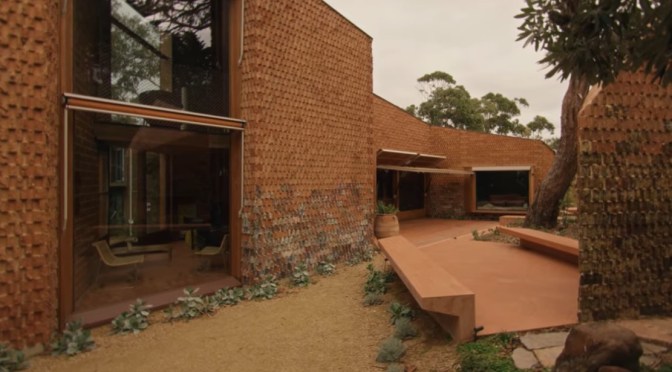
As an architect’s own home inspired by nature, Burnt Earth Beach House reflects the hues and tonality of the ochre-coloured cliff edges of Anglesea just beyond. “It was very important that we do something here that would transcend time but do so in a way that is completely different from our homes in Melbourne,” says John Wardle, founding partner of Wardle. The home’s facade is expressed through an invented brick developed alongside brickmaker Klynton Krause.
The process involved extrusion and hand tearing the brick surface prior to cutting, which exposes a raw, uneven surface, making every brick unique. Approaching the architect’s own home inspired by nature, a courtyard acts as an informal living zone and is bordered by a kitchen that houses a vast square central terracotta island bench. The space then bends around into the dining area with a reading nook that looks into the courtyard. Upstairs, a study appears to float overhead, enveloped in a hand-knotted screening from Vietnam.

Country Life Magazine (November 26, 2024): The latest issue features ‘Advent Calendar Special’…
Carla Passino is captivated by floral photographs that evoke 17th-century still-life paintings
She may be tiny, but Jenny wren certainly makes her presence felt, declares Mark Cocker
There’s more to myrrh than meets the eye, says Deborah Nicholls-Lee
Lucien de Guise is bowled over by the intoxicating concoctions mixed by Dickens and George IV
Neil Buttery tucks into the tale of the Yorkshire Christmas Pye
Pick out those perfect presents with a helping hand from Hetty Lintell and Amie Elizabeth White

The Royal Ballet dancer selects an inspiring, transformative work
The author’s Wessex is brought to life in Jeremy Musson’s words and Matthew Rice’s drawings
Deborah Nicholls-Lee is fascinated by fractals, the exquisite, ever-repeating patterns in Nature
John Lewis-Stempel urges us to rediscover our love of heathland, now a rarer habitat than rainforest
Andrew Green rounds up the animals in Dickens’s life and work
Jack Watkins explores the folklore and function of the lychgate
Our guide to entertaining in style
From flying a Spitfire to sushi-making, the COUNTRY LIFE team puts gift experiences to the test
Kate Green reveals how Sir David Willcocks changed the sound of Christmas with Carols for Choirs
Hetty Lintell on saunas, socks, silk bows and precious stones
Neil Buttery sorts the pudding prick from the tongue press
Rob Crossan talks Tupperware
Melanie Johnson on cabbage
A black fox illuminates a dreary dawn for John Lewis-Stempel
Victoria Marston looks back at classic film posters
Matthew Dennison explores the tin-novations that made Huntley & Palmers a household name
Sarah Sands shares how choral singing shaped the life of her late brother Kit Hesketh-Harvey
Ian Morton investigates the real meanings of our nursery rhymes
Harry Pearson finds out why this is the year of the Northern Lights

Country Life Magazine (November 20, 2024): The latest issue features Winston Churchill – The wit and wisdom of the great man…

As we approach the 150th anniversary of Sir Winston Churchill’s birthday, Amie Elizabeth White and Octavia Pollock pay homage to the great man, in his own words.
In the second of two articles, John Goodall charts the 1560s and 1620s expansion of Apethorpe Palace in Northamptonshire
England’s heather moorland and its glorious purple swathe is a wonder of the Western world, suggest John Lewis-Stempel
Do you know a Yonerywander from a Vinvertuperator? Engage your inner Edward Lear as Daniel McKay welcomes you into his wacky world of whimwondery

Food, glorious food is fuelling the creativity of modern still-life artists discovers Catriona Gray
The sewing machine rose to be an emblem of domesticity, but its invention is a story of Saints and Singers. Matthew Dennison follows the thread
Raze to the ground or renovate? Has the open-plan layout had its day? Cart shed or garage? Giles Kime considers some key architectural conundrums

John Hoyland is captivated by the spectacular transformation of Piet Oudolf’s double borders at the RHS garden in Surrey
If you like your chili ‘hotter than the hinges of hell’, Tom Parker Bowles has just the dish for you (and there’s not a bean in sight)

John Goodall lauds a decade-long project to rescue a unique painted church at Ursi, Romania
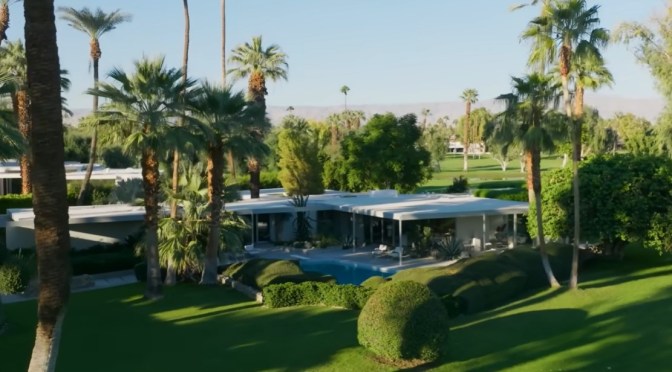
Video timeline: 00:00 – Introduction to the Iconic Mid-century Home 00:52 – The Original Plan and Inspiration 02:18 – A Minimal Layout 02:48 – The Afternoon Light and Vibes 03:46 – A Very California House 04:05 – Proud Moments
“Wexler was brilliant, with an extraordinary sense of syntax and grammar; everything lines up with everything,” says Steven Harris, partner at Steven Harris Architects. Interestingly, Harris and his partner bought the house accidentally. “We were helping another friend with their house and fell in love with the place,” recalls Harris. After spending time inside an iconic mid-century home designed by Wexler, Harris’s vision was rooted in preserving as much of the original as possible. “Almost everything here is original to the house,” he notes. “For me, the greatest liability would be for someone to drive by on the street and immediately say, ‘oh! that’s a Steven Harris house.’”
Alterations inside the iconic mid-century home designed by Wexler were largely stylistic and inspired by a Wassily Kandinsky painting. “If you look at it from the air, you will see flashes and curves and various shapes, which on one hand is quite graphic, and on the other, almost every view is perspectival because the things you’re looking at are only oblique. Things shift off of each other in a very curious and interesting way.” Stepping inside an iconic mid-century home designed by Wexler, the front door is indicated by a covered passage, flanked by an oblique terrazzo sidewalk extending from the driveway.

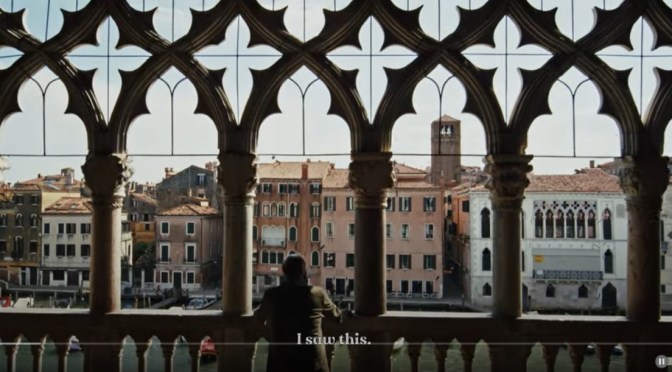
Cabana Magazine (November 8, 2024): “I believe in the future of Venice, otherwise I would not do this job,” says curator and restorer Toto Bergamo Rossi, speaking to Cabana from the spectacular surroundings of the X.
The director of Venetian Heritage is protecting and preserving his native Venice for future generations, always working within the architectural fabric of the historic water-locked city.
“I find that the ego of the architect who restores [these buildings] must disappear, never trying to compete with what’s over 300 years old, ever,” he tells Cabana. “Because we are temporary, but this remains.” Join Cabana Films and Toto Bergamo Rossi on a journey through Venetian heritage, as he paves the way for the city’s future.
For more design and decoration, subscribe to Cabana Magazine: https://cabanamagazine.com/products/c…
Video timeline: 00:00 – Introduction to the World’s Most Secret Home 01:07 – Behind the Design and Name 02:31 – The Arrival Sequence 02:58 – A Playful and Relaxed Brief 04:29 – The Floor Plan and Layout 06:25 – The Interior Material Palette 07:59 – The Exterior Material Palette 08:48 – Proud Moments
Settled on the Wānaka lakefront, the worlds most secret home is often in the path of cold wind crossing from Makarora. “When there are storms, you can feel very alone, but with the warmth of the fires, my two dogs rugged up with sheepskin, you essentially become a shepherd,” says Matt Chapman, custodian of the property. “When we created the home, I didn’t want too much space for an abundance of possessions. I’d reached a point in my life where minimalism and simplicity were the ways I wanted to exist.”
While maintaining a minimalist focus, the design brief for the project proposed a spatially flexible home that enables new experiences. “When we encountered the site, it was an opportunity to build a structure with length,” says Tim Hay, architect at Fearon Hay. “We liked the idea of a very simple silhouette … we wanted the building to have a sense of retreat and integration with the landscape.”
 Boomers Daily