Tag Archives: Gardens

Walks: Drottningholm Palace Gardens, Sweden

The Drottningholm Palace Gardens and Park

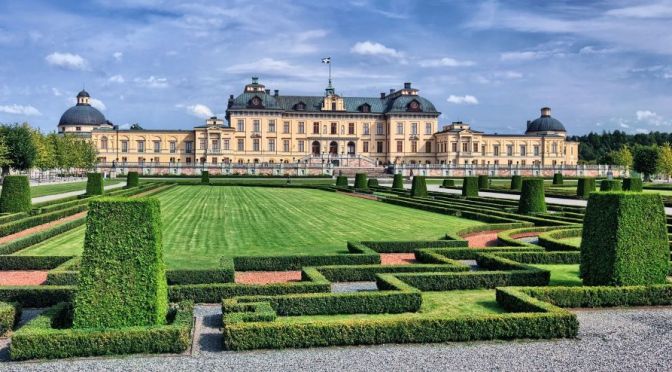
Drottningholm’s gardens and park are among Sweden’s most prominent contributions to Europe’s garden design and landscaping. As you stroll around, you’ll explore different artistic ideals from various centuries.

The history of the gardens begins when Drottningholm was taken over by the Dowager Queen Hedvig Eleonora in 1661. To help her develop a new pleasure garden, she commissioned Nicodemus Tessin, who was inspired by the French landscape architect André Le Nôtre’s proposal for the Château of Vaux-le Vicomte in France. Tessin was also heavily inspired by the gardens of the Palace Versailles.

The Baroque parterre garden—closest to the palace—has an intricate embroidery design originally inspired by Vaux-le Vicomte. Walking further into the park, you are greeted by a water parterre with ten pools and cascades. Beyond the cascades, there are four hedge groves surrounded by pine hedges, and the finale: a large bush called “the star.” The garden would later receive an outer frame with four linden tree-lined avenues. The oldest lindens are from Hedvig Eleonora’s time.
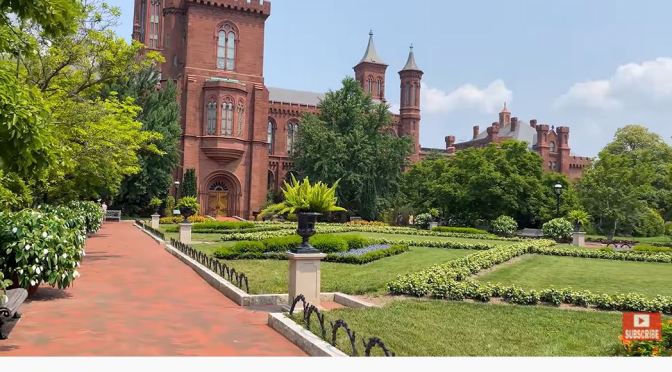
Scenic Walks: Smithsonian Gardens – Washington DC

The Smithsonian Gardens, a division of the Smithsonian Institution, is responsible for the “landscapes, interiorscapes, and horticulture-related collections and exhibits”, which serve as an outdoor extension of the Smithsonian’s museums and learning spaces in Washington, D.C.

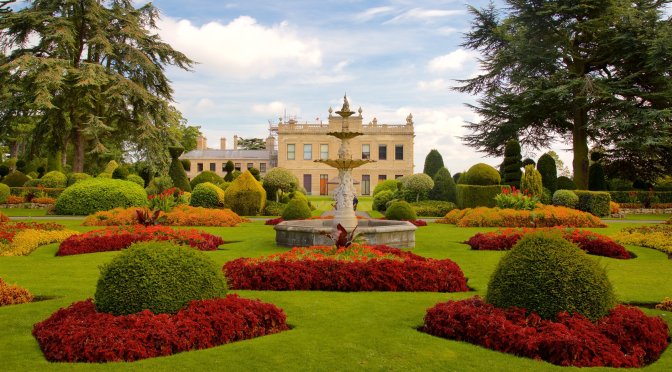
English Gardens: 19th-Century Brodsworth Hall In South Yorkshire

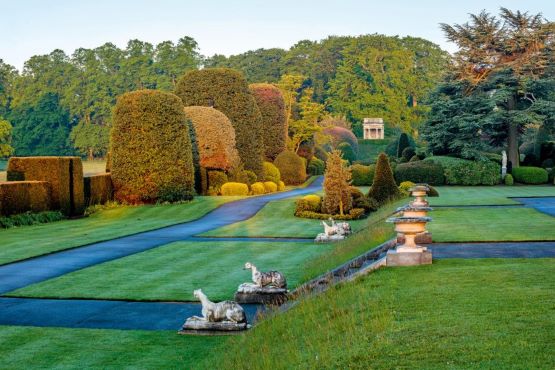
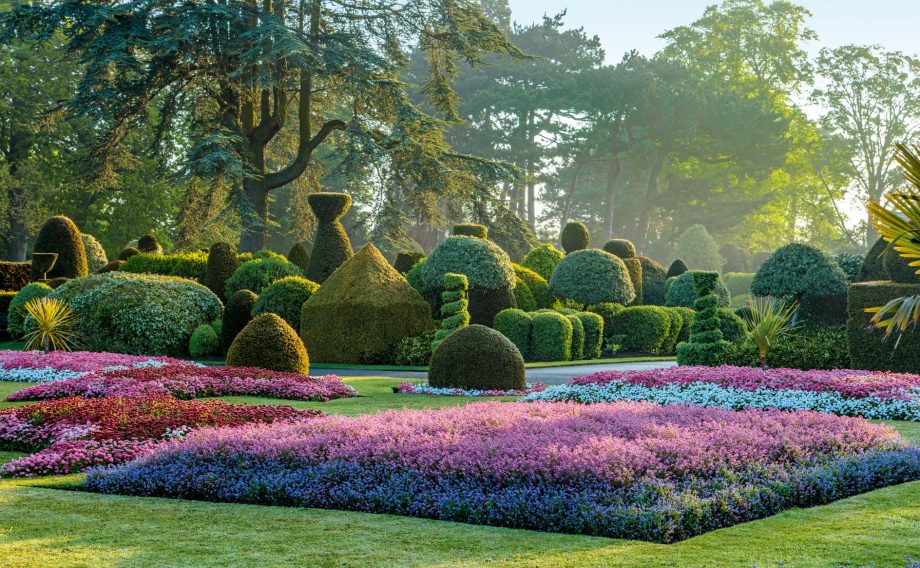
The mid-19th-century Gardens of Brodsworth Hall in South Yorkshire are striking. House and grounds are a perfect complement of Italianate green architecture and are linked by formal terraces with three staircases decorated by marble urns and recumbent — probably Italian — greyhounds acquired by the Italian sculptor Chevalier G. M. Casentini.

Tiffany Daneff, August 14, 2021

If this all feels rather unlikely in Yorkshire, that is because it reflects the taste of one man, Charles Sabine Augustus Thellusson, who came into an extraordinary inheritance in 1858 and devoted much of it to creating the hall and its gardens in his own personal style.

‘Today, he would be an oligarch,’ says Michael Klemperer, senior gardens advisor for the North and Midlands regions at English Heritage (EH), which now looks after house and gardens. ‘The money he received from the will was £700,000, which, with interest, equates to £140 million today.’ With the cash came the estate that had belonged to his great-grandfather Peter Thellusson, a Swiss financier, who had moved to London in 1760 and built up a fortune as a merchant and banker.

Charles Thellusson was an avid traveller, sailor and photographer. ‘He was a big, robust Victorian gentleman, a patrician walrus,’ notes Dr Klemperer, who sees Brodsworth as representing a transition between Continental styles and the Victorian era. ‘It is a garden that is interesting on a number of levels,’ he adds, citing influences as varied as Caspar David Friedrich (1774–1840) and Blackpool pier.

Read more

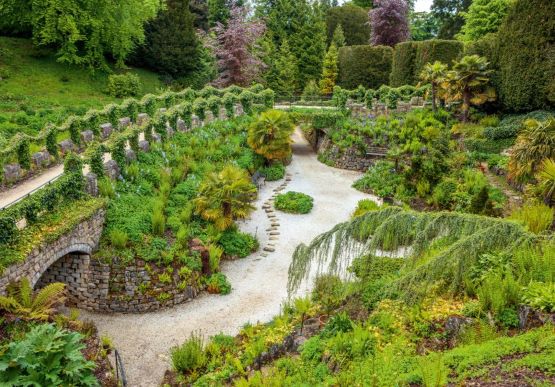
Garden Walks: Kamakura Hydrangea Temple, Japan

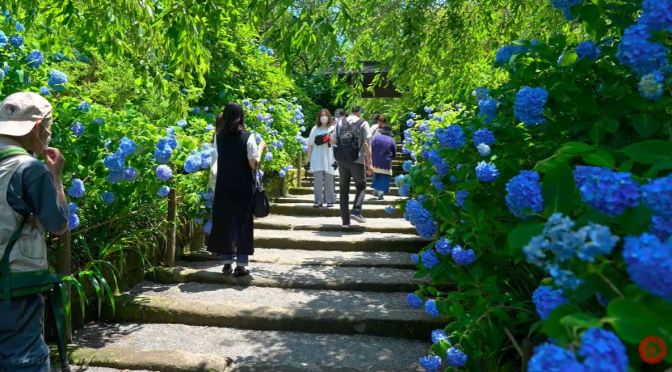
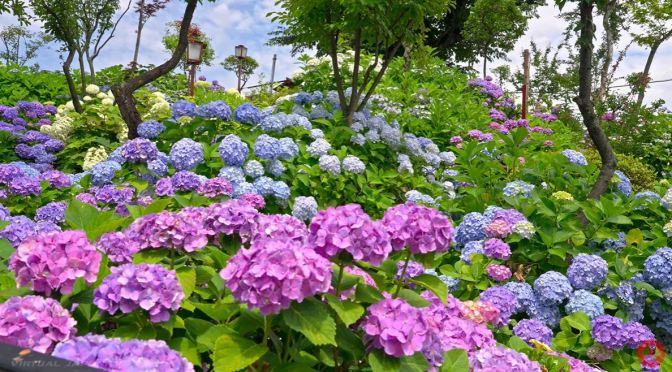
Kamakura is one of the most popular day trip destinations for both Tokyoites and tourists, uniting the beauty of nature with the majesty of history. It’s a stunning place to explore no matter the time of year, but Japan’s rainy season clads the ancient city in a breathtaking dress of blossoming hydrangea flowers. The elegant flowers can be admired at various sites, including the famous Hase-dera Temple. However, there’s only one place so stunning, it earned the nickname “hydrangea temple:” Meigetsu-in. Come with us on a journey to a world full of petals, raindrops, and little discoveries.

Walks: Giverny – Monet’s House & Gardens, France

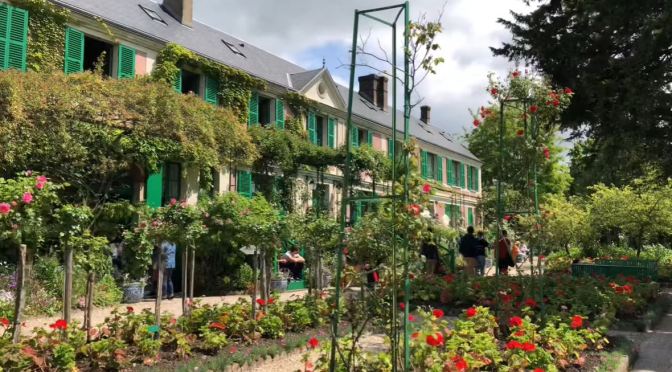
The Fondation Claude Monet is a nonprofit organisation that runs and preserves the house and gardens of Claude Monet in Giverny, France, where Monet lived and painted for 43 years. Monet was inspired by his gardens, and spent years transforming them, planting thousands of flowers. 

English Country Homes: 17th-Century Urchfont Manor In Wiltshire, UK

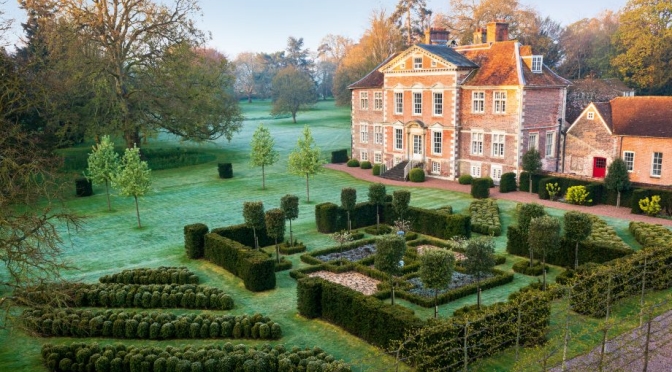
Within a few years of buying Urchfont Manor in 2013, Chris Legg and Eleanor Jones, with the help of a friend, landscape architect Paul Gazerwitz, had given their home a new vista that unites house and garden, as well as evoking the formal Baroque of the house’s late-17th-century past.

George Plumptre June 12, 2021

Their aim was to balance historical integrity with the development of a new garden. Continuity would be kept by preserving the garden’s bones, such as the walled garden and the fine trees beyond open lawn to the south and east. Work began on the rectangular walled kitchen garden.

The architecture on this side of the house is engagingly uneven and this is picked up in the new garden, which is neat and formal, but appropriately domestic in scale. The kitchen garden has been laid out afresh, with 16 rectangular patches divided by narrow gravel paths and with a square of four greengages in the centre. Crops are rotated and, every year, one bed celebrates an unusual plant, such as borlotti beans or root ginger. Elsewhere are nurtured asparagus and strawberry beds and a fruit cage with raspberries and gooseberries.

Read more at Country Life Magazine