
Read by John Davies
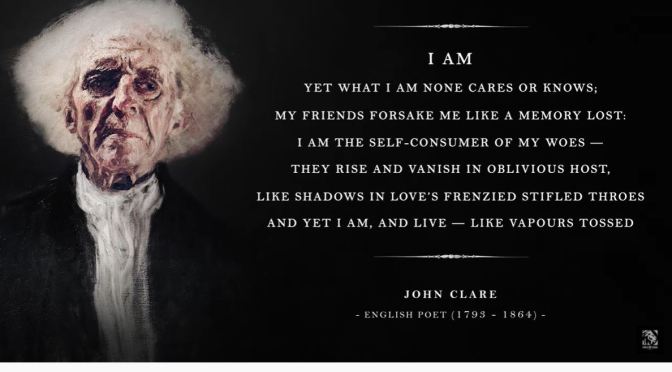
John Clare was an English poet who lived most of his life in abject poverty. His life was marred by bouts of mania and depression, and for the final 23 years of his life, Clare was locked in an insane asylum. It was here he began to write poetry; ‘I Am’ was Clare’s final elegy before his passing.
I Am!
BY JOHN CLARE
I am—yet what I am none cares or knows;
My friends forsake me like a memory lost:
I am the self-consumer of my woes—
They rise and vanish in oblivious host,
Like shadows in love’s frenzied stifled throes
And yet I am, and live—like vapours tossed
Into the nothingness of scorn and noise,
Into the living sea of waking dreams,
Where there is neither sense of life or joys,
But the vast shipwreck of my life’s esteems;
Even the dearest that I loved the best
Are strange—nay, rather, stranger than the rest.
I long for scenes where man hath never trod
A place where woman never smiled or wept
There to abide with my Creator, God,
And sleep as I in childhood sweetly slept,
Untroubling and untroubled where I lie
The grass below—above the vaulted sky.
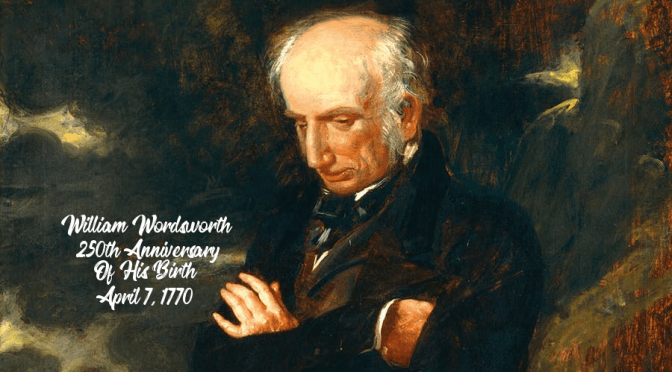
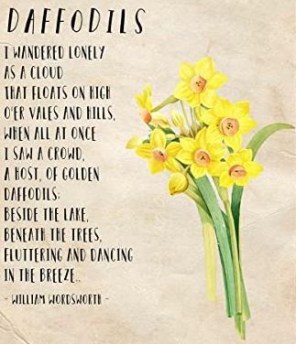 ‘We are fond of tracing the resemblance between Poetry and Painting,’ wrote William Wordsworth
 When, in 1840 or so, a well-meaning houseguest called Margaret Gillies made a drawing of the 70-year old Mrs Wordsworth, everyone agreed that it was an excellent likeness; but her kind act was rewarded with a testy and somewhat ungracious sonnet from the sitter’s husband. He preferred to visualise Mary in her salad days: ‘’tis a fruitless task to paint for me, / Who, yielding not to changes Time has made, / By the habitual light of memory see / Eyes unbedimmed, see bloom that cannot fade, / And smiles that from their birth-place ne’er shall flee / Into the land where ghosts and phantoms be’.
 Boomers Daily