Tag Archives: Continents

Science: Dead Trees Giving Off CO2, Massive Stars, Melting Ice & Biodiversity

How insects help release carbon stored in forests, and the upcoming biodiversity summit COP 15.

In this episode:

00:44 Fungi, insects, dead trees and the carbon cycle

Across the world forests play a huge role in the carbon cycle, removing huge amounts of carbon dioxide from the atmosphere. But when those trees die, some of that carbon goes back into the air. A new project studies how fast dead wood breaks down in different conditions, and the important role played by insects.

Research Article: Seibold et al.

09:37 Research Highlights

Massive stars make bigger planets, and melting ice moves continents.

Research Highlight: Why gassy planets are bigger around more-massive stars

Research Highlight: So much ice is melting that Earth’s crust is moving

12:04 The UN’s Convention on Biological Diversity

After several delays, the fifteenth Conference of the Parties (COP 15) to the United Nations Convention on Biological Diversity, is now slated to take place next year. Even communicating the issues surrounding biodiversity loss has been a challenge, and reaching the targets due to be set at the upcoming meeting will be an even bigger one.

Editorial: The scientific panel on biodiversity needs a bigger role

19:32 Briefing Chat

We discuss some highlights from the Nature Briefing. This time, cannibal cane toads and a pterosaur fossil rescued from smugglers.

Nature News: Australia’s cane toads evolved as cannibals with frightening speed

Research Highlight: A plundered pterosaur reveals the extinct flyer’s extreme headgear

National Geographic: Stunning fossil seized in police raid reveals prehistoric flying reptile’s secrets
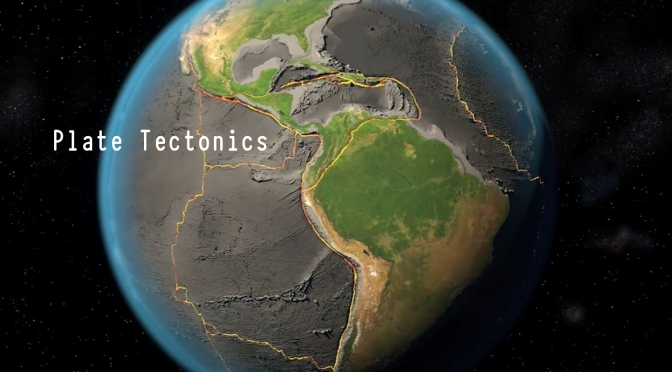
Views: ‘Plate Tectonics – Keys To Geologic History’

Plate tectonics is the narrative arc that ties every episode in Earth’s geologic history together. Thanks to the magnetic compasses hidden in volcanic rocks, scientists know where each tectonic jigsaw piece has been over eons of time. They can replicate the plates’ odysseys in beautiful and precise simulations that reveal the destruction and creation of Earth’s many faces. Lucía Pérez-Díaz, a geologist at Oxford, studies our planet’s stunning ability to constantly change its face.

Extreme Locations: ‘How Living At The South Pole, Antarctica Works’ (Video)

The South Pole, also known as the Geographic South Pole or Terrestrial South Pole, is one of the two points where Earth’s axis of rotation intersects its surface. It is the southernmost point on the surface of Earth and lies on the opposite side of Earth from the North Pole.

Antarctica, the southernmost continent and site of the South Pole, is a virtually uninhabited, ice-covered landmass. Most cruises to the continent visit the Antarctic Peninsula, which stretches toward South America. It’s known for the Lemaire Channel and Paradise Harbor, striking, iceberg-flanked passageways, and Port Lockroy, a former British research station turned museum. The peninsula’s isolated terrain also shelters rich wildlife, including many penguins.

Travel: Ten Underrated African Countries (Video)

Filmed and Produced by: Displore

Africa is the second largest continent in the world in terms of both land area and population, only after the Asian continent. Despite the ignorant thought that Africa is one country, Africa is home to 54 sovereign countries, and might be the world´s most diverse continent with very different and unique culture. The diversity makes Africa one of the world´s most interesting travel destination with several countries to choose from. The first thing most people will think of when planning a trip to Africa is the amazing wildlife the continent has to offer. With over 1100 different types of mammals most choose countries with the “big five animals “, national parks and the most popular countries but Africa has so much more to offer than just the most popular countries.