In August, the Sun rose behind the Extremely Large Telescope, under construction in Chile.
Past the halfway point, Extremely Large Telescope prepares to receive first mirrors
A web of steel girders is rising from the flattened summit of Cerro Armazones, 3000 meters above sea level in Chile’s Atacama Desert. The dome it will support will be vast—with a footprint as big as a soccer field and almost as tall as the Statue of Liberty— and unexpectedly nimble: It will smoothly rotate on rails as a giant telescope inside tracks stars through the night.
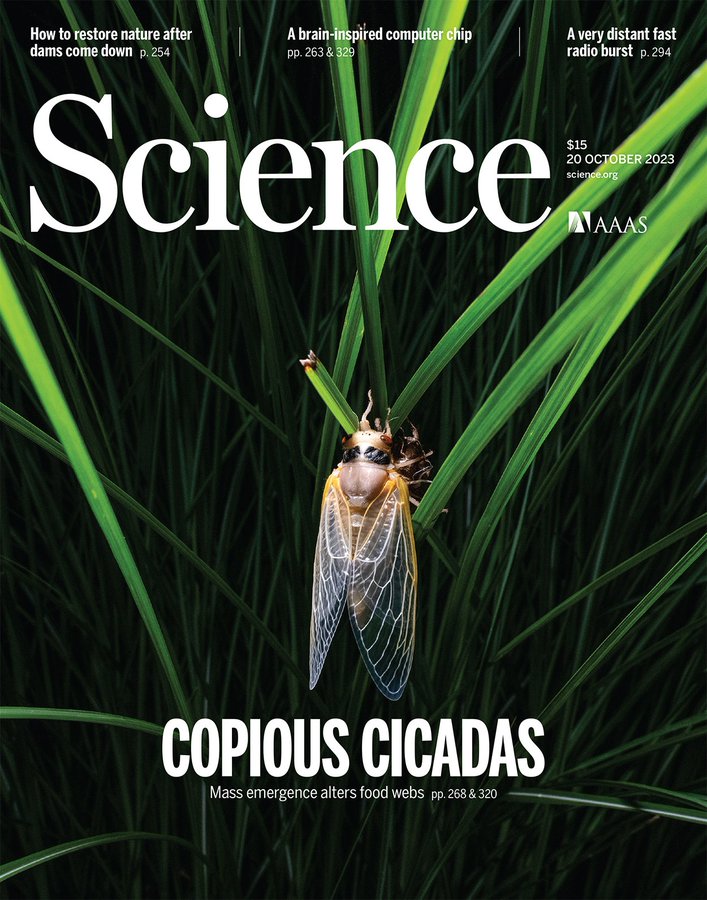
Trillions of cicadas are starting to emerge in 15 US states after 17 years underground. Gene Kritsky has been studying them for decades and has created a citizen science app, Cicada Safari, to help track the brood.
More than 3000 cicada species have been described worldwide. Most have a yearly life cycle, but seven species in the US belonging to the Magicicada genus remain underground as nymphs for 13 or 17 years before emerging, a process called periodical brooding. The only other two species of cicada to do this are found in Fiji and India. Read more at https://www.newscientist.com/article/…
Why are cicadas so freakin’ loud? Entomologist Samuel Ramsey has the answers. Dr. Sammy explains why it’s so important for cicadas to gather in large groups and make lots of noise.
The Tokyo Olympics are due to begin in just over two months. But with coronavirus cases climbing in recent months, 80% of Japanese people want the games to be cancelled.
The navigation signals sent by satellites like America’s GPS constellation are surprisingly weak. What happens when they’re jammed—or tricked? And in America cicadas have emerged from their underground redoubts for the first time in 17 years, for a frenzied few weeks of mating. How do you study a species that emerges fewer than six times in a century?
Periodical cicadas, identified as Brood X, are back, providing us with a once-every-17-years opportunity to witness a remarkable natural phenomenon, as these insects emerge and breed, while producing sounds as loud as a jet engine. Correspondent Chip Reid talks with entomologists about the cicadas’ cycle, and how their protein can satiate the appetites of predators (and cookie lovers).
News, Views and Reviews For The Intellectually Curious








 Boomers Daily