If you’re looking to find some black holes, it’s always helpful to know exactly what you’re looking for!
To get started on your black hole hunt, first watch this handy video to learn the basics about these strange cosmic objects.
Music: “Perfect Little Monsters” from Universal Production Music Video credit: NASA’s Goddard Space Flight Center Chris Smith (USRA): Lead Producer Chris Smith (USRA): Lead Animator Chris Smith (USRA): Lead Writer Jeanette Kazmierczak (University of Maryland College Park): Lead Science Writer Scott Noble (NASA/GSFC): Scientist John G. Baker (NASA/GSFC): Scientist Bernard J. Kelly (UMBC): Scientist
What are some skywatching highlights in April 2021? Look for the rosy arch known as the Belt of Venus at sunset, then find the constellation Leo overhead on April evenings. Also, check out Jupiter and Saturn with the Moon on April 6. Additional information about topics covered in this episode of What’s Up, along with still images from the video, and the video transcript, are available at https://solarsystem.nasa.gov/whats-up…
Science Senior Correspondent Daniel Clery regales host Sarah Crespi with tales about the most important work to come from 57 years of research at the now-defunct Arecibo Observatory and plans for the future of the site.
Sarah also talks with Toman Barsbai, an associate professor in the school of economics at the University of Bristol, about the influence of ecology on human behavior—can we figure out how many of our behaviors are related to the different environments where we live? Barsbai and colleagues took on this question by comparing behaviors around finding food, reproduction, and social hierarchy in three groups of animals living in the same places: foraging humans, nonhuman mammals, and birds.
What are some skywatching highlights in January 2021? Mark Earth’s closest approach to the Sun for the year, called perihelion, at the start of the month, then spot a couple of elusive planets: Uranus on Jan. 20th and Mercury throughout the second half of the month. Additional information about topics covered in this episode of What’s Up, along with still images from the video, and the video transcript, are available at https://solarsystem.nasa.gov/whats-up….
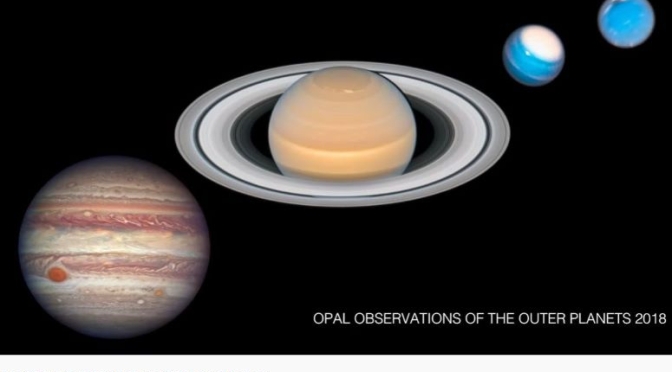
What is OPAL? OPAL (Outer Planet Atmospheres Legacy) is a project to obtain long time baseline observations of the outer planets in order to understand their atmospheric dynamics and evolution as gas giants. The yearly observations from OPAL throughout the remainder of Hubble’s operation will provide an important legacy of time-domain images for use by planetary scientists. Viewers might notice that some of the images of the same planets appear to be different colors. This is due to the fact that over the years, from Voyager to Hubble, many different instruments, and many different filters have been used.
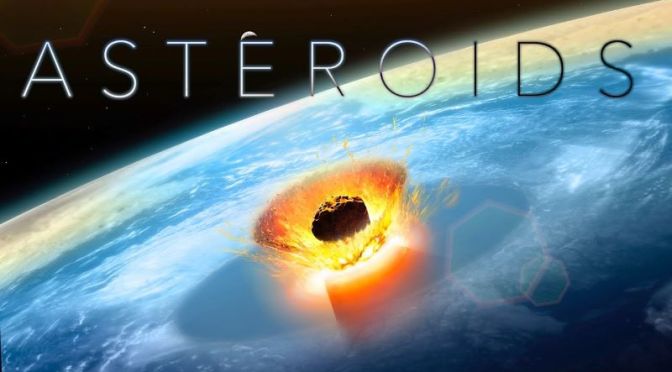
Stephen Hawking thought an asteroid impact posed the greatest threat to life on Earth.
Asteroids are small, rocky objects that orbit the Sun. Although asteroids orbit the Sun like planets, they are much smaller than planets. Asteroids are small, rocky objects that orbit the sun. Although asteroids orbit the sun like planets, they are much smaller than planets.
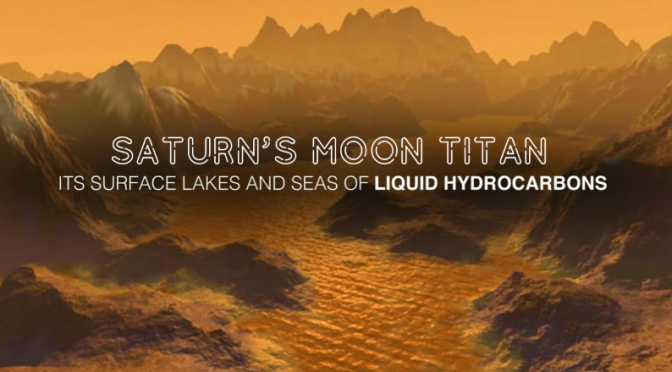
Earth is not the only place in the solar system with rain, rivers, lakes and seas. Saturn’s moon Titan has them, too — not of water, but of liquid methane and ethane. This Earth-like world even hides an ocean of liquid water deep beneath its surface! Find out what you need to know about Titan.
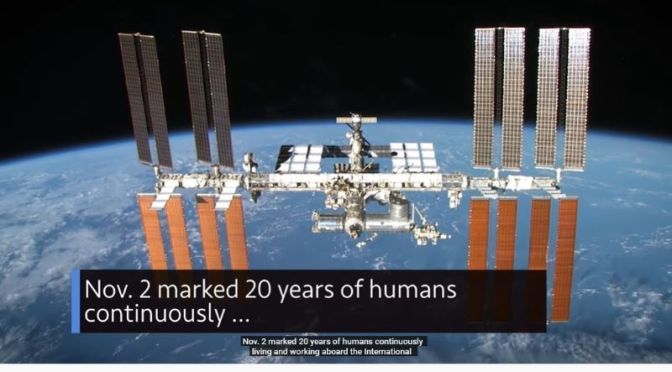
Marking 20 years of humans aboard the space station, getting out the vote from space, and preparations continue for NASA and SpaceX’s next crew launch … a few of the stories to tell you about – This Week at NASA!
Astronomers pin down the likely origins of mysterious fast radio bursts, Covid-19 in schools, octopuses taste with touch and the latest on what the US election means for science.
In this episode:
00:46 The origins of mysterious fast radio bursts
The detection of a brief but enormously-powerful radio burst originating from within the Milky Way could help researchers answer one of astronomy’s biggest mysteries.
At the start of the pandemic, there were fears that schools could become hotspots for infections. We discuss the evidence suggesting that this is unlikely to be the case, and the rates of infection in children of different ages.
Although the winner of this year’s US election is unclear, we discuss the current situation and what it might mean for science.
28:58 Briefing Chat
We discuss some highlights from the Nature Briefing. This time, ancient genomes reveal the migration of man’s best friend, and a new polio vaccine looks set to receive emergency approval.
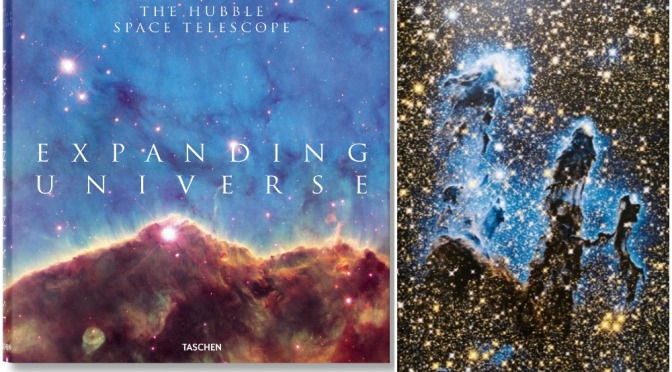
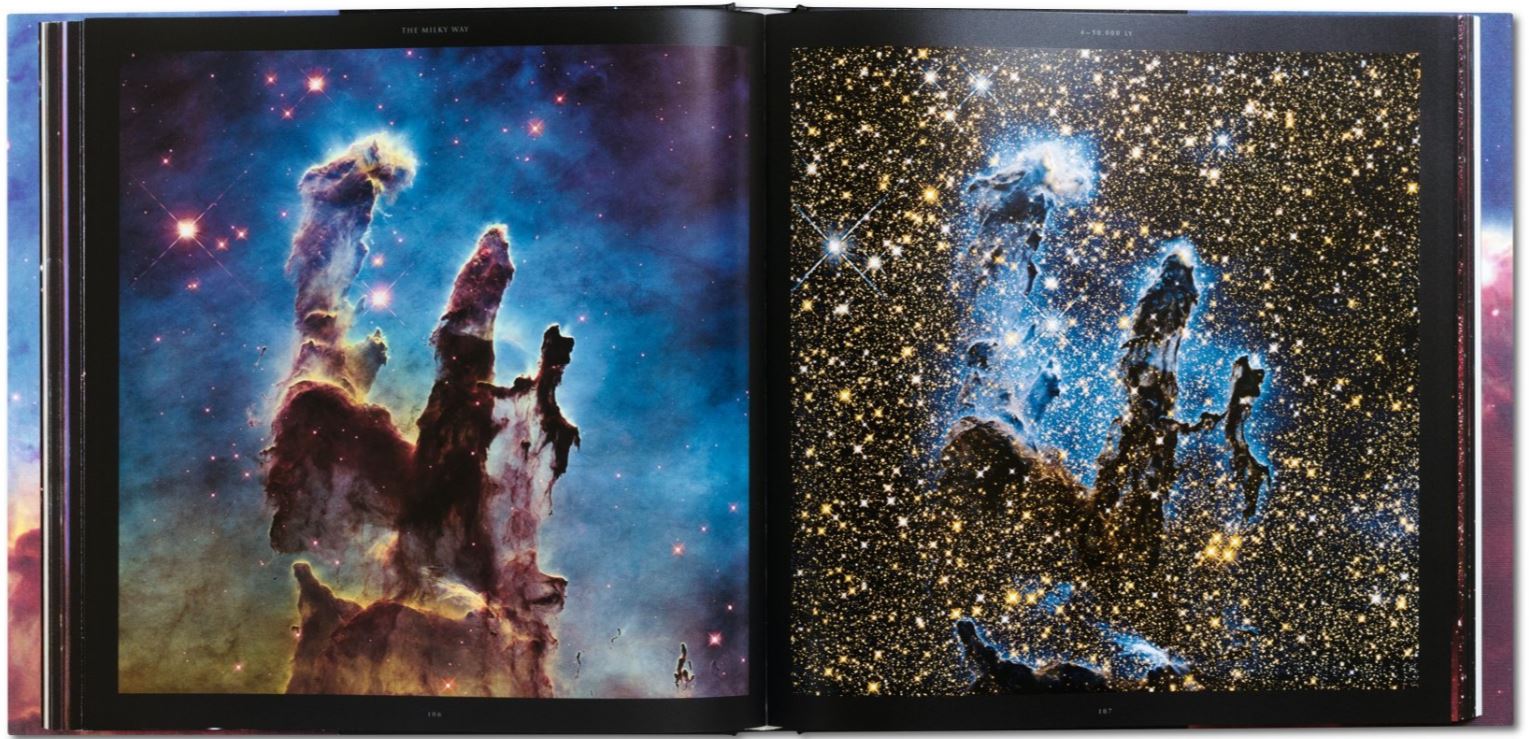
With investigations into everything from black holes to exoplanets, the Hubble Telescope has changed not only the face of astronomy but also our very sense of being in the universe. On the 30th anniversary of its launch into low-earth orbit, this updated edition of Expanding Universe presents 30 brand new images, unveiling more hidden gems from the Hubble’s archives.
Ultra-high resolution and taken with almost no background light, these pictures have answered some of the most compelling questions of time and space while also revealing new mysteries, like the strange “dark energy” that sees the universe expanding at an ever-accelerating rate.
The collection is accompanied by an essay from photography critic Owen Edwards and an interview with Zoltan Levay, who explains how the pictures are composed. Veteran Hubble astronauts Charles F. Bolden, Jr. and John Mace Grunsfeld also offer their insights on Hubble’s legacy and future space exploration.
The contributors
Charles F. Bolden, Jr., Major General, USMC (Ret.), is a former Administrator of NASA, where he oversaw the completion of the International Space Station. He spent 14 years as a member of NASA’s Astronaut Corps, and commanded and piloted the Space Shuttle Discovery on STS-31, which launched the Hubble Space Telescope into orbit.
Owen Edwards has written about photography for more than 30 years for numerous publications including American Photographer, New York Times Magazine, and Smithsonian.
John Mace Grunsfeld, PhD, is an astrophysicist and a NASA astronaut. He has flown five times on the Space Shuttle, including three Hubble servicing missions. He has served as the Associate Administrator for the Science Mission Directorate, the NASA Chief Scientist, and as the Deputy Director of the Space Telescope Science Institute.
Zoltan Levay is a retired principle science visuals developer at the Space Telescope Science Institute, where he worked with astronomers and communicators worldwide to publicize science results from NASA’s Hubble Space Telescope.


 Boomers Daily