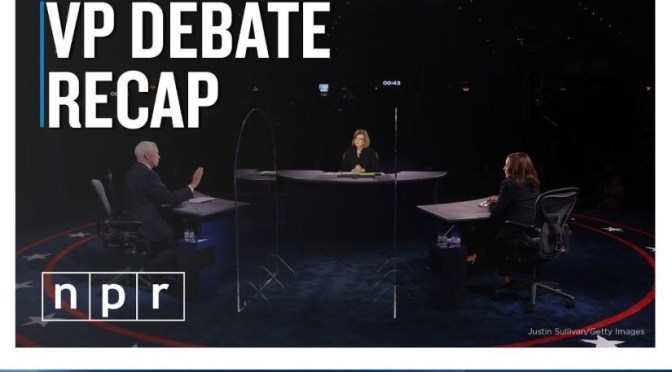
MICHAEL BLOOMBERG, the billionaire former mayor of New York, has announced he is running for president. But he is late to join the race and not very popular with Democratic primary voters. We also look at TikTok, a wildly successful video-sharing app that some see as a threat to security in the Western world. And much of Switzerland is up in arms—about the reliability of the country’s coffee supply. Runtime: 20 min
NPR’s Tamara Keith and Amy Walter of the Cook Political Report join Judy Woodruff to discuss the latest political news, including whether two weeks of public impeachment hearings have shifted public opinion about President Trump and the investigation into his Ukraine policy, potential pressure on Republican lawmakers and the late entrance of Michael Bloomberg into the 2020 Democratic race.
“I don’t think you can think about British politics or British history without thinking about her a very great deal,” Charles Moore, the authorized biographer of Margaret Thatcher, says of his subject on this week’s podcast. “And to some extent, you can’t think about the history of the modern West without thinking about her a very great deal.”
Adrienne Brodeur visits the podcast this week to discuss her new book, “Wild Game: My Mother, Her Lover, and Me.” When Brodeur was 14, her mother confided in her about an extramarital affair she was conducting. “The temptation is to view a mother like this in sort of the ‘monster mother’ perspective, and the fact is, the most important thing for me in writing this book was to present a very nuanced portrayal of both her and of our relationship,” Brodeur says.
Also on this week’s episode, Alexandra Alter discusses the winners of this year’s National Book Awards; and Susan Dominus, A.O. Scott and John Williams talk about what people are reading. Pamela Paul is the host.
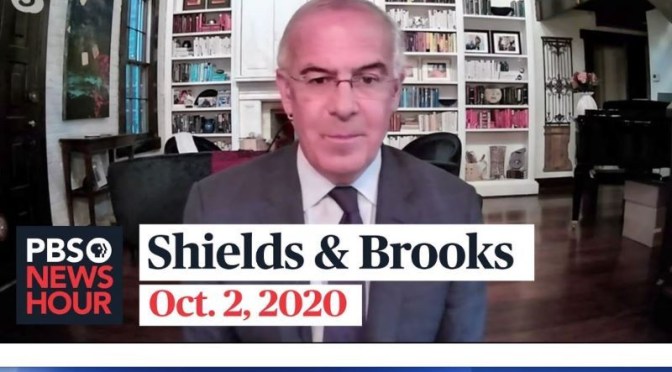
Syndicated columnist Mark Shields and New York Times columnist David Brooks join Judy Woodruff to discuss the week in politics, including the biggest revelations and most compelling characters from impeachment hearings, whether they will change voters’ minds about impeachment, how 2020 Democrats performed in their fifth debate and President Trump’s moves on military justice.
The secretary general of the North Atlantic Treaty Organisation, Jens Stoltenberg, reacts to Emmanuel Macron’s stark warnings about the future of the alliance. Daniel Franklin, The Economist’s diplomatic editor, asks Mr Stoltenberg how NATO’s members can overcome their differences—should Europe have its own defence force and is Turkey at risk of drifting away from the alliance? Also, how should Article 5 be enforced in space?
Democratic presidential contenders backed the Donald Trump impeachment inquiry during the fifth televised debate on Wednesday, saying his efforts to press Ukraine to investigate the former vice-president Joe Biden was an example of his administration’s corruption. The debate came hours after a senior US diplomat gave explosive testimony that directly implicated the president in a quid pro quo deal with Ukraine.
Polls looking to gauge how the public intends to vote put Johnson’s Conservatives as much as 18 percentage points ahead of Labour, but the numbers can vary widely.
To try to land a decisive blow in an election campaign which few voters relish, both leaders went on the attack, with Johnson trying to portray his rival as indecisive, while Corbyn questioned whether the prime minister could be trusted.
MANCHESTER, England (Reuters) – Prime Minister Boris Johnson doubled down on his Brexit promises on Tuesday, saying only he could take Britain out of the European Union quickly in a testy leadership debate with opposition Labour’s Jeremy Corbyn.
After the hour-long debate, polls showed the public were split over who was the victor: 51% said it was Johnson while 49% backed Corbyn – a result that analysts said reflected better on the Labour leader, who is trailing in opinion polls.
America and China are edging closer to signing a deal in the trade war. But that won’t mark the end—the issues at the heart of the conflict will be very difficult to resolve.
The world’s leading superpowers are locking horns. Over the past 16 months America and China have been trading blows through tariffs on goods. The impact is being felt on industries worldwide. But what is the story behind the America-China trade war? So the trade war, what have you guys been looking at? The US doesn’t like that China is growing so fast and set to overtake America as the biggest economy in the world if it hasn’t already by certain measures. Basically China and the US are caught in this race of imposing tariffs on each other so the US slaps a high tariff on certain products then China retaliates.
NPR’s Tamara Keith and Amy Walter of the Cook Political Report join Amna Nawaz to discuss the latest political news, including Pete Buttigieg’s surge in Iowa, former Vice President Joe Biden’s lead in South Carolina polls, Sen. Elizabeth Warren’s health care plan update and what another Democratic gubernatorial upset in Louisiana means for President Trump in 2020.
In 1965, James Baldwin, by then internationally famous, faced off against William F. Buckley Jr., one of the leading voices of American conservatism, in a debate hosted by the Cambridge Union in England. The debate proposition before the house was: “The American dream is at the expense of the American Negro.”
Nicholas Buccola’s “The Fire Is Upon Us” tells the story of that intellectual prizefight as well as the larger story of Buckley’s and Baldwin’s lives.
News, Views and Reviews For The Intellectually Curious