Also, President Biden spoke with China’s president in an opening conversation about the vast economic, climate, and security challenges between the two nations. And, the U.S. will impose sanctions and other consequences on Myanmar’s military leaders in response to the coup carried out there earlier this month.
On the first day of former President Donald Trump’s second impeachment trial, the Senate voted that the trial of a former president is constitutional, setting up days of arguments from House managers and Trump’s defense team.
Also, the U.S. military will pause normal operations to examine the problem of domestic extremism within the military ranks. And, Twitter is testing a new pilot program to try and get the spread of misinformation on the platform under control.
Democrats’ plan offers $1,400 stimulus checks at same income levels as previous rounds, Former President Trump’s lawyers call impeachment trial political theater, Cincinnati ‘tip war’ raises over $34,000 for restaurant workers in hometown rivalry.
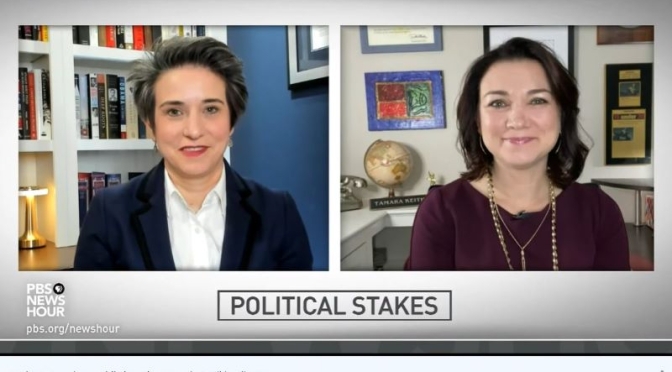
NPR’s Tamara Keith and Amy Walter of the Cook Political Report join Judy Woodruff to discuss the latest political news, including how former President Trump’s second impeachment trial will be different from the first, how partisanship plays in to the trial, Trump’s continued influence on the Republican Party and President Biden’s relief plan.
The second impeachment trial of former President Donald Trump begins this week as Republicans and his legal team argue the impeachment is unconstitutional.
And, South Africa has paused a planned deployment of a coronavirus vaccine from AstraZeneca after a study there showed it may be less effective against a new strain of the virus detected there. Also, how worried are U.S. health officials about variant strains of the virus in the U.S.?
The weekend’s biggest talking points are dissected by Tyler Brûlé, Christoph Lenz, Benno Zogg, Chiara Rimella and Jan E Brucker, with commentary from our editors in London and Tokyo. Plus: what is on the pages of ‘The National’ newspaper in the UAE?
Georgina Godwin covers the weekend’s biggest discussion topics. We flick through the weekend’s papers with Terry Stiastny, Andrew Mueller recaps the week’s biggest lessons and we hear editor in chief Andrew Tuck’s Saturday column.
New York Times columnist David Brooks and Washington Post columnist Jonathan Capehart join Judy Woodruff to discuss the week in politics, including tensions in the Republican Party, Democrats and bipartisanship, President Biden’s economic relief plan and former President Trump’s impeachment trial.
President Biden announced the U.S. will no longer support offensive military operations led by Saudi Arabia in Yemen, reversing a policy started by the Obama administration.
And, a new model by researchers at Columbia University paints what they say is a more accurate picture of the spread of the pandemic. Also, voting technology company Smartmatic is suing Fox News and some of its biggest stars alleging they spread disinformation that devastated the company.
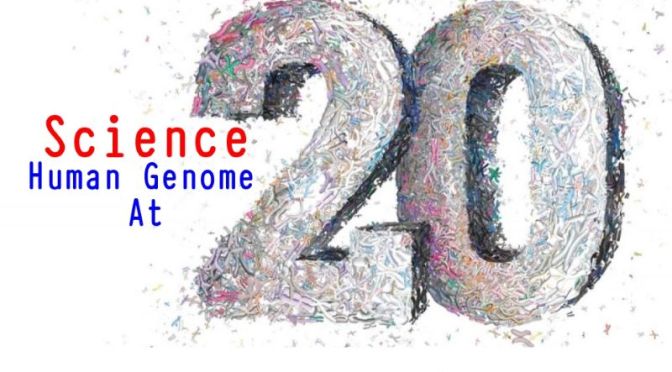
This week, Science celebrates the impending 20th anniversary of the publication of the draft human genome sequence—a landmark achievement by any measure…The Human Genome Project (HGP) was an internationally supported public project (Celera Genomics was the private effort that simultaneously sequenced the human genome). When the endeavor was launched in 1990, collaboration among a diverse group of scientists was essential because the sequencing was distributed across a number of international research sites.
The American Association for the Advancement of Science (AAAS, the publisher of Science) also looks forward to next week’s annual meeting, whose theme is “Understanding Dynamic Ecosystems.” At first glance, these two events may seem unrelated. But the successful completion of the human genome sequence ushered in biology’s era of “big science” and created a research ecosystem for tackling complex, technology-driven, and data-intensive multidisciplinary projects that continue to improve our understanding of cancer, the microbiome, the brain, and other areas of biology.
The Human Genome Project (HGP) was an internationally supported public project (Celera Genomics was the private effort that simultaneously sequenced the human genome). When the endeavor was launched in 1990, collaboration among a diverse group of scientists was essential because the sequencing was distributed across a number of international research sites. High-throughput technologies for DNA sequencing were critical to the project’s success, and the participation of biotech companies in the effort was instrumental in driving down the cost, speed, and throughput of generating DNA sequence. The ever-increasing amount of sequence data drove the development of mathematical and computational tools for assembling and annotating the data. Neither the laboratory scientists nor the computational scientists could have done this alone, and the convergence of these disciplines has been one of the most important legacies of the early genome efforts. There was also a commitment to train the next generation of genome scientists, and over the past 20 years, many colleges and universities have established new undergraduate and graduate programs in quantitative and systems biology. Life sciences students today graduate with a very different set of skills than they did in 2000.
News, Views and Reviews For The Intellectually Curious







 Boomers Daily