
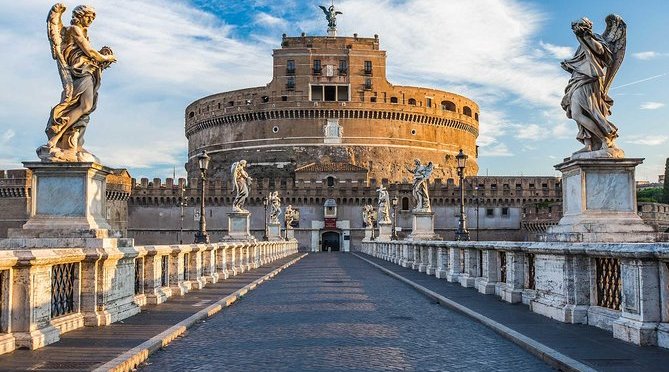
The Mausoleum of Hadrian, usually known as Castel Sant’Angelo, is a towering cylindrical building in Parco Adriano, Rome, Italy. It was initially commissioned by the Roman Emperor Hadrian as a mausoleum for himself and his family. The building was later used by the popes as a fortress and castle, and is now a museum.
Category Archives: Landmarks
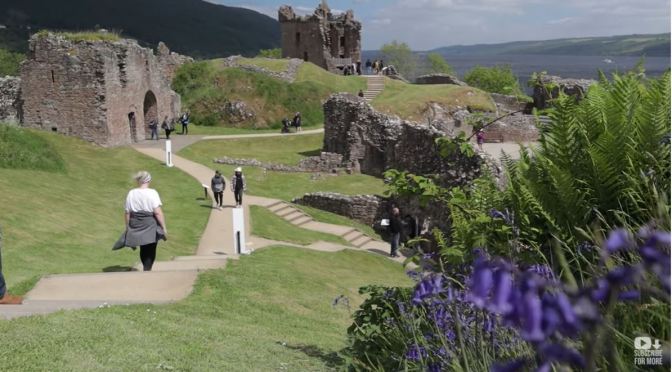
Tours: Urquhart Castle On Loch Ness, Scotland
Urquhart Castle, a ruin, sits beside Loch Ness in the Highlands of Scotland. The castle is on the A82 road, 21 kilometres south-west of Inverness and 2 kilometres east of the village of Drumnadrochit.
For the best views of Loch Ness head to Urquhart Castle on the western shore. Urquhart Castle is a romantic ruin and probably one of the most famous castles in the Scottish Highlands.
Video timeline: 0:00 Intro 0:23 Getting to the Castle 0:46 Western Shore 1:15 Booking the Castle 1:38 Urquhart Castle 2:13 Trebuchet 2:43 Walk the shores 3:29 Furnace & Causeway 3:56 Gatehouse 4:36 Early History 5:14 The Grant Tower 7:37 Great Hall 8:06 Water Gate 8:41 Jacobite Cruise 9:02 Later Castle History 9:41 Best Views 10:09 Next Time

New York Views: Walking The Brooklyn Bridge (4K)
The Brooklyn Bridge is a hybrid cable-stayed/suspension bridge in New York City, spanning the East River between Manhattan Island and Brooklyn on Long Island. Opened on May 24, 1883, the Brooklyn Bridge was the first fixed crossing of the East River.
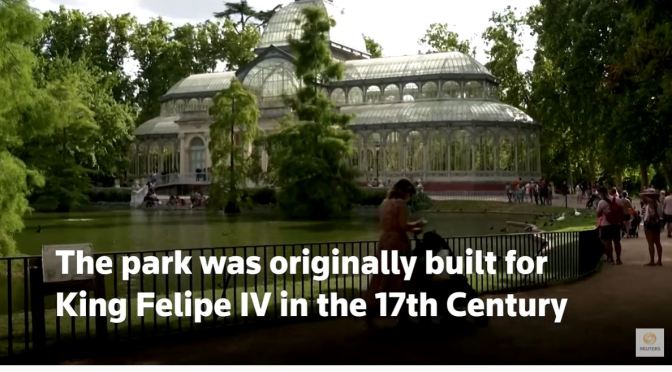
Views: Retiro Park & Paseo Del Prado In Madrid, Spain
UNESCO has added Madrid’s historic Paseo del Prado boulevard and Retiro Park to its list of world heritage sites.
The Buen Retiro Park, Retiro Park or simply El Retiro is one of the largest parks of the city of Madrid, Spain. The park belonged to the Spanish Monarchy until the late 19th century, when it became a public park. In 2021, Buen Retiro Park became part of a combined UNESCO World Heritage Site with Paseo del Prado.
The Paseo del Prado is one of the main boulevards in Madrid, Spain. It runs north–south between the Plaza de Cibeles and the Plaza del Emperador Carlos V (also known as Plaza de Atocha), with the Plaza de Cánovas del Castillo (the location of the Fuente de Neptuno, and of the Ritz and Palace five-star hotels) lying approximately in the middle. The Paseo del Prado forms the southern end of the city’s central axis (which continues to the north of Cibeles as the Paseo de Recoletos, and further north as the Paseo de la Castellana). It enjoys the status of Bien de Interés Cultural (BIC), and as part of a combined UNESCO World Heritage Site with Buen Retiro Park.
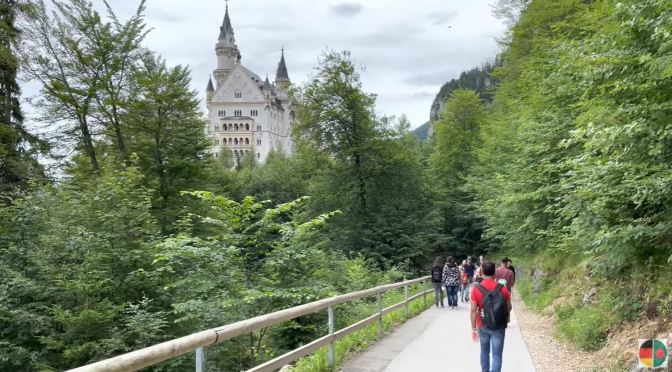
Walks: Neuschwanstein Castle, Füssen, Germany
Neuschwanstein Castle is a 19th-century historicist palace on a rugged hill above the village of Hohenschwangau near Füssen in southwest Bavaria, Germany. The palace was commissioned by King Ludwig II of Bavaria as a retreat and in honour of Richard Wagner.

Walks: Brandengurg Gate, Berlin, Germany (4K)
The Brandenburg Gate is an 18th-century neoclassical monument in Berlin, built on the orders of Prussian king Frederick William II after the temporary restoration of order during the Batavian Revolution.

Inside Views: Hagia Sopia – Istanbul, Turkey (4K Video)
Hagia Sophia, officially the Hagia Sophia Holy Grand Mosque, and formerly the Church of Hagia Sophia, is a Late Antique place of worship in Istanbul, designed by the Greek geometers Isidore of Miletus and Anthemius of Tralles.
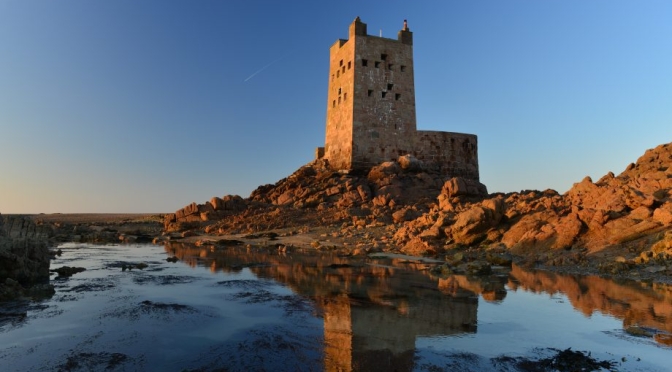
Channel Island Views: Monuments Of Jersey
Famous for its Jersey Royals, honey-coloured cows and international finance industry, Jersey is perhaps less well known for its rich history and distinct culture. Evidence of human activity dates back 250,000 years (the caves at La Cotte de St Brelade are associated with mammoth hunting) and its more recent Norman links give it a very French feel.


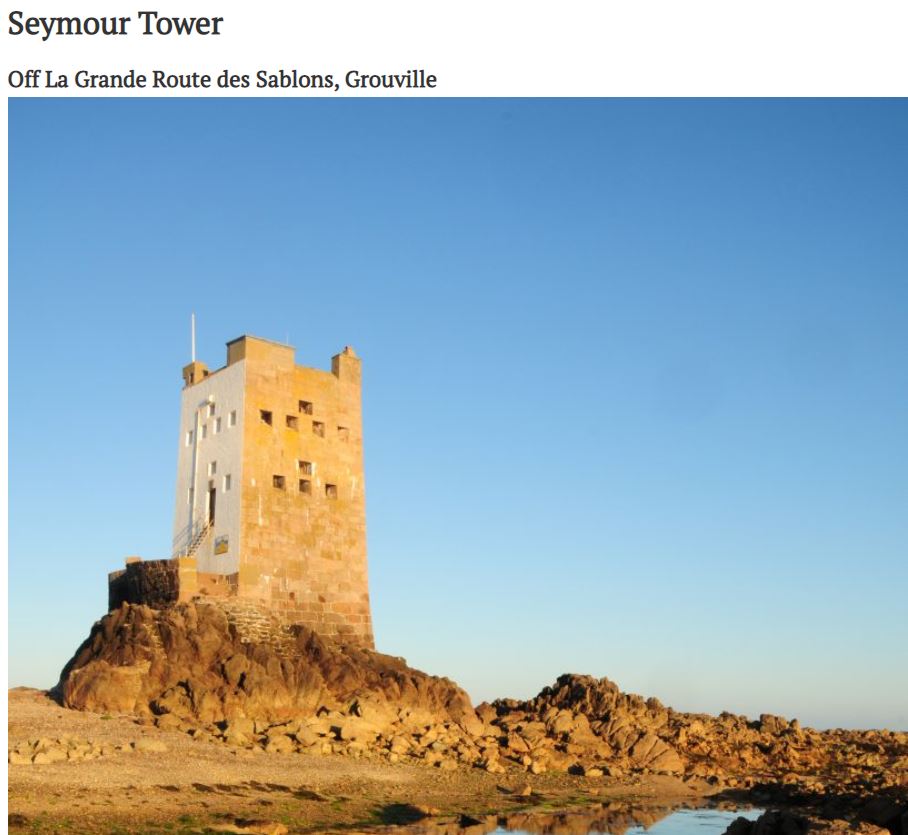
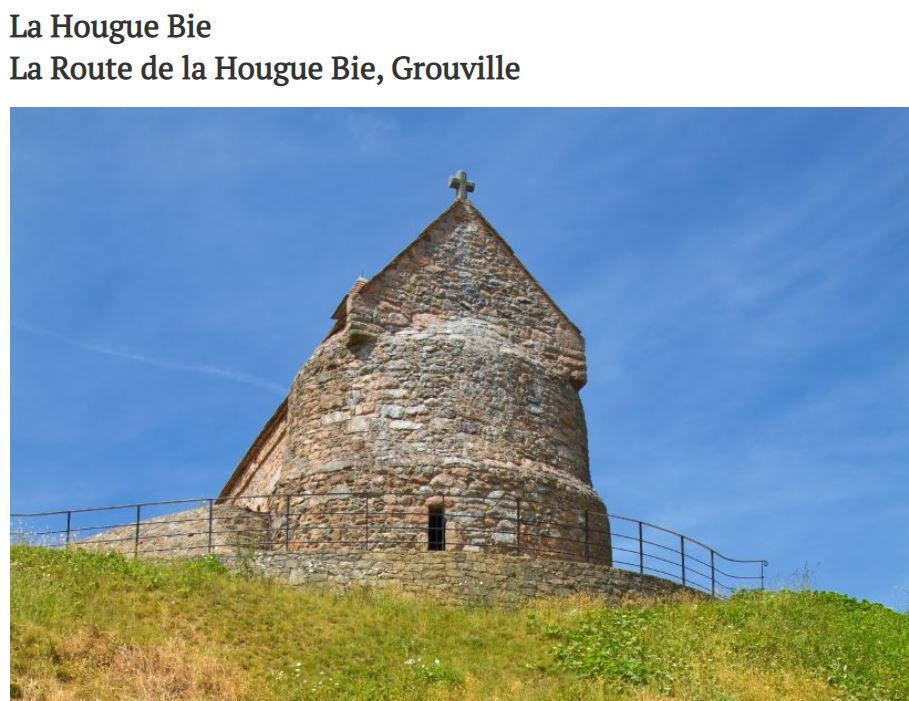

Electric bikes, available to rent, are an ideal way to explore the landscape, as you look out for a glimpse of a bottle-nosed dolphin, red squirrel or puffin, or you could simply take to your feet to stroll around the island and drink in the magnificent views.

Walks: Gardens By The Bay, Singapore (4K Video)
The Gardens by the Bay is a nature park spanning 101 hectares in the Central Region of Singapore, adjacent to the Marina Reservoir. The park consists of three waterfront gardens: Bay South Garden, Bay East Garden and Bay Central Garden.
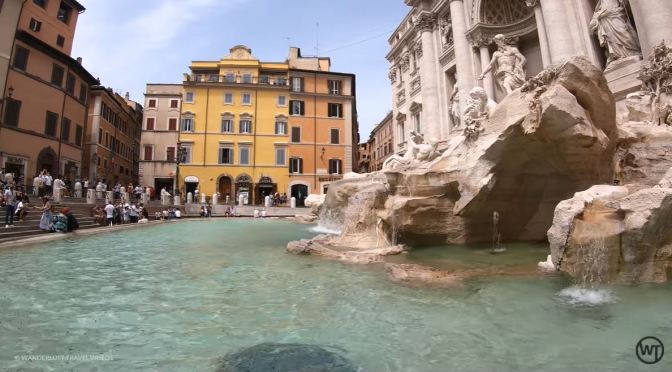
Rome Walks: The Trevi Fountain & Pantheon
The Trevi Fountain is a fountain in the Trevi district in Rome, Italy, designed by Italian architect Nicola Salvi and completed by Giuseppe Pannini and several others. Standing 26.3 metres (86 ft) high and 49.15 metres (161.3 ft) wide, it is the largest Baroque fountain in the city and one of the most famous fountains in the world. The fountain at the junction of three roads marks the terminal point of the “modern” Acqua Vergine, the revived Aqua Virgo, one of the aqueducts that supplied water to ancient Rome. In 19 BC, supposedly with the help of a virgin, Roman technicians located a source of pure water some 13 km (8.1 mi) from the city. (This scene is presented on the present fountain’s façade.) However, the eventual indirect route of the aqueduct made its length some 22 km (14 mi). This Aqua Virgo led the water into the Baths of Agrippa. It served Rome for more than 400 years.
The Pantheon from Greek Pantheion, “temple of all the gods” is a former Roman temple and since the year 609 a Catholic church (Basilica di Santa Maria ad Martyres or Basilica of St. Mary and the Martyrs), in Rome, Italy, on the site of an earlier temple commissioned by Marcus Agrippa during the reign of Augustus (27 BC – 14 AD). It was rebuilt by the emperor Hadrian and probably dedicated c. 126 AD. Its date of construction is uncertain, because Hadrian chose not to inscribe the new temple but rather to retain the inscription of Agrippa’s older temple, which had burned down.
Video recorded: June, 2021
 Boomers Daily