-
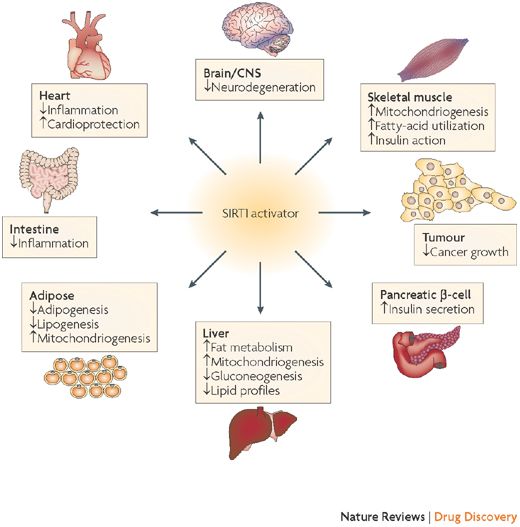
Sirtuins are a family of signaling proteins involved in metabolic regulation. SIRT1 (along with SIRT6 and SIRT7) are proteins are employed in DNA repair.
From Wikipedia:
Sirtuins are a class of proteins that possess either mono-ADP-ribosyltransferase, or deacylase activity, including deacetylase, desuccinylase, demalonylase, demyristoylase and depalmitoylase activity. The name Sir2 comes from the yeast gene ‘silent mating-type information regulation 2‘, the gene responsible for cellular regulation in yeast.
From in vitro studies, sirtuins are implicated in influencing cellular processes like aging, transcription, apoptosis, inflammation and stress resistance, as well as energy efficiency and alertness during low-calorie situations. As of 2018, there was no clinical evidence that sirtuins affect human aging.
Aging
Although preliminary studies with resveratrol, an activator of deacetylases such as SIRT1, led some scientists to speculate that resveratrol may extend lifespan, there was no clinical evidence for such an effect, as of 2018.
In vitro studies shown that calorie restriction regulates the plasma membrane redox system, involved in mitochondrial homeostasis, and the reduction of inflammation through cross-talks between SIRT1 and AMP-activated protein kinase (AMPK), but the role of sirtuins in longevity is still unclear, as calorie restriction in yeast could extend lifespan in the absence of Sir2 or other sirtuins, while the in vivo activation of Sir2 by calorie restriction or resveratrol to extend lifespan has been challenged in multiple organisms.


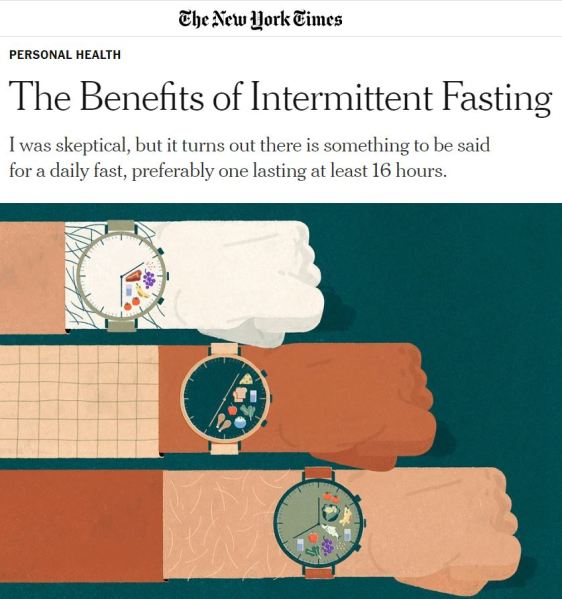 I was skeptical, but it turns out there is something to be said for practicing a rather prolonged diurnal fast, preferably one lasting at least 16 hours. Mark P. Mattson, neuroscientist at the National Institute on Aging and Johns Hopkins University School of Medicine, explained that the liver stores glucose, which the body uses preferentially for energy before it turns to burning body fat.
 Boomers Daily