
From an Antiques and the Arts Weekly:
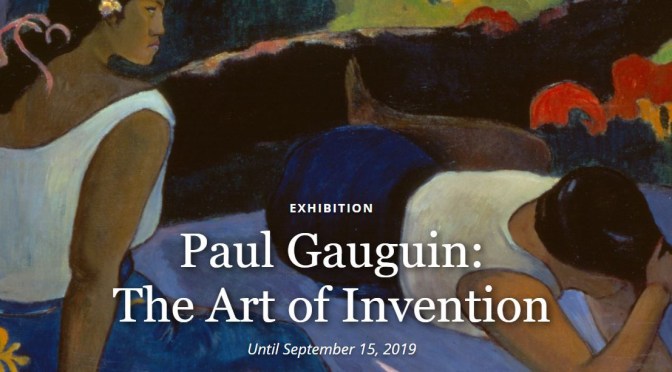
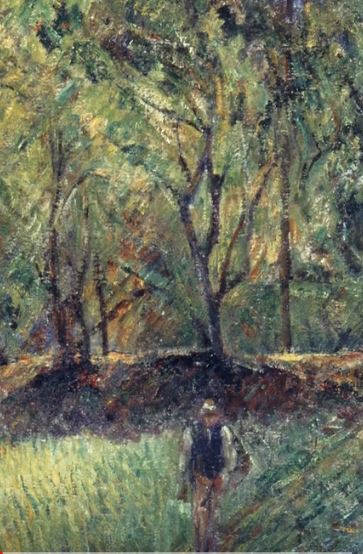 Comprising 55 Gauguin masterworks on loan from Copenhagen’s Ny Carlsberg Glyptotek, as well as some 35 objects from the collection of the Saint Louis Art Museum, “Paul Gauguin: The Art of Invention,” now on view in St Louis, offers a superb overview and deep insight into the life, thought and art of this quasi-mythological being whose shadow looms large not only over artistic Modernism but over the very romantic notion of the artist who sacrifices everything for art.
Along with many other artists in every discipline, Gauguin has been reappraised in recent years. His freedom and devotion to art above all came at a steep cost to others: the wife and children he left behind in Europe, the Native child brides he took in the South Seas and the children they bore him and hosts of friends – Van Gogh and Pissarro among them – who felt the sting of his wrathful restlessness.
French art historian Jean Leymarie, in his short, perfect essay on Paul Gauguin, published in the gorgeous dusty columns of the 1962 Encyclopedia of Art, sums up the birth of Modernism: “Painters no longer attempted to represent the external world by creating the illusion of an image, but rather to suggest their interior dreams through allusive symbols and the multiplication of decorative forms; line and color were invested with the role of expressive vehicles and became the abstract equivalents of sensation. This change, amounting to the overthrow of the empirical and optical vision that had come down from the Renaissance, was perhaps the most violent about-face in modern art. The way, from that time, was open, and we know how boldly Gauguin proceeded.”
https://www.antiquesandthearts.com/the-right-to-dare-everything-paul-gauguin-the-art-of-invention/
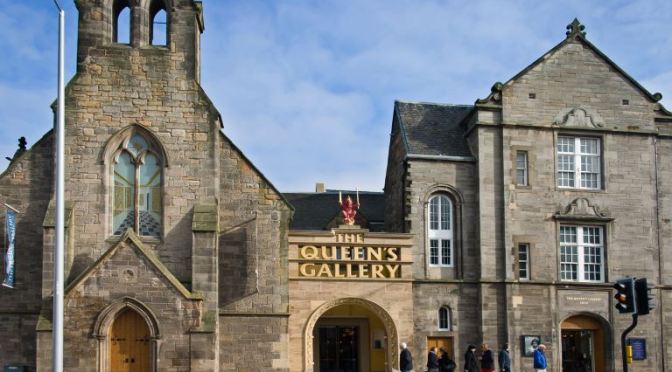
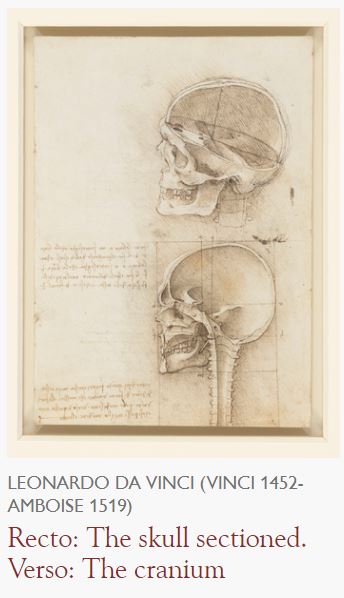 The 200 pages on display at the Queen’s Gallery, Buckingham Palace, have been together since the artist’s death. They were bound by the sculptor Pompeo Leoni in about 1590 and entered the Royal Collection during the reign of Charles II. Some of his most iconic images are here, including his study of a foetus in the womb, made as part of a treatise on anatomy that came close to being finished, but was never published.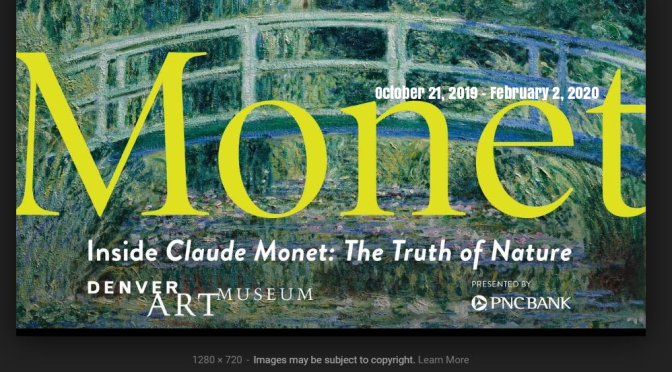
 The Denver Art Museum will be home to the most comprehensive U.S. exhibition of Monet paintings in more than two decades. The exhibition will feature more than 120 paintings spanning Monet’s entire career and will focus on the celebrated French impressionist artist’s enduring relationship with nature and his response to the varied and distinct places in which he worked.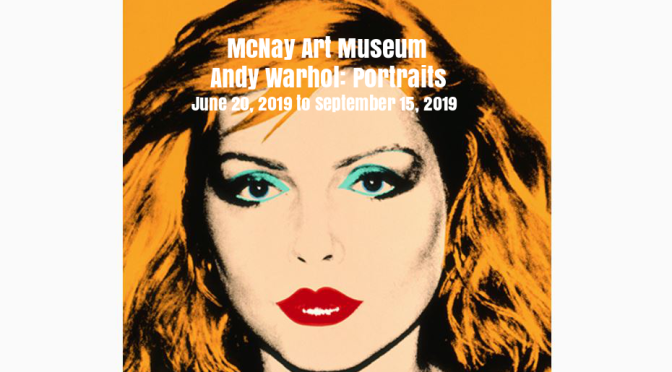
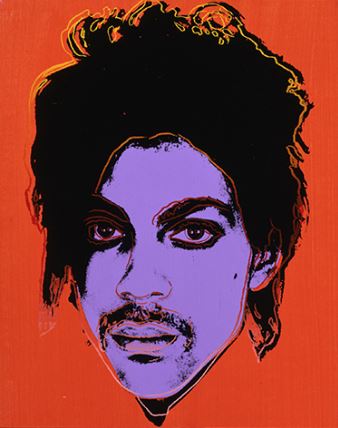 Andy Warhol: Portraits features over 120 paintings, prints, photographs, and films that depict the artist’s favorite genre: the portrait. This exhibition presents a snapshot of New York’s art and social scene from the 1960s through the 1980s through portraits of Warhol’s friends and patrons, movie stars and musicians, and celebrities of the day that range in style from the pristinely-idealized to the heartbreakingly-raw. Personalities who populated Warhol’s inner circle are represented; some widely recognized names include Joan Collins, Debbie Harry, Dennis Hopper, Mick Jagger, Robert Rauschenberg, and Andy Warhol himself. The presentation takes a multi-dimensional approach to the work, exploring the formal, conceptual, social, and political implications of portraiture, identity, and fame. Andy Warhol: Portraits invites the viewer into Warhol’s world, by examining the artist’s personal life, studio process, and use of a variety of mediums.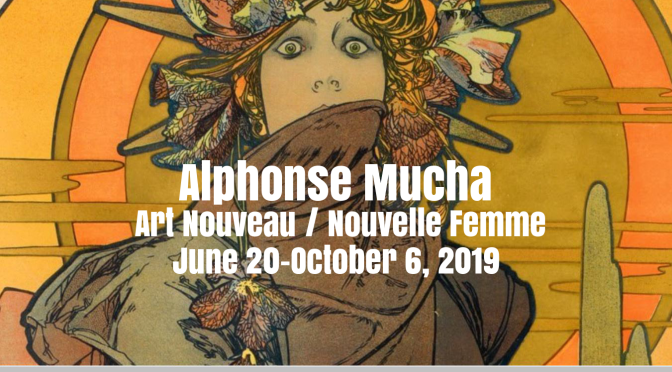
 Alphonse Mucha, born in Bohemia, came to Paris in 1887. Over the next 8 years, he emerged from obscurity to become the most celebrated graphic designer of the Art Nouveau movement. His intricate designs and gorgeous subjects were so popular that he produced pattern books for fellow designers and students, and his publishers repurposed his advertisements for hundreds of other products.
 Boomers Daily