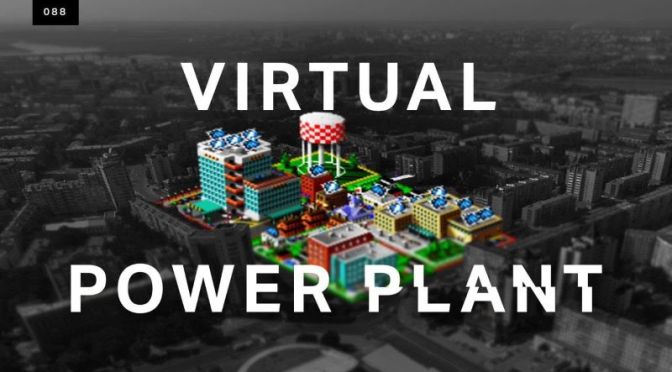
Residential solar panels and battery backups are becoming more and more popular as efficiency rises and costs sink. This explosion in distributed solar makes a new idea possible: virtual power plants, or a smart network of individual solar panels that can act like a big power plant when electricity is needed most. And as extreme weather threatens many communities, this idea is arriving in the nick of time.
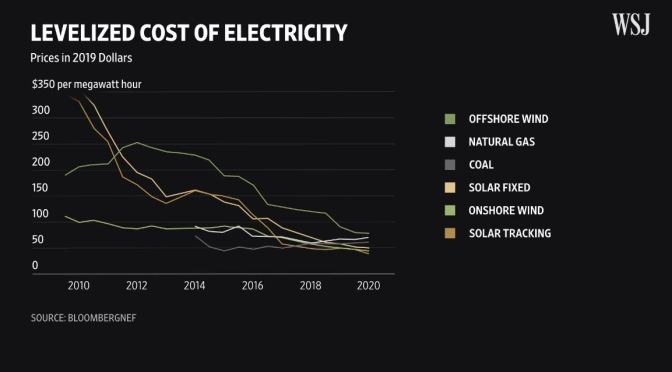
An abundance of fossil fuels combined with advances in technology to harness wind and solar power has sent energy prices crashing around the world. WSJ explains how it all happened at once.
Watch a Q&A with Steven Chu, who’s devoted a large part of his scientific career to searching for solutions to our climate challenges.
0.06 – What does sustainability mean to you?
0.34 – What are the present challenges in sustainability?
1.50 – How can we help every person see the importance of being sustainable?
3.24 – What can I do to be more sustainable in my everyday life?
5.22 – What’s the most sustainable form of energy in your opinion?
6.44 – How do you try to do research in the lab in a sustainable way?
8.34 – Where do you see our world’s climate status in 50 years?
10.19 – Do you feel hope in humanity when it comes to tackling climate change?
Steven Chu born February 28, 1948) is an American physicist and a former government official. He is known for his research at the University of California at Berkeley and his research at Bell Labs and Stanford University regarding the cooling and trapping of atoms with laser light, for which he won the Nobel Prize in Physics in 1997, along with his scientific colleagues Claude Cohen-Tannoudji and William Daniel Phillips.
Chu served as the 12th United States Secretary of Energy from 2009 to 2013. At the time of his appointment as Energy Secretary, Chu was a professor of physics and molecular and cellular biology at the University of California, Berkeley, and the director of the Lawrence Berkeley National Laboratory, where his research was concerned primarily with the study of biological systems at the single molecule level. Chu resigned as energy secretary on April 22, 2013. He returned to Stanford as Professor of Physics and Professor of Molecular & Cellular Physiology.
Chu is a vocal advocate for more research into renewable energy and nuclear power, arguing that a shift away from fossil fuels is essential to combating climate change. He has conceived of a global “glucose economy”, a form of a low-carbon economy, in which glucose from tropical plants is shipped around like oil is today. On February 22, 2019, Chu began a one-year term as president of the American Association for the Advancement of Science.
From a Wall Street Journal online article (Feb 13, 2020):
Beaming Solar Power – Wall Street Journal
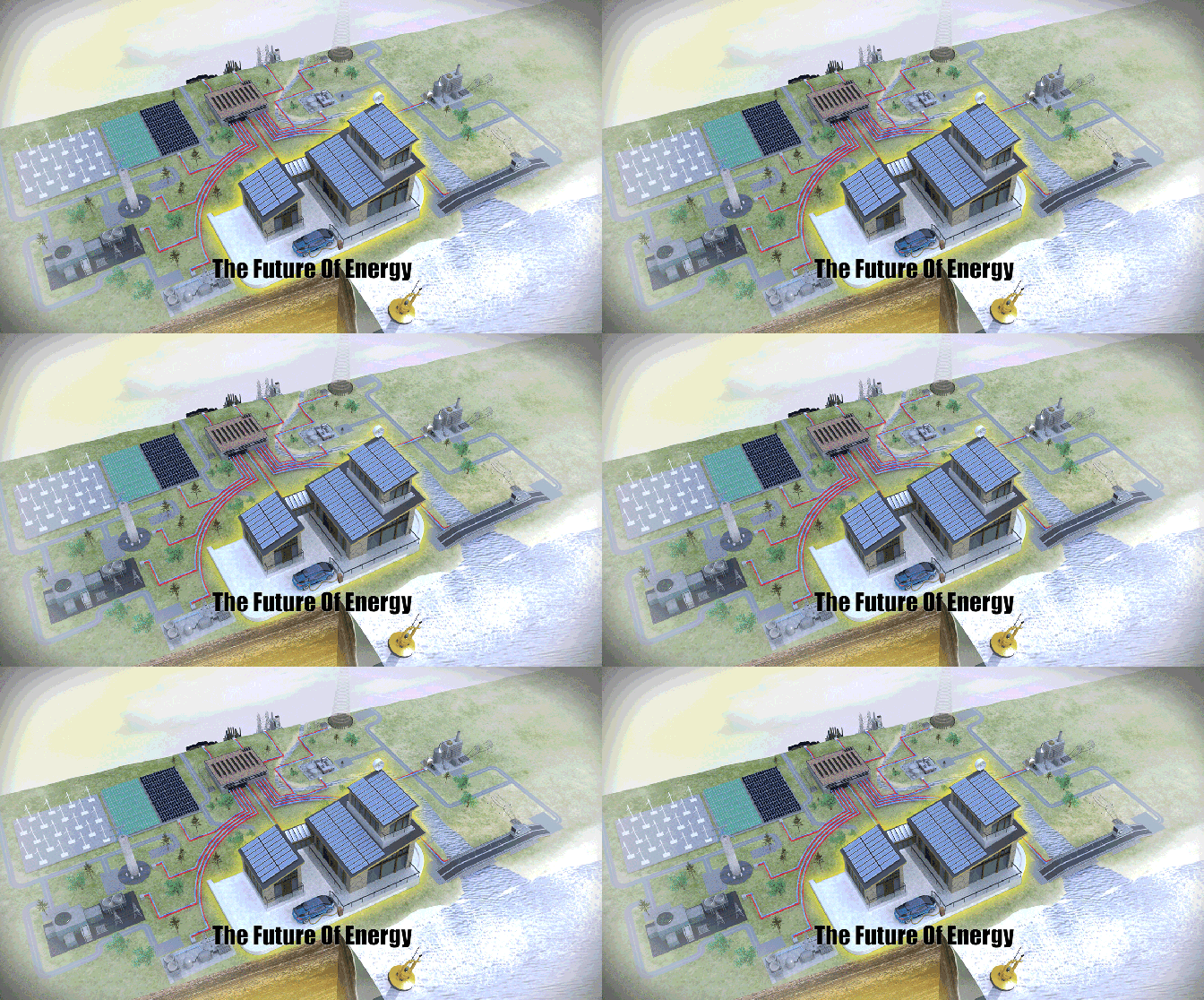
To meet the surge in demand projected by 2050, innovative engineers, utility operators and grid architects are planning for a future that blurs the distinctions between energy consumers and producers. Homeowners, businesses and other traditional utility customers are beginning to take on a new role as energy producers, through small-scale solar arrays, wind turbines and other new affordable technologies.
To coordinate so many different power sources and demands, the future power grid will depend on artificial intelligence, automated two-way communications and computer control systems to continuously collect and synthesize data from millions of smart sensors.
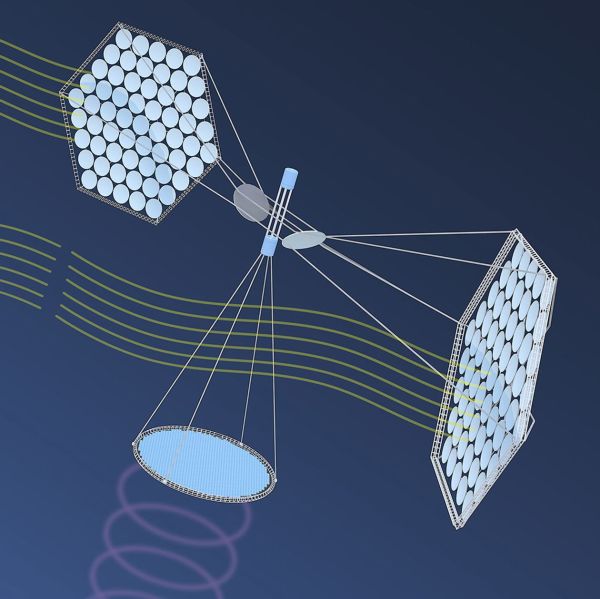
Beaming Solar Power – Scientists and engineers are working on spacecraft to capture sunlight and transform it into electricity that is wirelessly beamed to Earth. A prototype from the California Institute of Technology transmits power in a steerable beam. Japan’s space agency JAXA demonstrated a unit that converted 1.8 kilowatts of electricity into microwaves and then beamed it about 100 yards. China is planning an orbital solar power station.
Living Solar Cells – Researchers are exploring how to exploit the ability of many microorganisms to generate electric current through photosynthesis. Solar cells using microbes would be cleaner and cheaper than those based on conventional semiconductors. So far, the current is only about enough to drive a small fan. By using two kinds of microbes instead of one, scientists in China recently found a way to boost the electrical energy.
The Power of Brine – Scientists in Norway, the Netherlands, Japan and the U.S. are generating electricity by harnessing the difference in salt concentration between seawater and freshwater. In one experiment, a semipermeable membrane allows seawater ions to pass into the fresh water. The movement of the ions generates an electric current.


 Boomers Daily