
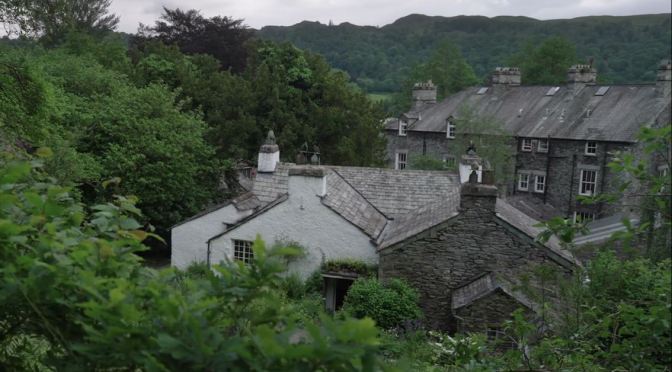
The Museum at Wordsworth Grasmere, the second phase of work at the former Lake District home of the great English Romantic poet William Wordsworth and his sister Dorothy, has opened to the public, with all gallery, exhibition design and interpretative overviews by Nissen Richards Studio.
The first phase of work by Nissen Richards Studio encompassed the conservation and reinterpretation of Dove Cottage itself, where William and Dorothy once lived, plus the new identity for Wordsworth Grasmere and the scheme’s signage and wayfinding.
The new visitor journey, designed by Nissen Richards Studio in close collaboration with the Wordsworth Grasmere team, includes a series of threshold moments, such as a totem sign and the setting of words into the walkways, featuring fragments of poems going off in two directions, so that visitors see them clearly on arrival and departure.
The Museum includes a shop and ticketing area, before visitors enter a new, double-height orientation space, where quotations by Wordsworth are set within a dramatic, full-height light wall. Visitors then make their way to a former stable space that houses an immersive introductory film, before stepping over the threshold into Dove Cottage. Visitors return to The Museum via Dove Cottage’s Garden-Orchard, entering an expanded first floor space, loosely arranged into four new galleries. Galleries One and Four are set to one side and Galleries Two and Three to the other, whilst a pause space in between offers views onto the gardens and surrounding landscape.
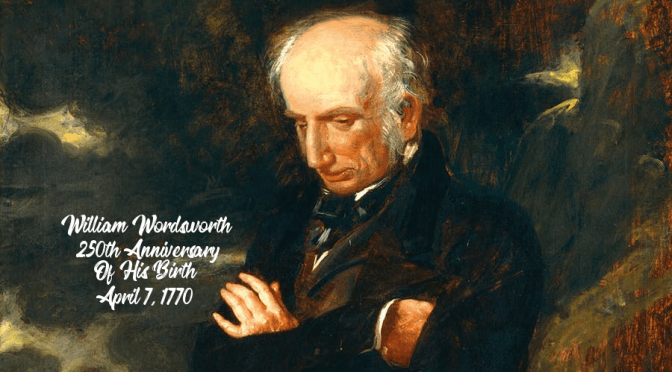
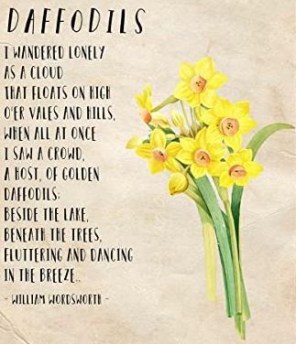 ‘We are fond of tracing the resemblance between Poetry and Painting,’ wrote William Wordsworth
 When, in 1840 or so, a well-meaning houseguest called Margaret Gillies made a drawing of the 70-year old Mrs Wordsworth, everyone agreed that it was an excellent likeness; but her kind act was rewarded with a testy and somewhat ungracious sonnet from the sitter’s husband. He preferred to visualise Mary in her salad days: ‘’tis a fruitless task to paint for me, / Who, yielding not to changes Time has made, / By the habitual light of memory see / Eyes unbedimmed, see bloom that cannot fade, / And smiles that from their birth-place ne’er shall flee / Into the land where ghosts and phantoms be’.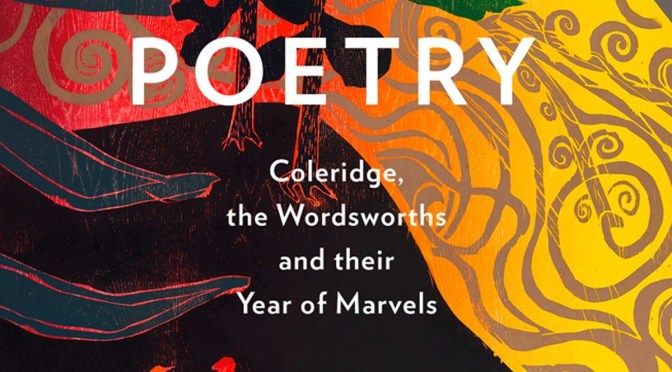
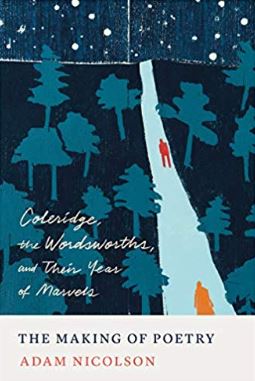 In The Making of Poetry, Adam Nicolson embeds himself in the reality of this unique moment, exploring the idea that these poems came from this particular place and time, and that only by experiencing the physical circumstances of the year, in all weathers and all seasons, at night and at dawn, in sunlit reverie and moonlit walks, can the genesis of the poetry start to be understood.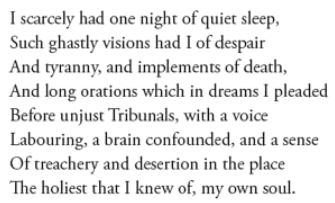
 Boomers Daily