Tag Archives: Wildlife

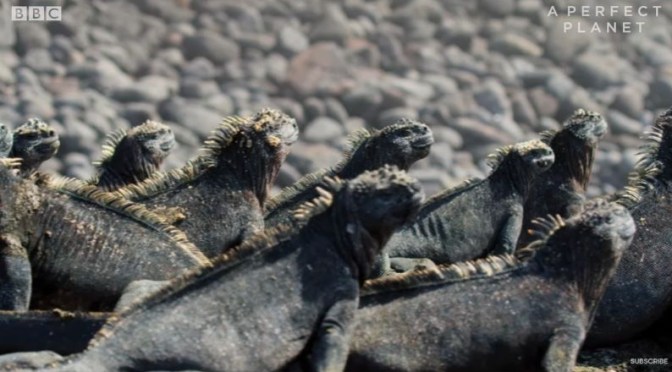
Ocean Wildlife: ‘Marine Iquanas’ Of The Galápagos Islands (BBC Earth Video)

This sea-diving lizard only has 30 minutes to search for food before his muscles seize up.

The marine iguana, also known as the sea iguana, saltwater iguana, or Galápagos marine iguana, is a species of iguana found only on the Galápagos Islands. Unique among modern lizards, it is a marine reptile that has the ability to forage in the sea for algae, which makes up almost all of its diet. 

The Galápagos Islands is a volcanic archipelago in the Pacific Ocean. It’s considered one of the world’s foremost destinations for wildlife-viewing. A province of Ecuador, it lies about 1,000km off its coast. Its isolated terrain shelters a diversity of plant and animal species, many found nowhere else. Charles Darwin visited in 1835, and his observation of Galápagos’ species later inspired his theory of evolution.
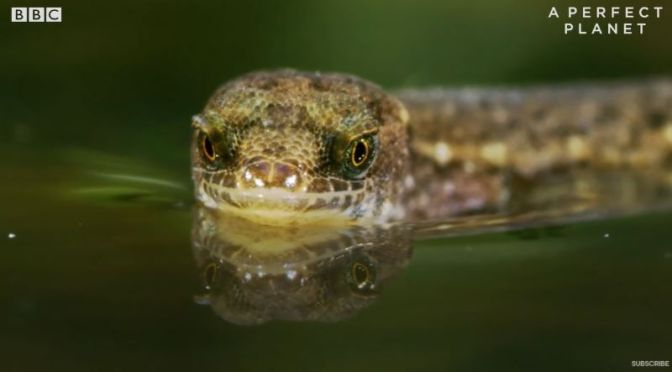
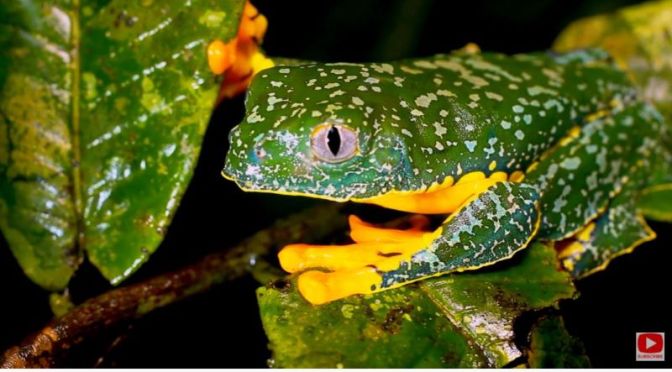
Wildlife: ‘Amazon Pigmy Geckos – The Unsinkable Lizard’ (BBC Earth Video)

This little pygmy gecko has an amazing superpower, that helps it survive in the wet season.

The Amazon pigmy gecko is a species of lizard in the Sphaerodactylidae family found in northern South America in Colombia, Venezuela, the Guianas, Brazil, Ecuador, and northern Peru. 

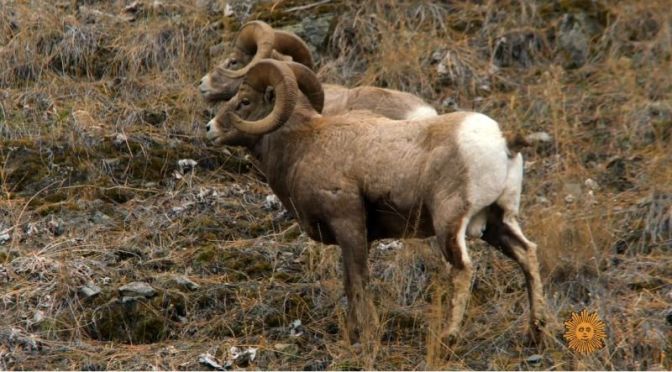
Wildlife: Big Horn Sheep In The Sapphire Mountains, Western Montana (Video)

“Sunday Morning” takes us to Big Sky Country, in Western Montana’s Sapphire Mountains. Videographer: Brad Markel.

The Sapphire Mountains are a range of mountains located in southwestern Montana in the northwestern United States. From a point near the Clark Fork River and the city of Missoula, they run in a southerly direction for a distance of approximately 60 miles (100 km), making up much of the border between Ravalli County (to the west) and Granite County. To the west is the Bitterroot Valley, and to the east is Rock Creek. The southern end of the range meets the larger Anaconda Range at West Pintler Peak.

Views: ‘Reptiles’ (8K Video)

Reptiles are a class of vertebrates made up mostly of snakes, turtles, lizards, and crocodilians. These animals are most easily recognized by their dry, scaly skin. Almost all reptiles are cold-blooded, and most lay eggs—though some, like the boa constrictor, give birth to live young. Instead of possessing gills like fish or amphibians, reptiles have lungs for breathing.

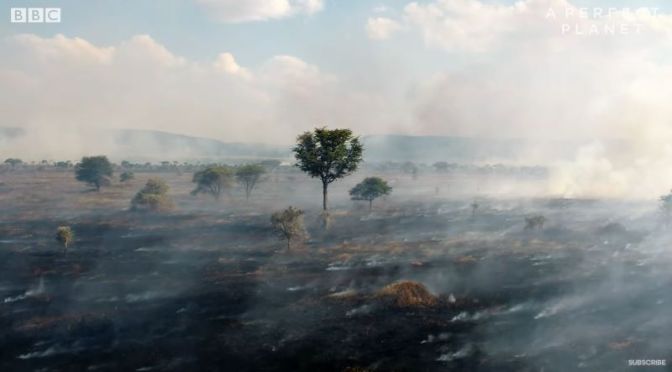
Ecology: Benfits Of 50% Of Serengeti Grasslands Burning Each Year (Video)

After receiving twelve hours of solar energy every day, the Serengeti grasslands become a tinderbox, just waiting to be lit.

The vast majority of the African fires currently burning seem to be in grasslands, in exactly the places we expect to see fires at this time of year. These fires are usually lit by cattle farmers as part of their traditional management of the savannahs where their animals graze. Some fires are started to stimulate new growth of nutritious grass for their animals, others are used to control the numbers of parasitic ticks or manage the growth of thorny scrub.

Without fires, many savannahs (and the animals they support) wouldn’t exist, and lighting them is a key management activity in many of the iconic protected areas of Africa. For instance the Serengeti in Tanzania is known worldwide for its safari animals and awe-inspiring wildebeest migration – and our work shows that around half of its grasslands burn each year.

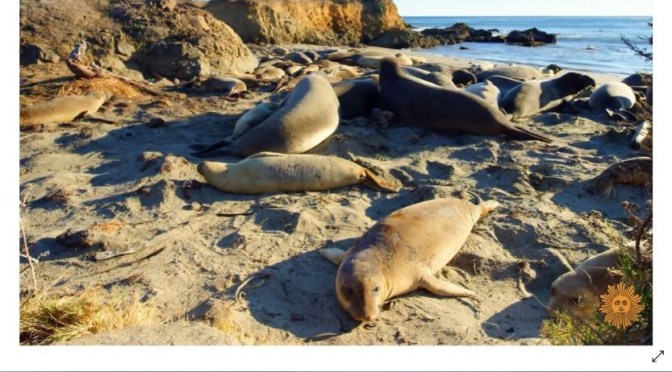
Marine Wildlife: ‘Elephant Seals’ On Beaches In San Simeon, California (Video)

“Sunday Morning” takes us to the beach at San Simeon, Calif., a home for elephant seals. Videographer: Lance Milbrand.

The northern elephant seal (Mirounga angustirostris) is one of two species of elephant seal (the other is the southern elephant seal). It is a member of the family Phocidae (true seals). Elephant seals derive their name from their great size and from the male’s large proboscis, which is used in making extraordinarily loud roaring noises, especially during the mating competition. Sexual dimorphism in size is great. Correspondingly, the mating system is highly polygynous; a successful male is able to impregnate up to 50 females in one season.

San Simeon is a town and census-designated place on the Pacific coast of San Luis Obispo County, California, United States. Its position along State Route 1 is about halfway between Los Angeles and San Francisco, each of those cities being roughly 230 miles away.