
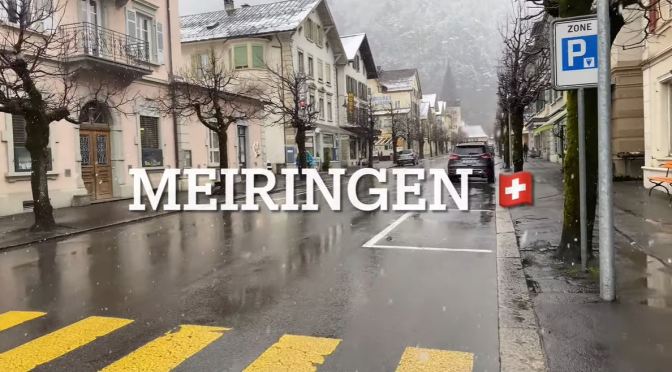
Meiringen is first mentioned in 1234 as Magiringin. Due to its strategic location at the foot of several alpine passes, the area around Meiringen was settled at least in the Early Middle Ages. The first village church was built in the 9th or 10th century. When it was destroyed in a flood the new church of St. Michael (first mentioned in 1234) was built about 5 m (16 ft) above the old church. The current church of St. Michael dates from the 15th century and was renovated in 1683–84. The Restiturm castle was constructed in the 13th century, whilst the Wyghus fortress in the Brünig Pass was first mentioned in 1333, though it was destroyed later.
Tag Archives: Walking Tour Videos

Walking Tours: ‘Velbert – Germany’ (4K Video)
Velbert is a city in the district of Mettmann, in North Rhine-Westphalia, Germany. The city is renowned worldwide for the production of locks and fittings.
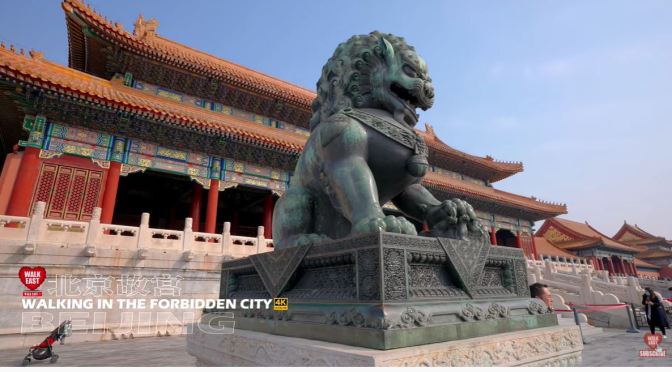
Walks: ‘The Forbidden City – Beijing, China’ (4K Video)
The Forbidden City is the palatial heart of China. Constructed in 1420, during the early Ming Dynasty, it is China’s best-preserved imperial palace, and the largest ancient palatial structure in the world.
As one of the five most important palaces in the world, the grand halls and walls proudly display the essence and culmination of traditional Chinese architecture, fitting for the capital city of the world’s largest nation.
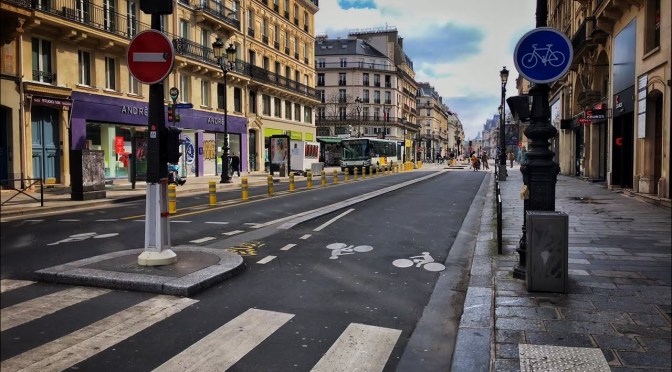
Walks: ‘Latin Quarter – Paris, France’ (4K Video)
Also known as the 5th arrondissement, the quaint Latin Quarter is home to the Sorbonne University and student-filled cafes. It’s also famed for its bookshops, including the landmark Shakespeare & Company. Family-friendly attractions include the Jardin des Plantes botanical gardens and the National Museum of Natural History. The stately Panthéon building holds the remains of notables like Voltaire and Marie Curie.
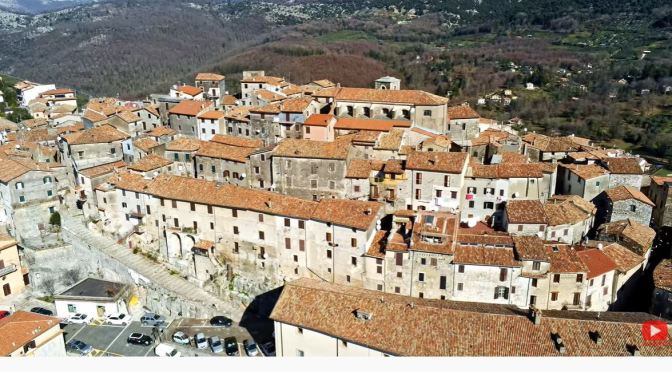
Village Walks: ‘Bassiano – Central Italy’ (Video)
Bassiano is a municipality in the Province of Latina in the Italian region Lazio, located about 60 kilometres southeast of Rome and about 14 kilometres northeast of Latina. As of 31 December 2004, it had a population of 1,664 and an area of 31.6 square kilometres.
𝗧𝗶𝗺𝗲𝗹𝗶𝗻𝗲 🔻 0:00 – [Drone intro] 1:30 – [Walking tour begins / Northern gate] 3:34 – [Via Manunzio] 10:28 – [“Gate of the Holy Souls” / Archangel Micheal – the angel is visible past the gate on the left] 15:00 – [Via Giulio Bernardini] 19:32 – [Gate “Decarcia Tower” – holes for the ancient door still visible. On a house nearby there is scupted the head of God Fauno] 21:20 – […tour continues…] 24:12 – [Beautiful view on stone stairs] 30:00 – [Beautiful little square] 31:28 – [St.Erasmus Square & Chrcuh (closd unfortunately)] 33:20 – […tour continues…] 34:34 – [Suggestive interior hallway] 35:20 – […tour continues…] 39:50 – [*Poem on Bassiano* – 𝘁𝗿𝗮𝗻𝘀𝗹𝗮𝘁𝗶𝗼𝗻 𝗶𝗻 𝗰𝗮𝗽𝘁𝗶𝗼𝗻𝘀] 41:29 – [Via Manunzio] 43:04 – [Inside the town again] 46:25 – [Northern wall hallway] 49:05 – [Outside the Walls / Monument to the fallen soldiers of the town]
The history of Bassiano certainly begins around the 10th century and starts with a small group of shepherds and farmers forced to take refuge in this place completely covered by the view of the plain, due to the continuous barbarian raids. The first written records of Bassiano date back to 1169. In a document found in the archive of the collegiate church of Santa Maria in Sermoneta, reference is made to the recovery of the Castrum stolen by deception by a certain Gregorio Leonis from a Lord of Bassiano. 𝗠𝗶𝗱𝗱𝗹𝗲 𝗔𝗴𝗲𝘀 In 1240, Pope Gregory IX appointed Tasmondo Annibaldi as Lord of the Castles of Sermoneta and Bassiano, to thank him for the help received against the invasion attempts of Frederick II. The Annibaldi ruled the town until 1297 when the castle passed into the possession of the Caetani who ruled it until the fiefs were abolished, except for a decade (1492 – 1502) in which the Borgias ruled. The history of Bassiano is profoundly marked by the action of the spiritual movements of the 13th and 14th centuries, which were the promoters of a social renewal, also by the Knights Templar who, it is believed, have left the mark of their passage here. 𝗥𝗲𝗻𝗮𝗶𝘀𝘀𝗮𝗻𝗰𝗲 It was only at the beginning of the 16th century that the Caetani, with the construction of the Baronial palace, left an imprint of their dominion on the land of Bassiano. It was Bonifacio Caetani who in 1554 had an important palace built, as a refuge from the dangers of the swamp and a place of treatment for his ill health. The palace incorporates in its interior houses and medieval shops that the Caetani had bought in the 15th century in the “Porta salamandra” area which was the main access road to the Castrum. Important citizen of the town is the humanist typographer Aldo Manuzio.
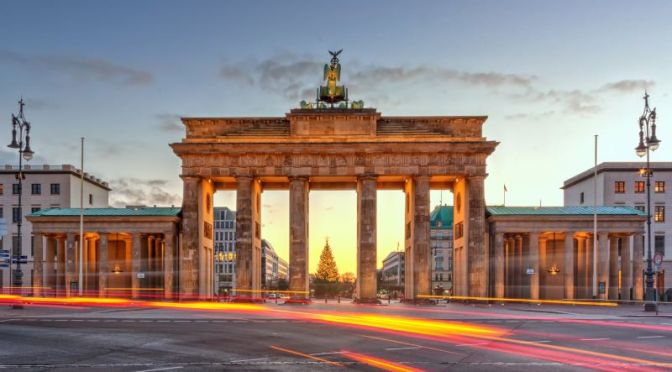
Walks: ‘Brandenburg Gate, Berlin, Germany’ (4K Video)
The Brandenburg Gate is an 18th-century neoclassical monument in Berlin, built on the orders of Prussian king Frederick William II after the temporary restoration of order during the Batavian Revolution.
Berlin, Germany’s capital, dates to the 13th century. Reminders of the city’s turbulent 20th-century history include its Holocaust memorial and the Berlin Wall’s graffitied remains. Divided during the Cold War, its 18th-century Brandenburg Gate has become a symbol of reunification. The city’s also known for its art scene and modern landmarks like the gold-colored, swoop-roofed Berliner Philharmonie, built in 1963.
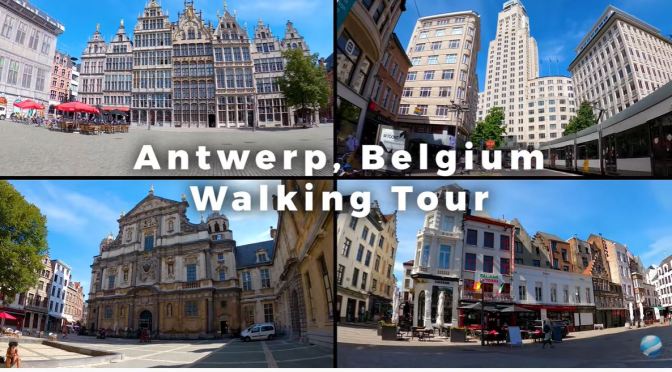
Walking Tours: ‘Antwerp – Northern Belgium’ (Video)
Antwerp is a port city on Belgium’s River Scheldt, with history dating to the Middle Ages. In its center, the centuries-old Diamond District houses thousands of diamond traders, cutters and polishers. Antwerp’s Flemish Renaissance architecture is typified by the Grote Markt, a central square in the old town. At the 17th-century Rubens House, period rooms display works by the Flemish Baroque painter Peter Paul Rubens.
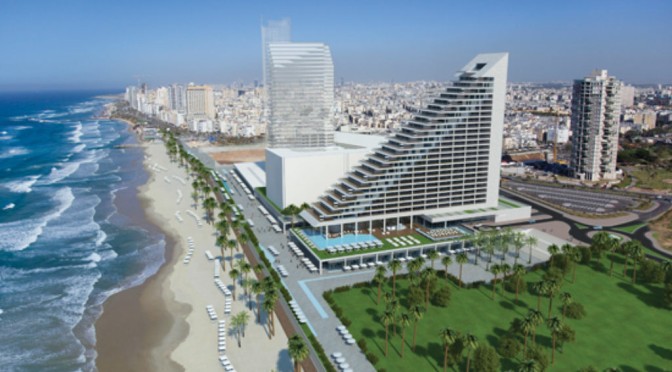
Coastal Walks: ‘Bat Yam’ – Mediterranean Sea, Israel
Bat Yam is a city located on Israel’s Mediterranean Sea coast, on the central coastal strip just south of Tel Aviv. It is part of the Gush Dan metropolitan area and the Tel Aviv District. In 2020, it had a population of 160,000.

Walking Tour: ‘Lübeck – Northern Germany’ (4K)
Lübeck is a northern German city distinguished by Brick Gothic architecture, which dates to its time as the medieval capital of the Hanseatic League, a powerful trading confederation. Its symbol is the Holstentor, a red-brick city gate that defended the river-bounded Altstadt (old town). Rebuilt following WW II, the Marienkirche is a 13th–14th-century landmark that widely influenced Northern European church design.
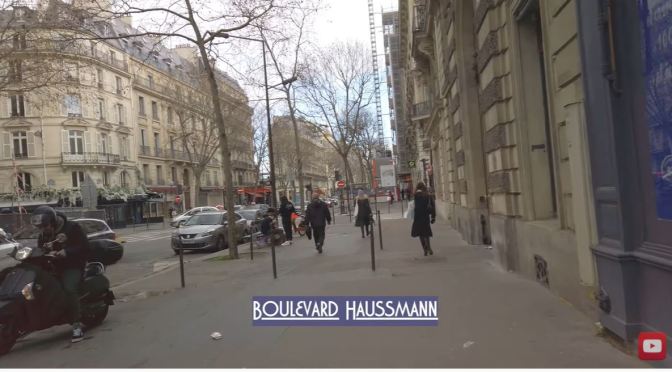
Walking Tour: Boulevard Haussmann In Paris (4K)
Boulevard Haussmann, 2.53 kilometres long from the 8th to the 9th arrondissement, is one of the wide tree-lined boulevards created in Paris by Napoleon III, under the direction of his Prefect of the Seine, Baron Haussmann.
 Boomers Daily