
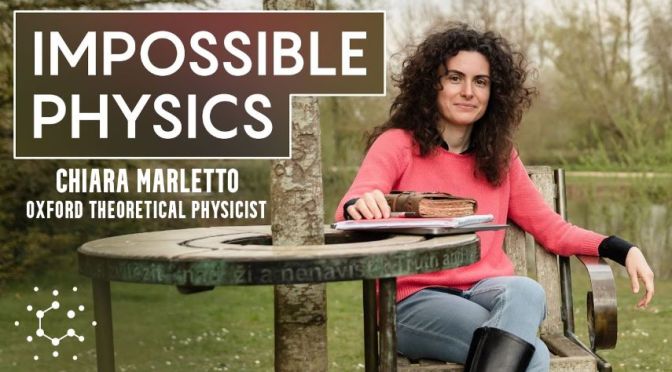
“Declaring something impossible leads to more things being possible,” writes the physicist Chiara Marletto. “Bizarre as it may seem, it is commonplace in quantum physics.”
Chiara Marletto is trying to build a master theory — a set of ideas so fundamental that all other theories would spring from it. Her first step: Invoke the impossible.
Constructor Theory is a new approach to formulating fundamental laws in physics. Instead of describing the world in terms of trajectories, initial conditions and dynamical laws, in constructor theory laws are about which physical transformations are possible and which are impossible, and why. This powerful switch has the potential to bring all sorts of interesting fields, currently regarded as inherently approximative, into fundamental physics. These include the theories of information, knowledge, thermodynamics, and life.
Read more about Marletto and David Deutsch’s constructor theory at Quanta Magazine: https://www.quantamagazine.org/how-to…
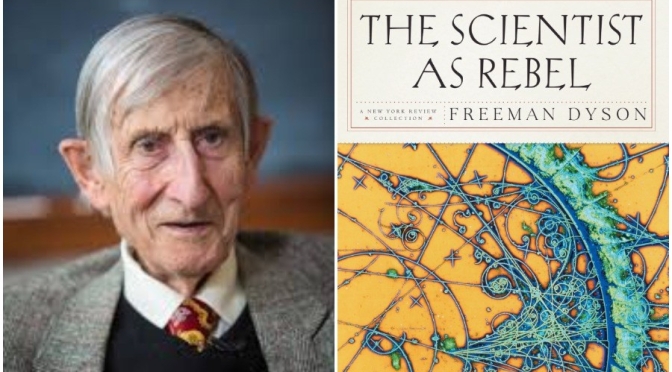
 “Life begins at 55, the age at which I published my first book,” he wrote in “From Eros to Gaia,” one of the collections of his writings that appeared while he was a professor of physics at the Institute for Advanced Study — an august position for someone who finished school without a Ph.D. The lack of a doctorate was a badge of honor, he said. With his slew of honorary degrees and a fellowship in the Royal Society, people called him Dr. Dyson anyway.
 Boomers Daily