
Tag Archives: Superconductors

Research: New Scientist Magazine – August 12, 2023

Image

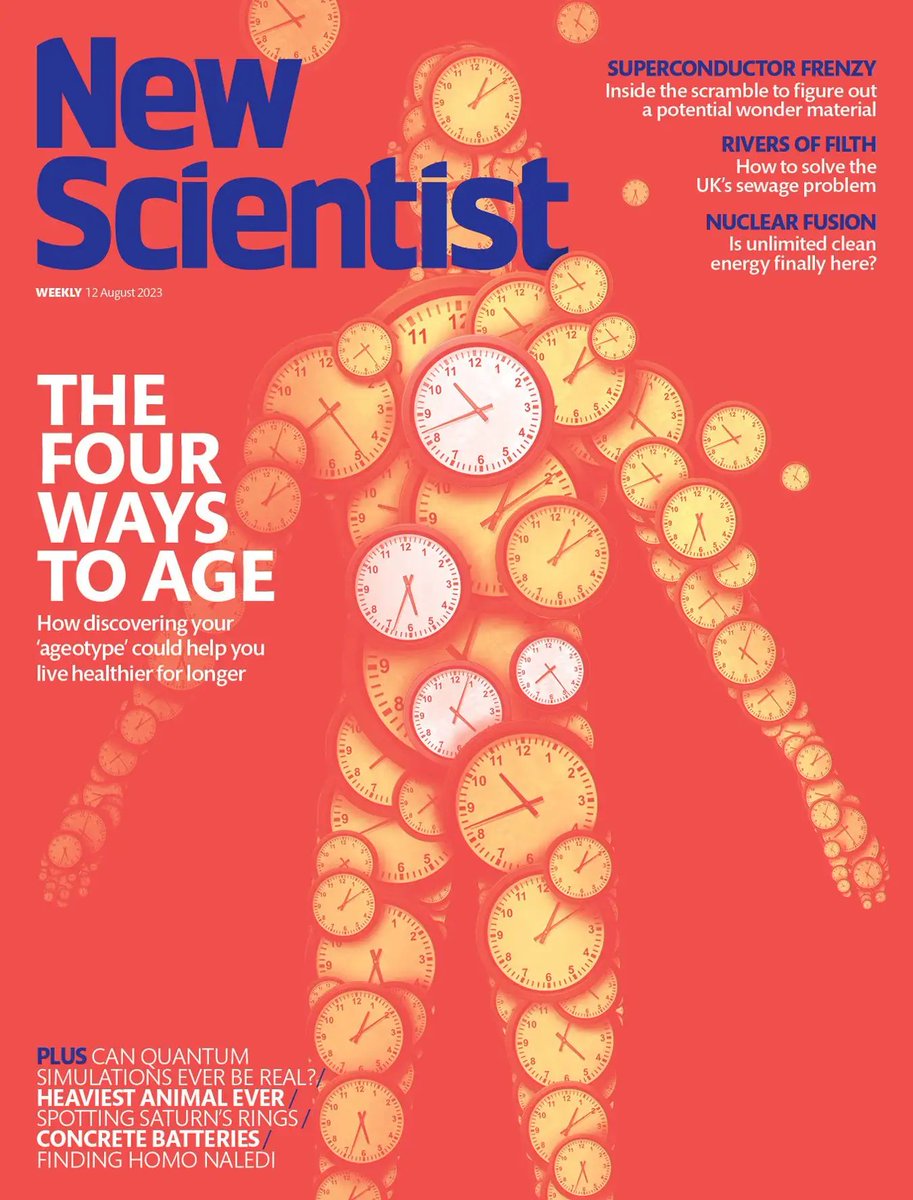
New Scientist Magazine August 12, 2023 issue: The Four Ways to Age; Can Quantum Simulations ever be real?; Heaviest animal ever; Spotting Saturn’s Rings; Concrete batteries; Finding Homo Naledi and more…

How working out your ageotype could help you live healthier for longer

New Scientist Default Image

Your body is ageing down one of four – or more – possible pathways. Figuring out your “ageotype” could help you zero in on the things you can do to stay healthier for longer

By Graham Lawton

THERE is a (probably apocryphal) story about Henry Ford sending agents out to junkyards across the US in search of scrapped Model Ts. The famous industrialist wanted to know which of the car’s vital components failed first, so he could do something about it. The agents reported back that every bit of the car was susceptible to failure, but some were more susceptible than others, except for one – a component of the steering system called the kingpin, which almost never failed. They expected Ford to announce plans to extend the working lives of the weaker components. Instead, he ordered his engineers to make less resilient kingpins. No point wasting good money on a component that always outlived the others.

Cave of Bones review: Lee Berger on the discovery of Homo naledi

Sewage crisis: The truth about British rivers and how to clean them up

From time crystals to wormholes: When is a quantum simulation real?

Energy-storing concrete could form foundations for solar-powered homes

Scientists race to test claimed room-temperature superconductor

Front Covers: Science Magazine – August 27

Science Podcasts: Room-Temp Superconductors, Covid-19 Mask Benefits

A high pressure experiment reveals the world’s first room-temperature superconductor, and a method to target ecosystem restoration.

In this episode:

00:44 Room-temperature superconductivity

For decades, scientists have been searching for a material that superconducts at room temperature. This week, researchers show a material that appears to do so, but only under pressures close to those at the centre of the planet. Research Article: Snider et al.News: First room-temperature superconductor puzzles physicists

08:26 Coronapod

The Coronapod team revisit mask-use. Does public use really control the virus? And how much evidence is enough to turn the tide on this ongoing debate? News Feature: Face masks: what the data say

19:37 Research Highlights

A new method provides 3D printed materials with some flexibility, and why an honest post to Facebook may do you some good. Research Highlight: A promising 3D-printing method gets flexibleResearch Highlight: Why Facebook users might want to show their true colours

22:11 The best way to restore ecosystems

Restoring degraded or human-utilised landscapes could help fight climate change and protect biodiversity. However, there are multiple costs and benefits that need to be balanced. Researchers hope a newly developed algorithm will help harmonise these factors and show the best locations to target restoration. Research Article: Strassburg et al.News and Views: Prioritizing where to restore Earth’s ecosystems

28:40 Briefing Chat

We discuss some highlights from the Nature Briefing. This time, a 44 year speed record for solving a maths problem is beaten… just, and an ancient set of tracks show a mysterious journey. Quanta: Computer Scientists Break Traveling Salesperson RecordThe Conversation: Fossil footprints: the fascinating story behind the longest known prehistoric journey