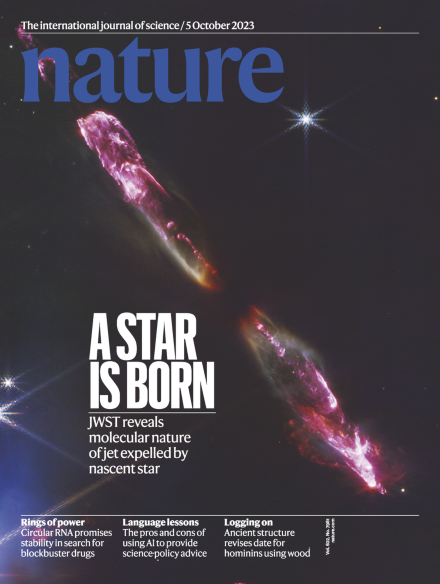
nature Magazine – October 5, 2023: The latest issue features a composite near-infrared image of Herbig-Haro 211, a striking interstellar jet emanating from a young star in the Perseus Molecular Cloud, captured by Tom Ray and his colleagues using the James Webb Space Telescope.
Deceptive videos and images created using generative AI could sway elections, crash stock markets and ruin reputations. Researchers are developing methods to limit their harm.
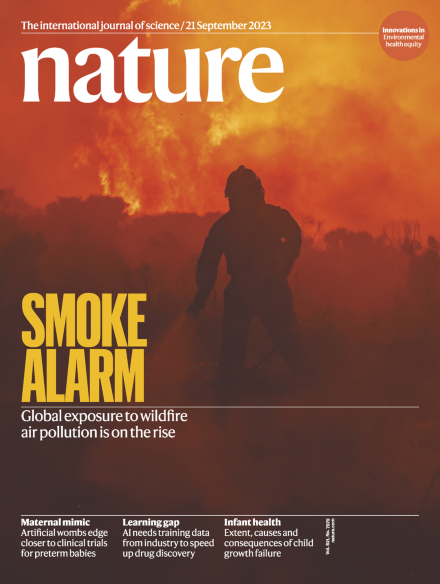
nature Magazine – September 21, 2023: In this week’s issue, an estimate of global human exposure to air pollution from landscape fires (dominated by wildfires, but also including planned or controlled open land fires) between 2000 and 2019.
As many countries head into autumn, they are targeting vaccinations at people in high-risk categories, leaving those at lower risk uncertain about what to do.
Climate change, civil war and international sanctions all contributed to the devastation caused by some of Libya’s worst flooding ever, researchers say.
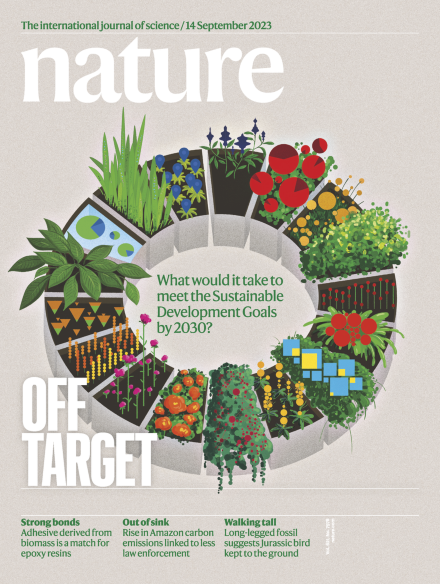
nature Magazine – September 14, 2023: In this week’s issue, 193 countries agreed to work towards 17 goals aimed at improving the lives of people around the world. From eliminating poverty and reducing hunger to tackling global warming and taking care of biodiversity, the Sustainable Development Goals have since taken their place in corporate plans and government policy.
Nature looks at the detective work required to confirm a controversial claim of finding interstellar debris.
A research team made headlines last week when it claimed to have scooped up from the sea floor fragments of a meteorite that came from beyond our Solar System1. Finding such an interstellar sample on Earth would be exciting because it might shed light on how planets and stars beyond our own form. But a number of scientists say that the evidence that the material came from another planetary system is not convincing so far.
The prized materials could be transformative for research — but only if they have other essential qualities.
The wave of excitement caused by LK-99 — the purple crystal that was going to change the world — has now died down after studies showed it wasn’t a superconductor. But a question remains: would a true room-temperature superconductor be revolutionary?
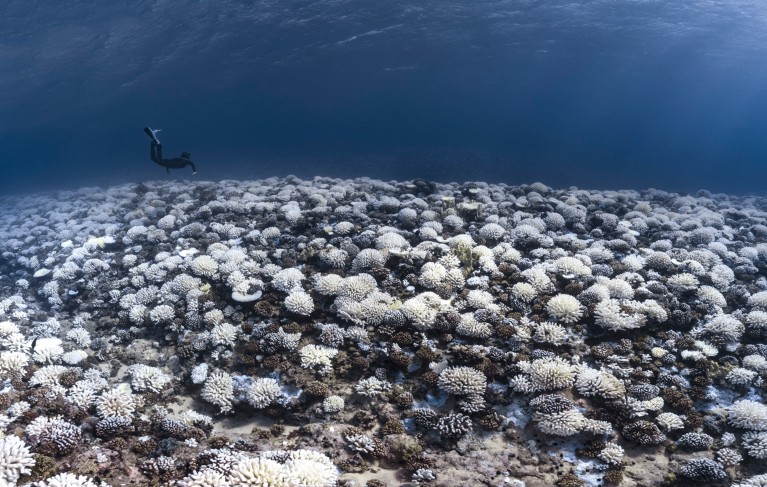
Record-high ocean temperatures, combined with a confluence of extreme climate and weather patterns, are pushing the world into uncharted waters. Researchers must help communities to plan how best to reduce the risks.
Oceans are warming up, and dangerously so. Since April this year, the average global sea surface temperature has been unusually high and rising; by August, oceans in the Northern Hemisphere had reached record-high temperatures, even surpassing 38 °C in one area around Florida.
nature Magazine – August 31, 2023 issue:In this week’s issue, AI pilot beats human champions in aerial contest – Artificial intelligence has taken on and beaten human competitors in many games, including chess, StarCraft and Gran Turismo.
Events in Hawaii show how much we have to learn about wildfire spread — but simple research steps can help to build resilience.
Driven by drought, high winds and extreme heat, fires in recent years have caused destruction and losses on a scale bigger than anyone is used to. The average annual global cost of wildfires is around US$50 billion, the World Economic Forum said in January. And by the end of the century, climate change might make catastrophic conflagrations 50% more common, according to the United Nations Environment Programme. Given the surge in urban development in and near forested areas, something has to be done to protect communities. As Maui’s experience shows, little is in place.
In a rapidly urbanizing world, what happens in cities matters — and sustainability success stories show what can be achieved when researchers and policymakers work together.
More than half of the world’s population lives in cities, and that proportion is set to grow. By 2050, another two billion people will be urban dwellers, the United Nations estimates. Cities lie at the nexus of all aspects of human development, from building thriving economies to coping with climate change.
The planet has warmed 1.2 ºC on average, but that’s enough to produce big extremes.
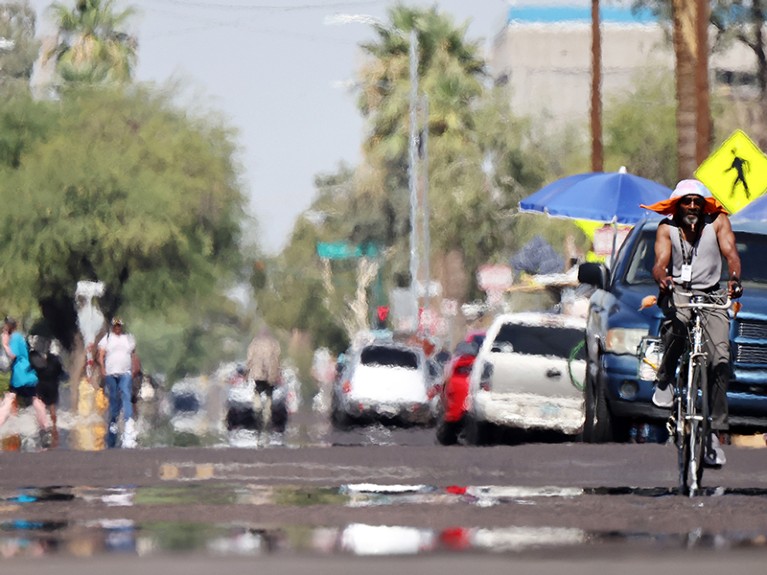
From wilting saguaros in Arizona and hot-tub-like temperatures off the coast of Florida to increased heat-related hospitalizations in Europe and agricultural losses in China, last month felt unusually hot. It was: several teams have now confirmed that July 2023 was the hottest month in recorded history. And there’s more to come.
July is typically the hottest month of the year, and this July shattered records going back as far as 1850 by around 0.25 °C. Overall, the average global temperature was 1.54 °C above the preindustrial average for July, according to Berkeley Earth, a non-profit group in California that is one of several organizations tracking global warming. It’s a seemingly small increase, but what many people across the world actually experienced was a bout of long and often brutal heat waves.
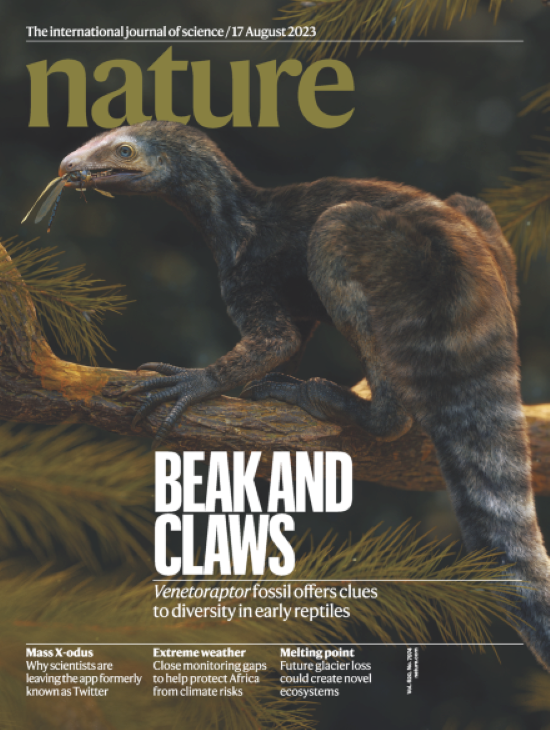
nature Magazine – August 17, 2023 issue: The cover shows an artist’s impression of Venetoraptor gassenae, a species of ancient reptile that lived some 230 million years ago. Dinosaurs and pterosaurs dominated land and air, respectively, around 70 million to 200 million years ago, but their evolutionary precursors are not that well known.
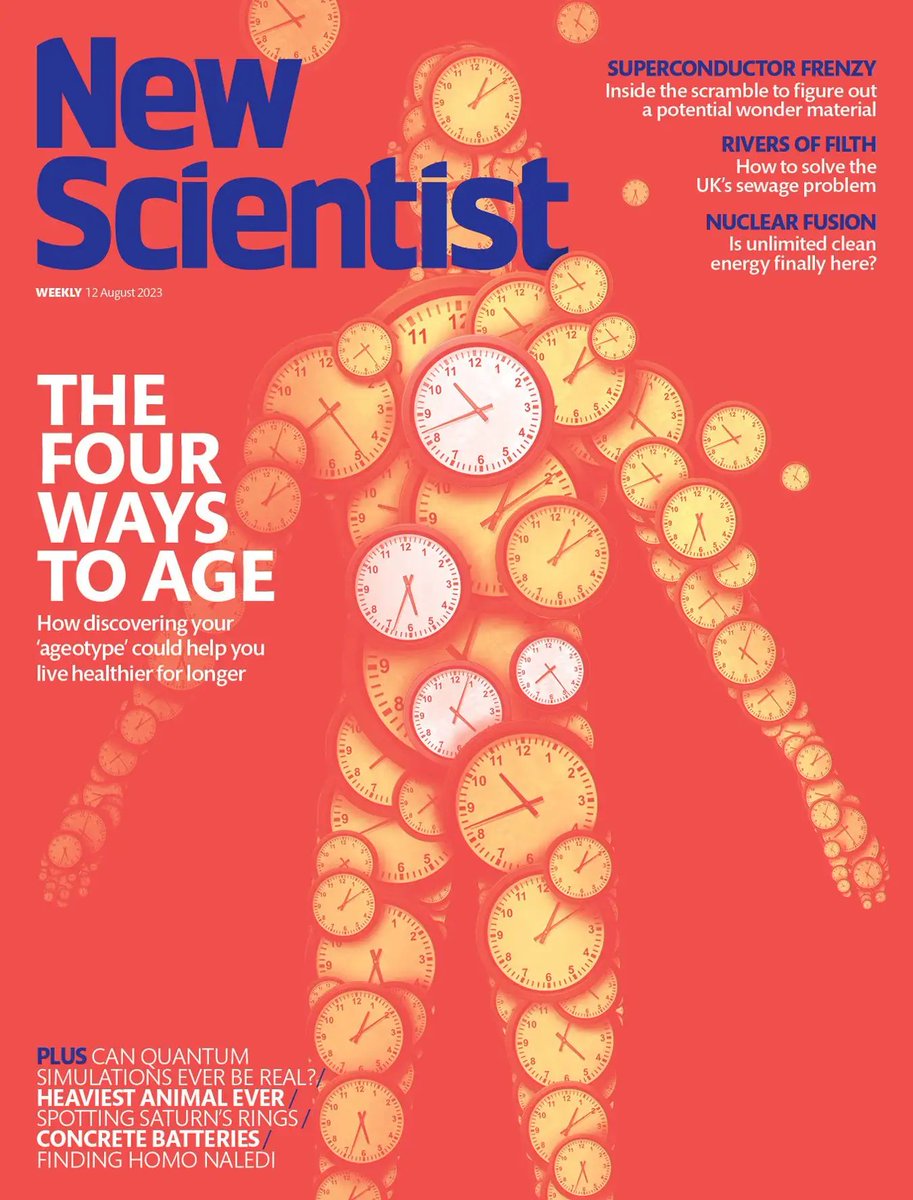
New Scientist Magazine – August 12, 2023 issue: The Four Ways to Age; Can Quantum Simulations ever be real?; Heaviest animal ever; Spotting Saturn’s Rings; Concrete batteries; Finding Homo Naledi and more…
Your body is ageing down one of four – or more – possible pathways. Figuring out your “ageotype” could help you zero in on the things you can do to stay healthier for longer
THERE is a (probably apocryphal) story about Henry Ford sending agents out to junkyards across the US in search of scrapped Model Ts. The famous industrialist wanted to know which of the car’s vital components failed first, so he could do something about it. The agents reported back that every bit of the car was susceptible to failure, but some were more susceptible than others, except for one – a component of the steering system called the kingpin, which almost never failed. They expected Ford to announce plans to extend the working lives of the weaker components. Instead, he ordered his engineers to make less resilient kingpins. No point wasting good money on a component that always outlived the others.











 Boomers Daily