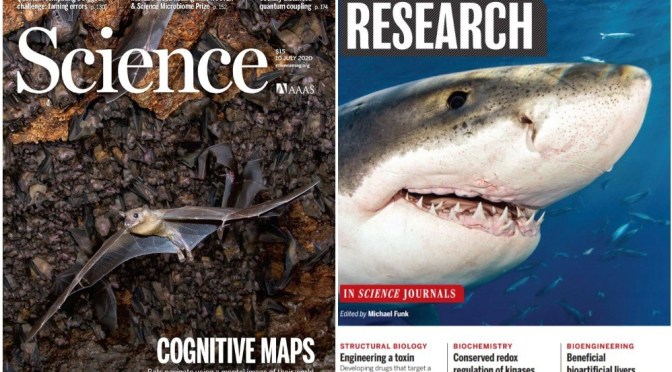
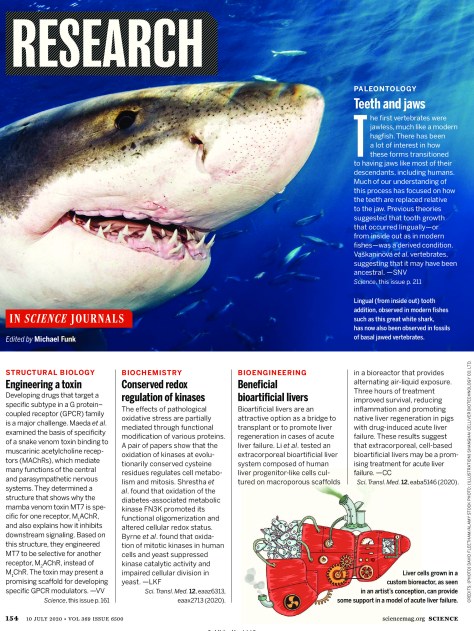


 First up this week, News Intern Rodrigo Pérez-Ortega talks with host Meagan Cantwell about an oasis of biodiversity in the striking blue pools of Cuatro Ciénegas, a basin in northern Mexico. Researchers have published dozens of papers exploring the unique microorganisms that thrive in this area, while at the same time fighting large agricultural industries draining the precious water from the pools.
David Tatnell, a postgraduate researcher at the University of Exeter, talks with host Sarah Crespi about using heat to make sound, a phenomenon known as thermoacoustics. Just like the sound of fire or thunder, sudden changes in temperature can create sound waves. In his team’s paper in Science Advances, Tatnell and colleagues describe a thermoacoustic speaker that uses thin, heated films to make sound. This approach cuts out the crosstalk seen in mechanical speakers and allows for extreme miniaturization of sound production. In the ultrasound range, arrays of thermoacoustic speakers could improve acoustic levitation and ultrasound imaging. In the hearing range, the speakers could be made extremely small, flexible, and even transparent.
Kimberly Prather, an atmospheric chemist at the University of California, San Diego, who studies how ocean waves disperse virus-laden aerosols, joins host Sarah Crespi to talk about how she became an outspoken advocate for using masks to prevent coronavirus transmission. A related insight she wrote for Science has been downloaded more than 1 million times.
Mikkel Sinding, a postdoctoral fellow at Trinity College Dublin, talks sled dog genes with Sarah. After comparing the genomes of modern dogs, Greenland sled dogs, and an ancient dog jaw bone found on a remote Siberian island where dogs may have pulled sleds some 9500 years ago, they found that modern Greenland dogs—which are still used to pull sleds today—have much in common with this ancient Siberian ancestor. Those similarities include genes related to eating high-fat diets and cold-sensing genes previously identified in woolly mammoths. In this month’s book segment, Kiki Sanford talks with Rutger Bregman about his book, Humankind: A Hopeful History, which outlines a shift in the thinking of many social scientists to a view of humans as more peaceful than warlike.



 Senior Correspondent Jeffrey Mervis joins host Sarah Crespi to talk about how universities are dealing with the financial crunch brought on by the coronavirus. Jeff discusses how big research universities are balancing their budgets as federal grants continue to flow, but endowments are down and so is the promise of state funding.
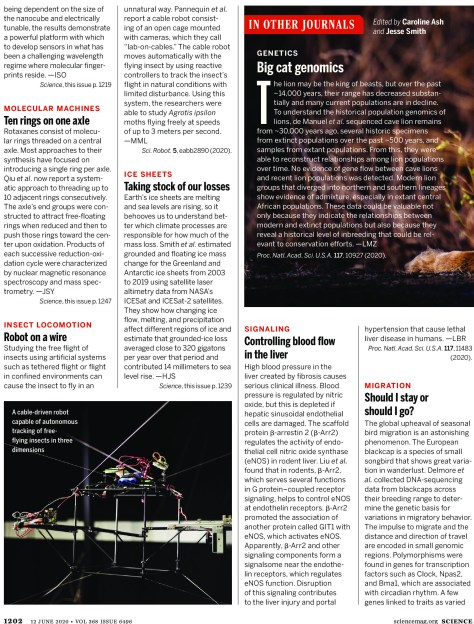
Mosquito-borne infections like Zika, dengue, malaria, and chikungunya cause millions of deaths each year. Nicole Culbert and colleges write this week in Science Robotics about a new way to deal with deadly mosquitoes—using drones. The drones are designed to drop hundreds of thousands of sterile male mosquitoes in areas with high risk of mosquito-borne illness. The idea is that sterile male mosquitoes will mate with females and the females then lay infertile eggs, which causes the population to decline. They found this drone-based approach is cheaper and more efficient than other methods of releasing sterile mosquitoes and does not have the problems associated with pesticide-based eradication efforts such as resistance and off-target effects.
 Staff Writer Kelly Servick joins host Sarah Crespi to talk about the ins and outs of coronavirus contact tracing apps—what they do, how they work, and how to calculate whether they are crushing the curve.
 Edward Gregr, a postdoctoral fellow at the Institute for Resources, Environment, and Sustainability at the University of British Columbia, Vancouver, talks with Sarah about the controversial reintroduction of sea otters to the Northern Pacific Ocean—their home for centuries, before the fur trade nearly wiped out the apex predator in the late 1800s. Gregr brings a unique cost-benefit perspective to his analysis, and finds many trade-offs with economic implications for fisheries For example, sea otters eat shellfish like urchins and crabs, depressing the shellfishing industry; but their diet encourages the growth of kelp forests, which in turn provide a habitat for economically important finfish, like salmon and rockfish.
First up this week, Staff Writer Meredith Wadman talks with host Sarah Crespi about how male sex hormones may play a role in higher levels of severe coronavirus infections in men. New support for this idea comes from a study showing high levels of male pattern baldness in hospitalized COVID-19 patients.
Next, Jason Qian, a Ph.D. student in the systems biology department at Harvard Medical School, joins Sarah to talk about an object-tracking system that uses bacterial spores engineered with unique DNA barcodes. The inactivated spores can be sprayed on anything from lettuce, to wood, to sand and later be scraped off and read out using a CRISPR-based detection system. Spraying these DNA-based identifiers on such things as vegetables could help trace foodborne illnesses back to their source. Read a related commentary piece.





 Boomers Daily