The Globalist Podcast (June 18, 2024): European Union leaders gathered last night to discuss who will take the bloc’s top jobs.
Then: Vladimir Putin heads to Pyongyang and Nato puts nuclear weapons on standby, amid a record 13 per cent rise in global spending on nuclear armament this year. Plus: Singapore’s mission to clean up its beaches, business news and we tour an exhibition about writer Franz Kafka.
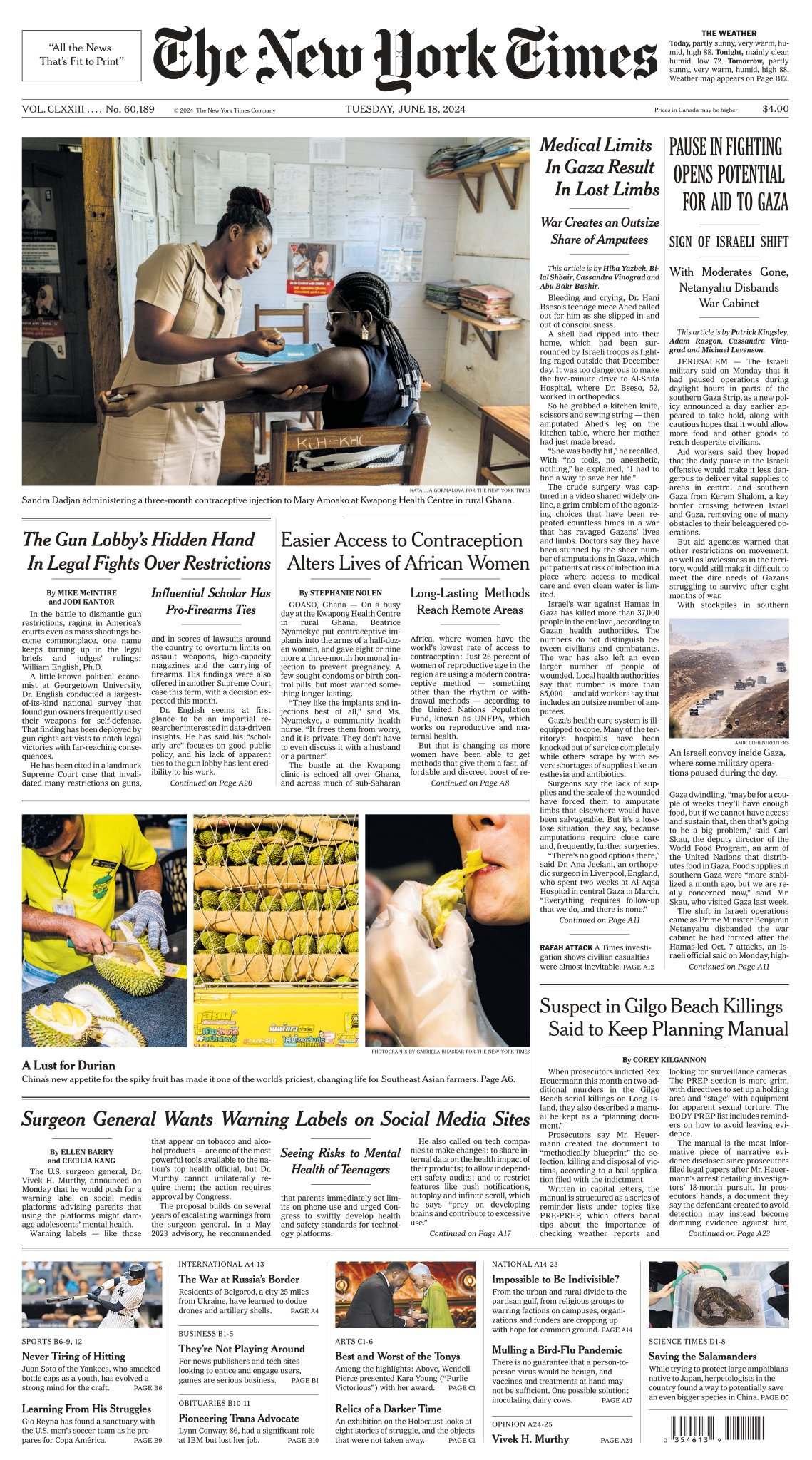
The new policy, addressing concerns that combat made aid delivery too dangerous, took hold as an increasingly isolated Benjamin Netanyahu dissolved his war cabinet.
Access to medical care and even clean water is limited, and the risk of infection is high, making it difficult for patients to get follow-up surgeries, prosthetics and rehabilitation.
Many pregnant women who struggle with drugs put off prenatal care, feeling ashamed and judged. But as fatal overdoses rise, some clinics see pregnancy as an ideal time to help them confront addiction.
The Globalist Podcast (June 17, 2024): The war in Gaza risks expanding. Plus: South Africa’s new government of national unity, the latest from Ukraine’s peace summit in Switzerland and whether Apple can catch up to competitors in the world of artificial intelligence.
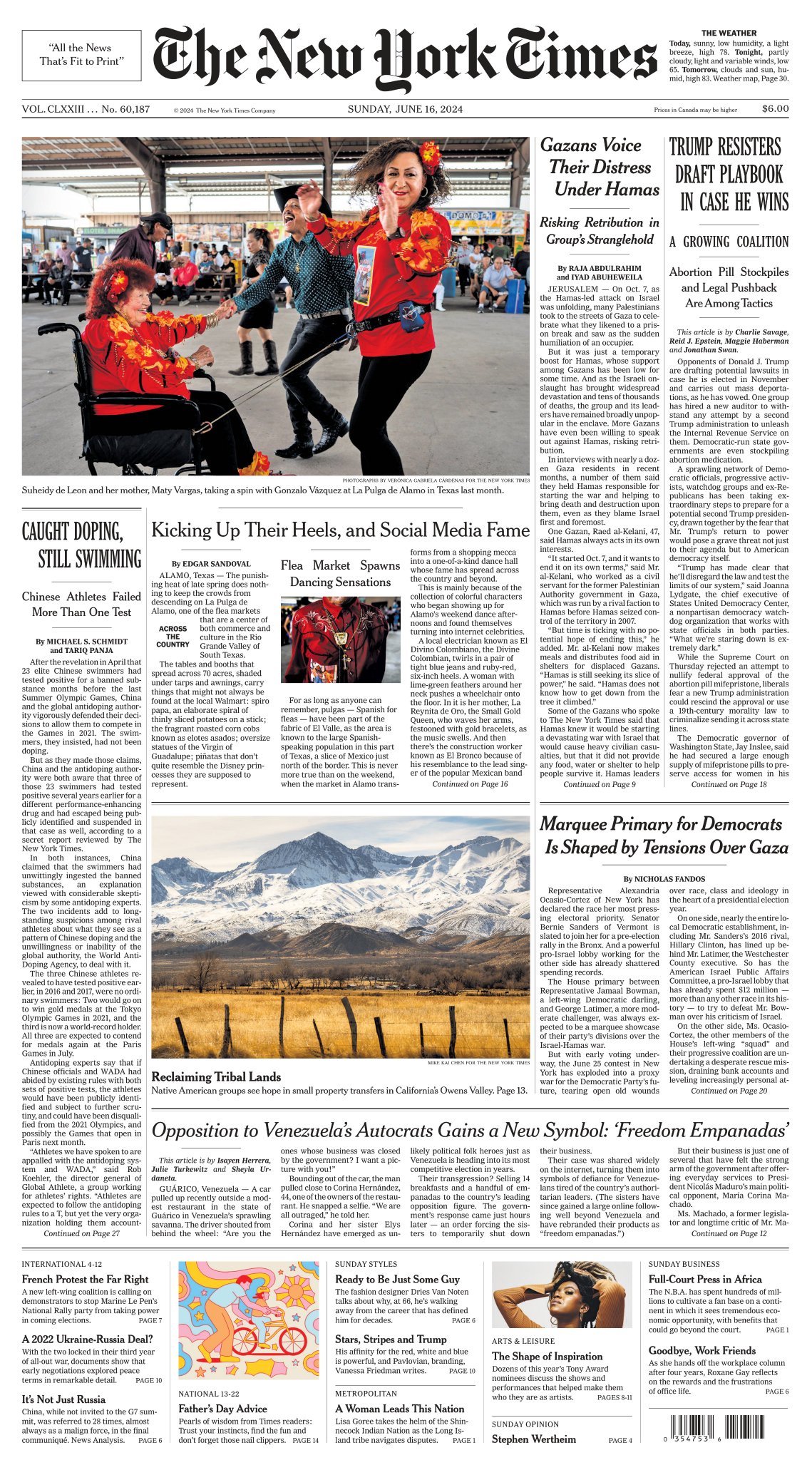
An emerging coalition that views Donald J. Trump’s agenda as a threat to democracy is laying the groundwork to push back if he wins in November, taking extraordinary pre-emptive actions.
Ordinary Gazans are bearing the brunt of the 8-month Israeli military onslaught on the territory and many blame the Palestinian armed faction for starting the war.
Three athletes who failed drug tests before the 2021 Olympics had tested positive for a powerful steroid several years earlier. They were not suspended in either incident.
Monocle on Saturday (June 15, 2024): Authors and attendees have been boycotting literary festivals for their sponsorship by Baillie Gifford – and now music festivals are under fire.
Charles Hecker and Georgina Godwin explore whether this will do more harm than good, as well as the top stories from global papers. Then: Richard Village, founder of new independent publisher Foundry Editions, joins to talk about bringing Mediterranean authors to the attention of English-speaking audiences. Plus: Nigerian-American artist and poet Precious Okoyomon speaks about her magical exhibition in Basel, Switzerland.
The devices allow semiautomatic guns to fire more rapidly. They were banned after one of the deadliest mass shootings in modern U.S. history, at a Las Vegas concert in 2017.
The Biden campaign is trying to work its way into social media feeds. But it is struggling to win over the young, left-leaning influencers who control the conversation online.
In a cold, remote corner of northern Quebec, a sexual abuse scandal pushed a church to the edge. The Rev. Gérard Tsatselam, from Cameroon, must comfort the afflicted to bring it back.
The Globalist Podcast (June 14, 2024): Ukraine’s armed forces look to Nato for longer-term predictability in aid.
Also in the programme: how Macron’s snap election has upended French politics, the winner of the Women’s Prize for Fiction and a celebration of the love of freight trains. Plus: the papers and latest news from the world of science and health.
Accusations of racism, sexual harassment and rigging have plagued the organization in recent years, but no reigning titleholder has ever quit. Then Miss USA and Miss Teen USA resigned in the same week.
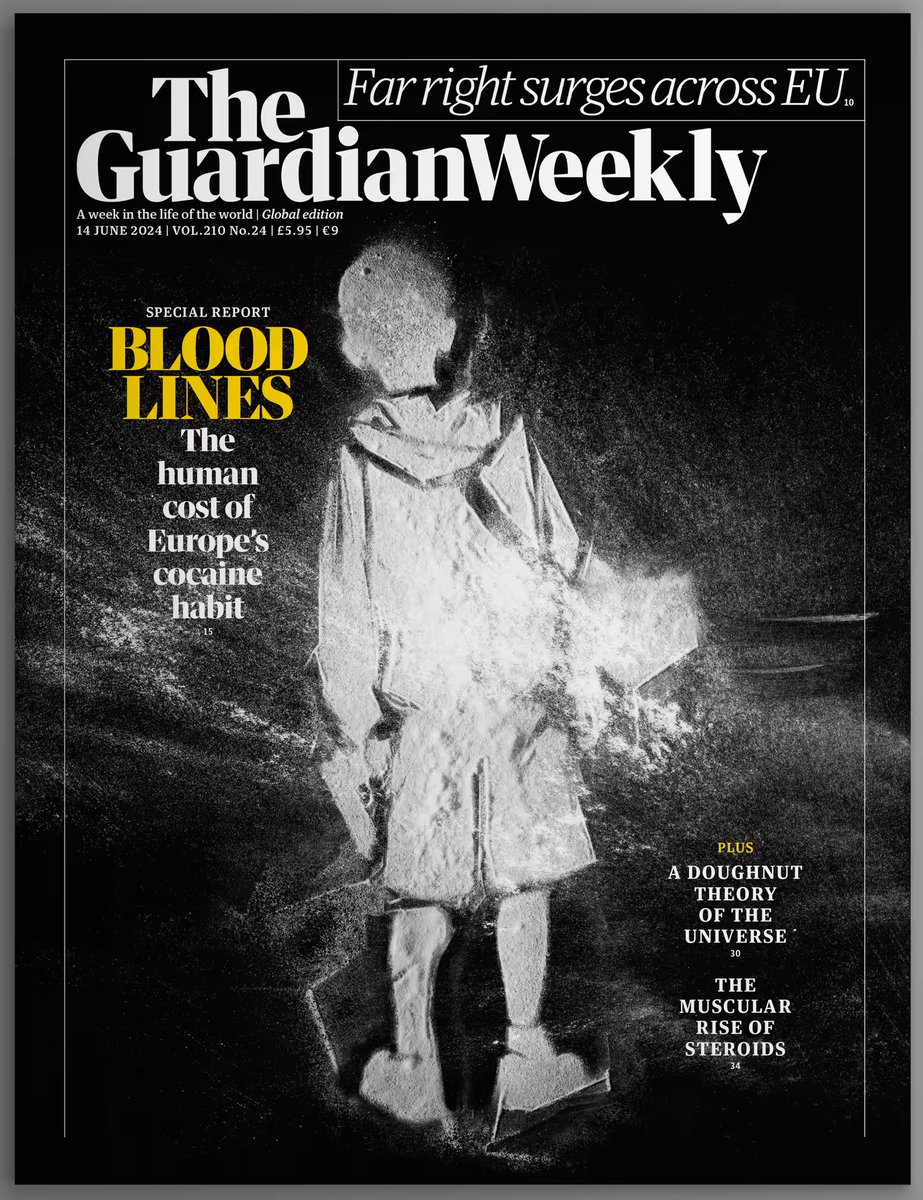
The Guardian Weekly (June 13, 2024) – The new issue features‘Blood Lines’ – The human cost of Europe’s cocaine habit’; The Far Rights surges across EU; A doughnut theory of the universe; The muscular rise of steroids…
In a week when much of the attention in Europe was on far-right political gains in the parliamentary elections, the Guardian Weekly’s cover shines a light on another of the continent’s disturbing undercurrents.
A Guardian investigation has found that hundreds of unaccompanied child migrants across Europe are being forced to work for increasingly powerful drug cartels to meet the continent’s soaring appetite for cocaine.
In cities including Paris and Brussels, gangs are exploiting the “unlimited” supply of vulnerable African children at their disposal, using brutal means to control their victims, including torture and rape if they fail to sell enough drugs, as they seek to expand Europe’s $13bn cocaine market.
Mark Townsend reveals the plight of the illegal trade’s child foot soldiers, while Annie Kelly explains the growing problem of cocaine use in Europe. And from Ecuador, Tom Phillips reports on how death and destruction follow the drug on its complex journey across the Atlantic.
News, Views and Reviews For The Intellectually Curious





 Boomers Daily