
From a Becker’s Hospital review news release:
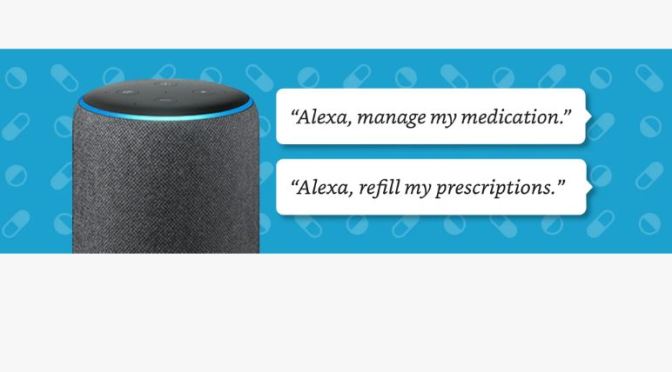
 Any customer with an active prescription and an Alexa-enabled device will be able to access the medication management skill on the device, a Giant Eagle spokesperson told CNBC. Rachel Jiang, who leads the Amazon Alexa health and wellness team, said the company began developing the skill after noticing that customers were using the devices to create medication reminders.
Beyond a simple reminder, the skill also offers more information about medication regimens and can be used to order refills. When the skill is installed, Alexa, which was confirmed earlier this year to be HIPAA-compliant, will prompt users to set up a profile and passcode, which must be delivered each time Alexa is asked a question about a medication.
Amazon and Pittsburgh-based supermarket and pharmacy chain Giant Eagle have formed a partnership that will allow Amazon Echo devices to offer Giant Eagle pharmacy patients medication reminders, CNBC reports.

 An obscure think tank in Boston is getting drug companies to lower their prices – using something called a QALY. WSJ’s Denise Roland explains what a QALY is, and why it’s controversial.
 “This is the fourth time in the last two years we’ve had to activate our hospital’s emergency operations plan for a major drug shortage,” Dr. Biddinger told NBC News. “It’s almost unfathomable in modern medicine. I never thought we would get to a point in the U.S. healthcare system where we wouldn’t have essential medicines to be able to treat patients.”
 The top 10 most commonly administered antibiotics in the ER for nonadmitted patients were:
 But greater use of biosimilars could create significantly more savings. If biosimilars obtained a 75 percent market share, less than the share of these medicines in many European Union nations, the resulting annual savings for the U.S. healthcare system could be nearly $7 billion, based on Winegarden’s analysis.
 Rieder likens his experiences trying to get off prescription pain meds to a game of hot potato. “The patient is the potato,” he says. “Everybody had a reason to send me to somebody else.”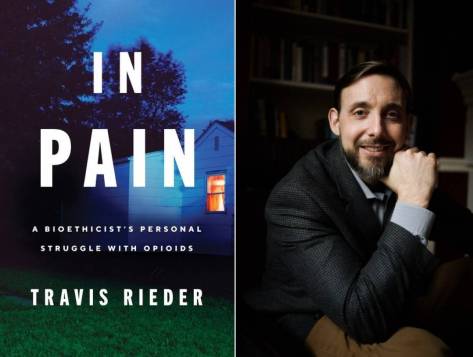
 Boomers Daily