From a Hyperallergic.com online review:
 “Everywhere is the wait and the gathering,” concludes “Resort.” A kind of soporific haze has seeped into de Chirico’s imagination, asserted through evocations of sleeping and dreaming. Even the violence and ambiguous sexual imagery of “The Mysterious Night” yield to a final note of definitive somnolence: “Everything sleeps; even the owls and the bats who also in the dream dream of sleeping.”
“My room,” he writes, “is a beautiful vessel,” and from there he propels his imagination outward across space and time, geography and history. Indeed, “faraway” (lontani, lontano) is one of his favorite adjectives.  He daydreams of Mexico or Alaska and invokes a future-oriented “avant-city” and a distant day where he is immortalized, albeit in an old-fashioned mode as a “man of marble.”
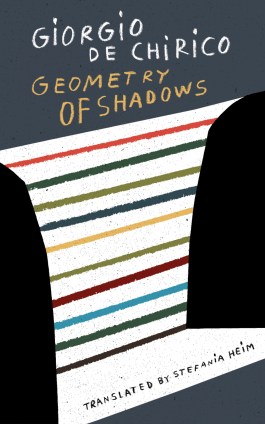
The paintings of Giorgio de Chirico invariably call to mind a cluster of adjectives: haunting, enigmatic, evocative, poetic. But unlike many artists whose poetry remains wordless and confined to the canvas, de Chirico was also a writer whose texts have been praised and even translated by such art-world luminaries as Louise Bourgeois and John Ashbery. A new collection provides us with more of de Chirico’s writings. Translated into English by Stefania Heim, Geometry of Shadows presents the relatively compact totality of the artist’s extant poems and poetic fragments written in Italian, complementing his memoirs and the novel Hebdomeros (in French), which have been available in English for some time.
To read more: https://hyperallergic.com/520898/geometry-of-shadows-by-giorgio-de-chirico/



 Boomers Daily