
Learn what CRISPR is, how it works, and how Penn Medicine is working to harness its power to help patients.

Learn what CRISPR is, how it works, and how Penn Medicine is working to harness its power to help patients.
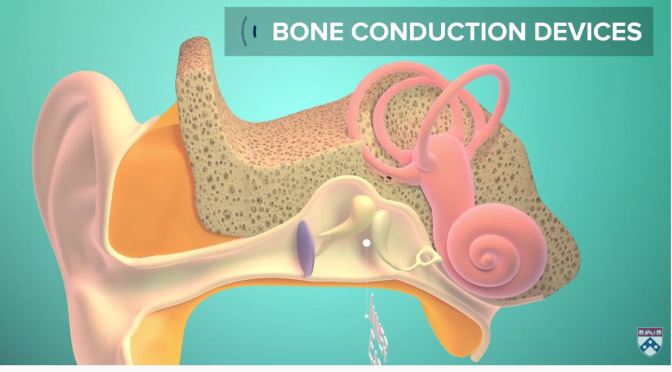
At Penn Medicine ENT, we offer patients the most advanced developments in hearing technology. Our multidisciplinary approach to medicine ensures that each patient path is tailored to the patient’s specific needs.
In terms of hearing devices, we offer access to almost every hearing aid manufacturer available, as well as advanced implantable technology. This includes the auditory brain stem implant, which Penn Medicine is the first in the region to offer.
Hearing is currently the only sense that we can completely restore. We’re proud to be able to offer our patients everything available to help restore their communication with family and friends.

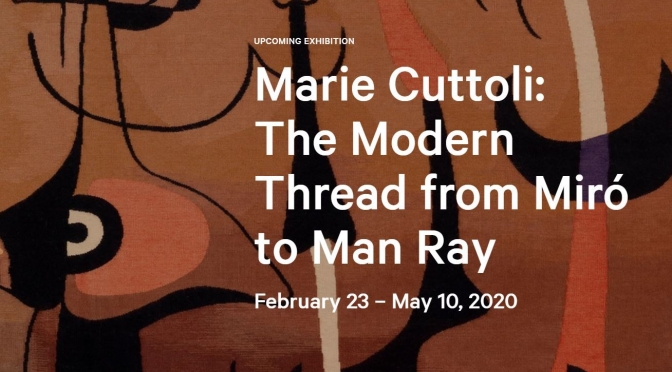
In 1930s Paris, leading modern artists experimented with tapestry design, thanks to pioneering entrepreneur Marie Cuttoli (1879–1973). Cuttoli lived between Algeria 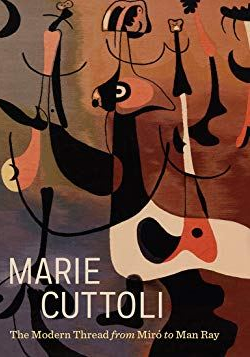 and Paris and collected work by artists such as Pablo Picasso, Joan Miró, and Georges Braque.
This exhibition traces her career, from her early work in fashion and interiors to her revival of the French tapestry industry. She commissioned the most celebrated artists of her time—Rouault, Léger, Picasso, Braque, Le Corbusier, Man Ray, and Miró, among others—to create designs for the historic tapestry workshops in Aubusson. By uniting these important paintings and drawings with the resulting tapestry, this exhibition shows their true purpose, revealing modernism’s profound dialogue with the decorative arts.
From a Wall Street Journal article by Edward Rothstein:
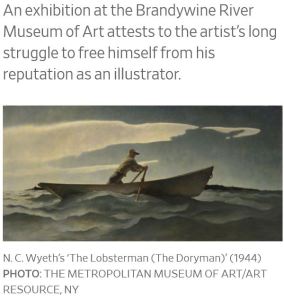 In some cases, Wyeth’s images bore into memory as sharply as the books they illuminate. I’m thankful I never saw Wyeth’s “Captain Nemo” (1918) while steeping myself in Jules Verne’s “The Mysterious Island” (1874): I would never have been able to shed the image Wyeth created of this white-haired, secretive, dying man, surrounded by allusions to his exotic past, his skin seeming bleached, we learn here, by the electrical lighting of his submarine.
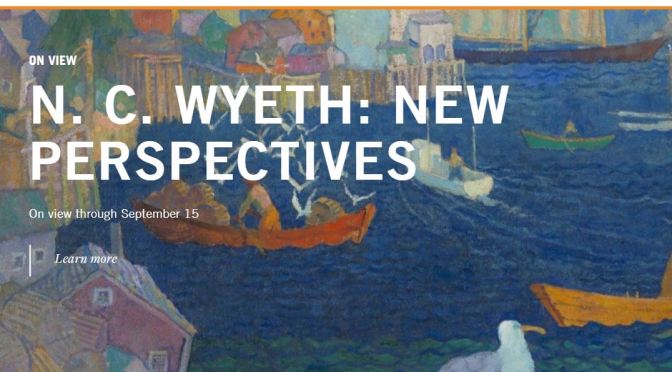
This is the first retrospective Wyeth has received in a generation, and it may be unfair to begin an account of it with the illustrations that made him a commercial success, for they also haunted him as he struggled to free himself from his reputation as an illustrator— a struggle that ultimately involved his relationship with his more
artistically celebrated son, Andrew, and his attempts to both accommodate and bypass modernist taste. But you can see how they could have had that impact. This show—jointly created with Maine’s Portland Museum of Art, and curated by Christine B. Podmaniczky from the Brandywine and Jessica May from the Portland—pays tribute
to the illustrations’ power and notes, too, that Wyeth often cut his artistic cloth to suit the demands of magazine editors, advertising agencies and bank-building mural planners.
 Boomers Daily