From a NextAvenue.org online review:
 Am I Still a Man?
Masculinity is not a natural collection of individual traits but, rather, a cultural story, a plot or a script by which men are judged and judge themselves. One problem is that this script for masculinity stops at midlife. For most old men in American society, there are no landmarks of achievement or value; no lighthouse guiding one’s moral compass; no employment office with the sign “old men wanted.” There is only the province of retirement — a barren place often marked by an absence of wealth, prestige and personal meaning.
Do I Still Matter?
At least since the institutionalization of retirement in the mid-20th century, old men have often felt marginalized, useless or invisible. Retirement is a primary source of depression for those whose identities and self-esteem have depended on being productive, earning a living and being engaged with others in the workplace. Employment and volunteer work are often less possible for men who have reached their 80s.
What Is the Meaning of My Life?
Because our society provides old people with no widely shared meanings or norms by which to live, the task of finding significance in later life falls to individuals in their relationships with family and community.
Meaning is partly a matter of love and of relevance. If I love and am loved, my life has significance. Meaning is also a moral question: Have I lived a good life by my own lights? Did I, and do I, measure up to my own expectations and to the standards of my family, religion, community and nation?
Am I Still Loved?
Love, of course, means many things. There is love of God. There is love that comes from God or a Divine Being or Beings — love that carries existential meaning. It is the kind of love Ram Dass received from his guru Neem Karoli Baba, who inspired him to live a life of loving service on the path toward merging with Brahman, the ultimate reality in Hinduism.
To read more: https://www.nextavenue.org/questions-older-men-ask-themselves/?hide_newsletter=true&utm_source=Next+Avenue+Email+Newsletter&utm_campaign=1eb08d4dfa-12.10.2019_Tuesday_Newsletter&utm_medium=email&utm_term=0_056a405b5a-1eb08d4dfa-166479103&mc_cid=1eb08d4dfa&mc_eid=6cab05fae0


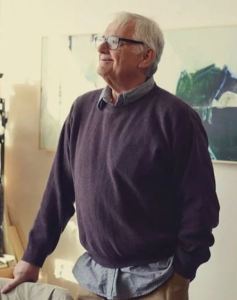
 In James Wrayge’s quiet studio on an early winter afternoon, there is a tangible sense of purpose. Wrayge’s paintings line the walls along the portion of the space he shares with another artist at the Northrup King Building in Minneapolis. There are also some paintings on the floor propped up against the same walls. And there is one — in progress — set on an easel in the corner.
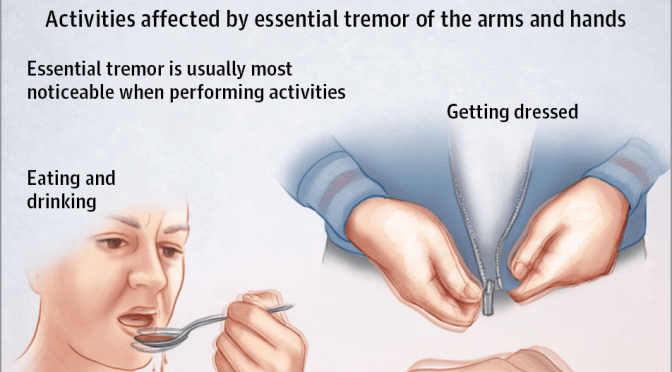
 Essential tremor is a common movement disorder
 Boomers Daily